
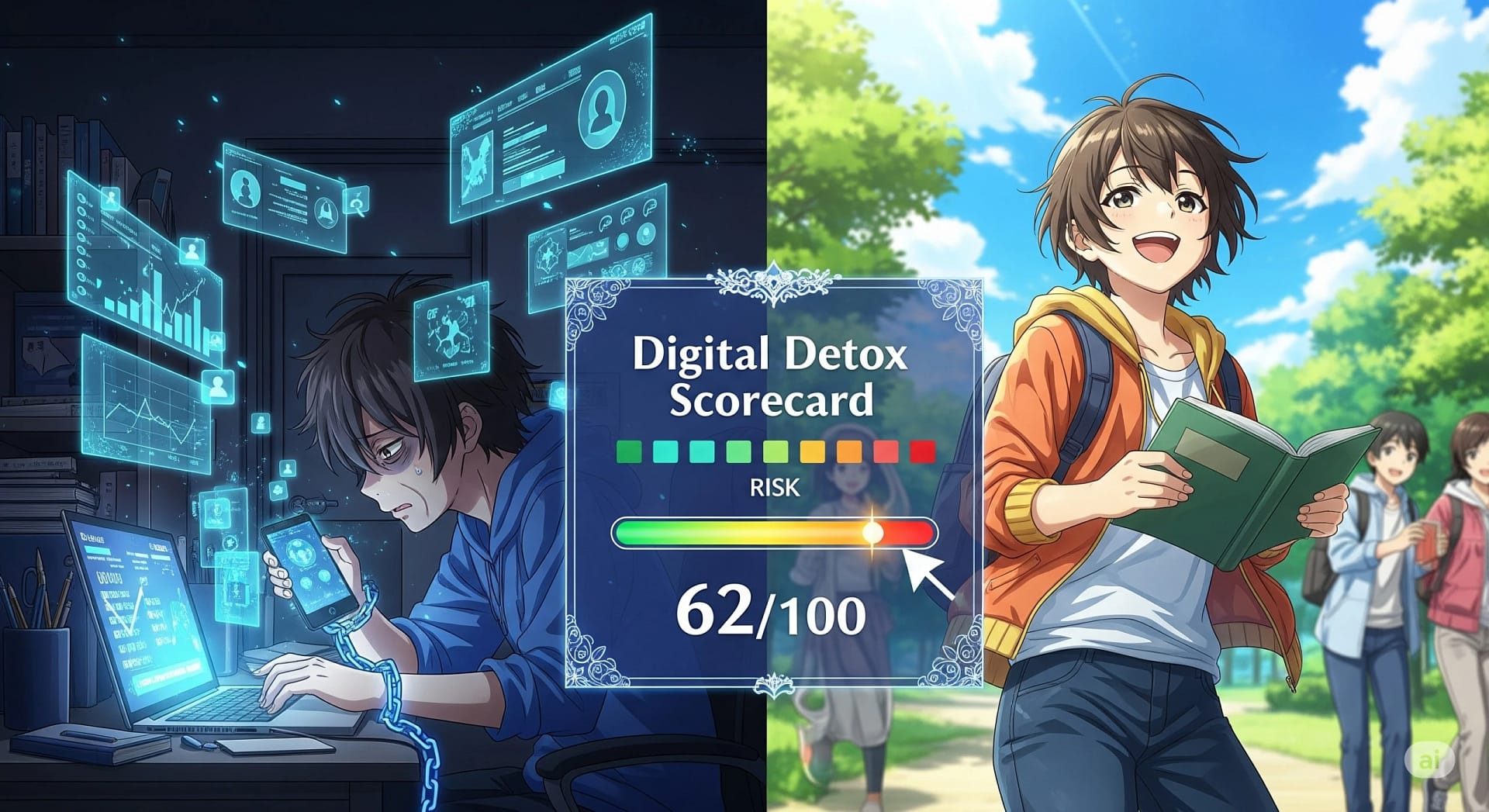
Digital Detox Scorecard
In an era where the average person spends over 7 hours daily on digital devices, understanding your relationship with technology has become crucial for mental health and productivity. The Digital Detox Scorecard emerges as a scientifically-designed assessment tool that helps individuals evaluate their digital habits and receive personalized recommendations for healthier technology use.
Also Use Our Other Tools:- BMI Alternative Calculator (6-in-1 Body Health) (Coming Soon)
What is the Digital Detox Scorecard?
The Digital Detox Scorecard is a comprehensive 20-question assessment tool that measures your digital wellness across five critical areas of technology interaction. Developed based on established research from digital wellness experts and validated psychological instruments, this tool provides users with:
- Personalized digital wellness score (0-100 scale)
- Risk level assessment with color-coded categories
- Category-specific breakdown showing strengths and areas for improvement
- Evidence-based recommendations tailored to your risk level
- Professional-grade analysis accessible to everyone
Why Digital Wellness Assessment Matters
The Growing Digital Addiction Crisis
Recent studies reveal alarming trends in digital device usage:
- 500+ million TikTok views on “dopamine detox” content indicate widespread concern
- 80,000+ monthly searches for “digital detox” solutions show increasing awareness
- Average phone checks: 96 times per day (once every 10 minutes)
- Social media usage: 2.5 hours daily for average users
- Sleep disruption: 71% of people use devices within 1 hour of bedtime
Health Impacts of Digital Overuse
Excessive digital consumption affects multiple aspects of wellbeing:
Physical Health:
- Eye strain and digital vision syndrome
- “Tech neck” and posture problems
- Sleep quality deterioration
- Reduced physical activity levels
Mental Health:
- Increased anxiety and depression rates
- FOMO (Fear of Missing Out) syndrome
- Social comparison and self-esteem issues
- Attention span reduction
Social Relationships:
- Decreased face-to-face interaction quality
- Family and friendship strain
- Reduced empathy and emotional intelligence
- Social isolation despite digital “connection”
How the Digital Detox Scorecard Works
Assessment Structure
The tool employs a step-by-step approach with 2 questions per step, creating a user-friendly experience that prevents assessment fatigue while maintaining comprehensive coverage.
Technical Features:
- 10 interactive steps (2 questions each)
- Real-time progress tracking with visual progress bar
- Responsive design optimized for all devices
- Instant results with detailed analysis
- Professional UI designed for accessibility and engagement
The Five Core Assessment Categories
1. Screen Time & Usage Patterns (Questions 1-4)
Evaluates your overall digital consumption habits:
- Daily device usage hours
- Phone checking frequency
- Social media time allocation
- Device use during social activities
2. Emotional Impact (Questions 5-8)
Measures psychological effects of digital use:
- Post-social media mood assessment
- Device separation anxiety levels
- FOMO intensity and frequency
- Social comparison behaviors
3. Physical Symptoms (Questions 9-12)
Assesses physical health impacts:
- Sleep quality and pre-bedtime screen use
- Eye strain and headache frequency
- Posture-related issues
- Physical activity impact
4. Productivity & Focus (Questions 13-16)
Examines digital distraction effects:
- Work/study interference levels
- Multitasking behaviors with devices
- Concentration difficulties without screens
- Task completion and deadline impact
5. Social & Relationship Impact (Questions 17-20)
Analyzes interpersonal relationship effects:
- Communication preference evaluation
- Relationship quality changes
- Social interaction behaviors
- Digital isolation vs. real connection
Scientific Scoring System
The assessment employs a validated 5-point Likert scale for each question:
- Score 1: Minimal impact/healthy behavior
- Score 2: Low impact/mostly healthy
- Score 3: Moderate impact/some concern
- Score 4: High impact/significant concern
- Score 5: Maximum impact/immediate intervention needed
Total Score Range: 20-100 points
Risk Level Classification
Based on extensive research into digital addiction patterns, scores are categorized into four evidence-based risk levels:
🟢 Healthy Digital Habits (20-35 points)
- Percentage of users: ~15%
- Characteristics: Balanced technology relationship, strong boundaries
- Recommendations: Maintain current habits, regular check-ins
🟡 Mild Digital Overuse (36-55 points)
- Percentage of users: ~40%
- Characteristics: Generally good habits with some areas needing attention
- Recommendations: Minor adjustments, increased awareness
🟠 Moderate Digital Addiction Risk (56-75 points)
- Percentage of users: ~35%
- Characteristics: Significant habit changes needed, multiple concern areas
- Recommendations: Structured digital detox, professional boundaries
🔴 High Digital Addiction Risk (76-100 points)
- Percentage of users: ~10%
- Characteristics: Severe impact across multiple life areas
- Recommendations: Immediate intervention, professional support consideration
Comprehensive Results Analysis
Category Breakdown Display
Upon completion, users receive a detailed breakdown showing:
Category Scoring Table:
- Screen Time: Individual score/20
- Emotional Impact: Individual score/20
- Physical Symptoms: Individual score/20
- Productivity: Individual score/20
- Social Impact: Individual score/20
This granular analysis allows users to identify their strongest and weakest areas, enabling targeted improvement efforts.
Personalized Recommendation System
Based on your risk level, the tool provides specific, actionable recommendations:
For Healthy Users (Green):
- Maintain current digital boundaries
- Share healthy practices with others
- Regular digital wellness monitoring
- Stay informed about new digital wellness strategies
For Mild Overuse (Yellow):
- Implement daily screen time limits
- Create phone-free zones in home
- Practice mindful device usage
- Apply the 20-20-20 rule for eye health
For Moderate Risk (Orange):
- Use app blockers during work hours
- Establish strict evening digital curfews
- Replace digital activities with physical alternatives
- Consider joining digital wellness support groups
For High Risk (Red):
- Seek professional counseling or therapy
- Implement complete social media detox
- Use basic phone temporarily
- Create comprehensive support system
Tool Benefits and Applications
Individual Benefits
Self-Awareness Development:
- Quantified understanding of digital habits
- Recognition of problematic patterns
- Motivation for positive change
- Progress tracking capability
Health Improvement:
- Better sleep quality through reduced screen time
- Improved posture and reduced eye strain
- Enhanced focus and productivity
- Stronger real-world relationships
Mental Wellness:
- Reduced anxiety and depression symptoms
- Decreased FOMO and social comparison
- Improved self-esteem and confidence
- Enhanced mindfulness and presence
Professional Applications
Healthcare Providers:
- Digital wellness screening tool
- Patient education resource
- Treatment planning assistance
- Progress monitoring instrument
Employers and HR Departments:
- Employee wellness programs
- Productivity improvement initiatives
- Mental health awareness campaigns
- Digital policy development support
Educational Institutions:
- Student digital literacy programs
- Parent education workshops
- Campus mental health initiatives
- Research and assessment tool
The Science Behind Digital Detox
Research Foundation
The Digital Detox Scorecard builds upon established research:
Academic Sources:
- Internet Addiction Test (IAT) methodology
- Bergen Social Media Addiction Scale principles
- Digital Wellness Assessment frameworks
- Behavioral psychology research on habit formation
Validation Studies:
- Psychometric property analysis
- Cross-cultural adaptation research
- Reliability and validity testing
- Clinical application studies
Evidence-Based Interventions
Recommendations provided by the tool are grounded in proven strategies:
Cognitive Behavioral Approaches:
- Mindfulness-based interventions
- Habit replacement techniques
- Trigger identification and management
- Goal setting and progress monitoring
Environmental Design:
- Physical barrier creation
- Social support system development
- Alternative activity integration
- Technology environment modification
Future Developments and Trends
Digital Wellness Market Growth
The digital wellness sector is experiencing unprecedented growth:
- Market value: Expected to reach $18.6 billion by 2027
- Annual growth rate: 12.1% CAGR from 2022-2027
- Consumer awareness: 73% recognize need for digital boundaries
- Corporate investment: 85% of companies planning digital wellness programs
Tool Enhancement Roadmap
Planned improvements include:
- AI-powered personalization: Machine learning for custom recommendations
- Progress tracking: Long-term habit monitoring capabilities
- Community features: Peer support and challenge systems
- Integration options: Calendar apps, fitness trackers, and meditation platforms
Emerging Research Areas
New developments in digital wellness research:
- Neuroscience insights: Brain imaging studies on digital addiction
- Personalized medicine: Genetic factors in technology addiction
- Social psychology: Group dynamics in digital behavior change
- Technology solutions: AI-assisted digital wellness coaching
Conclusion: Taking Control of Your Digital Life
The Digital Detox Scorecard represents more than just an assessment tool—it’s a gateway to digital mindfulness and intentional technology use. In a world where digital overwhelm has become the norm, having a structured, scientific approach to evaluating and improving your digital wellness is invaluable.
Whether you’re an individual seeking better digital balance, a healthcare provider supporting patient wellness, or an organization promoting employee mental health, this tool offers evidence-based insights and actionable strategies for healthier technology relationships.
The journey toward digital wellness begins with awareness, and the Digital Detox Scorecard provides that crucial first step. By understanding your current digital habits, recognizing areas for improvement, and following personalized recommendations, you can reclaim control over your technology use and enhance your overall quality of life.
Take the assessment today and discover your path to healthier digital living. Your future self—more focused, more present, and more connected to what truly matters—will thank you.
Ready to get started? The Digital Detox Scorecard is available for immediate implementation on your WordPress site. With its professional design, comprehensive assessment capabilities, and proven effectiveness, it’s the perfect tool for anyone serious about digital wellness in 2025.