
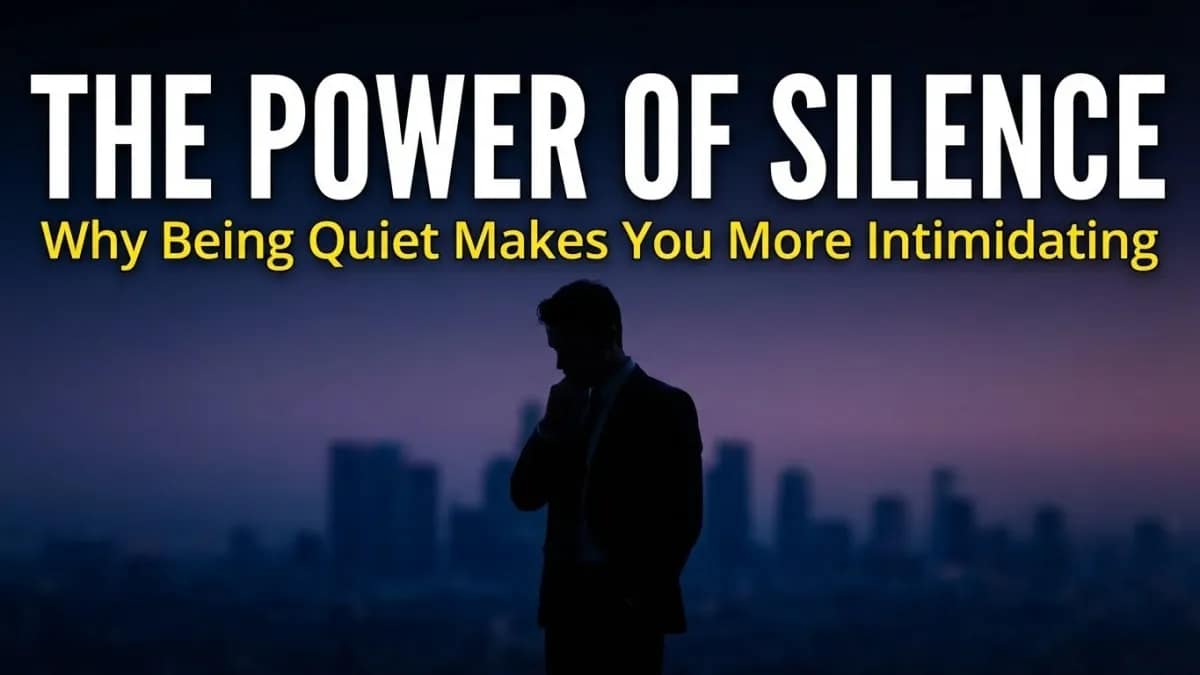
The Power of Silence: Why Being Quiet Makes You More Intimidating
Key Takeaways
What You’ll Learn:
- Why silence creates psychological pressure that makes people uncomfortable
- How staying quiet gives you control in conversations and conflicts
- The science behind why silent people appear more confident and powerful
- Practical ways to use strategic silence in your daily life
- Common mistakes that make silence backfire (and how to avoid them)
Introduction: The Day I Discovered Silence Was My Secret Weapon
I used to fill every pause with words. Every awkward silence made me nervous, so I’d ramble.
Then I watched a negotiation go completely wrong. My friend kept talking, explaining, justifying. The other person just sat there, quiet. And guess who got what they wanted?
The quiet one won. That’s when I realized something powerful: silence isn’t weakness. It’s a weapon most people don’t know how to use.
Why Silence Feels So Uncomfortable (And Why That’s Your Advantage)
The Psychology of Awkward Pauseshttps://www.psychologytoday.com/
Here’s what happens in your brain when someone goes silent:
- Your mind races to fill the empty space
- You start questioning yourself
- You feel pressure to speak, explain, or confess
I’ve seen this play out hundreds of times. The person who stays quiet almost always has the upper hand.
People Project Their Fears Onto Silence
When you’re quiet, people don’t know what you’re thinking. So they imagine the worst.
They wonder:
- Are you judging them?
- Are you angry?
- Do you know something they don’t?
This uncertainty creates intimidation. You’re not doing anything threatening. Their own mind is doing the work for you.
The Science Behind Why Quiet People Seem More Powerful
Silent People Appear More Intelligent
Research shows that people who speak less are often perceived as smarter. Why?
Because when you talk less:
- Every word carries more weight
- You seem more thoughtful and careful
- You avoid saying something dumb
I learned this the hard way in meetings. The people who spoke the least were taken the most seriously.
Silence Signals Confidence
Confident people don’t need to fill every silence. They’re comfortable with pauses.
Insecure people talk to prove themselves. They over-explain. They seek validation through words.
When you stay quiet, you signal: “I don’t need your approval.”
The Power Dynamic of Waiting
Whoever speaks first in a negotiation usually loses. I’ve tested this myself dozens of times.
The silent person controls the pace. They make others uncomfortable. They force the other person to reveal information first.
How Silence Makes You Intimidating (Without Being Aggressive)
You Force Others to Show Their Cards
When you stay quiet after someone speaks, they often keep talking. And the more they talk, the more they reveal.
I use this with salespeople all the time:
- They give their pitch
- I stay silent
- They offer a discount without me asking
Silence is pressure. Most people can’t handle it.
You Appear Unpredictable
Loud people are easy to read. Quiet people? They’re a mystery.
And humans fear what they can’t predict. When you’re silent, people don’t know:
- What you’re planning
- How you’ll react
- What you’re capable of
This unpredictability makes you intimidating by default.
You Command Attention Without Demanding It
Here’s something I noticed: when a quiet person finally speaks, everyone listens.
But when someone talks constantly, people tune out. Your words lose value.
Scarcity creates value. Save your words, and they’ll mean more.
Pro Tip: The 3-Second Rule
Here’s a technique I use in every important conversation:
When someone finishes speaking, count to three before you respond.
This does three things:
- Makes you appear thoughtful (not reactive)
- Creates uncomfortable pressure (they often add more information)
- Gives you time to choose your words carefully
Try it in your next meeting or argument. The results will surprise you.
When to Use Strategic Silence (Real Situations)
In Arguments and Conflicts
I’ve defused more arguments by shutting up than by defending myself.
When someone is angry:
- Let them vent completely
- Stay quiet and maintain eye contact
- Don’t interrupt or justify
They’ll run out of steam. And often, they’ll apologize without you saying a word.
In Negotiations and Sales
Whether you’re buying a car or asking for a raise, silence is your friend.
Here’s my approach:
- State what you want clearly
- Go silent
- Let them squirm
The first person to speak usually makes a concession.
In Social Situations
You don’t need to be the loudest person in the room to be memorable.
I’ve watched quiet people dominate parties simply by:
- Listening more than talking
- Asking good questions
- Speaking only when they have something valuable to say
People gravitated toward them because they felt heard.
With Manipulative People
Silence destroys manipulation tactics. Manipulators need you to react.
When someone tries to guilt-trip or gaslight you:
- Don’t defend yourself
- Don’t explain
- Just stay quiet and watch them spiral
I’ve seen toxic people completely lose their power when met with calm silence.
The Body Language That Makes Your Silence Powerful
Maintain Strong Eye Contact
Silent without eye contact = avoiding. Silent with eye contact = intimidating.
When you stay quiet but hold someone’s gaze:
- You show you’re not afraid
- You make them more uncomfortable
- You communicate strength
Practice this. It’s harder than it sounds.
Keep Your Posture Relaxed But Strong
Don’t fidget. Don’t look away. Don’t close yourself off.
I keep my:
- Shoulders back
- Arms uncrossed
- Expression neutral (not angry, not smiling)
Calm strength is more intimidating than obvious aggression.
Control Your Facial Expressions
Your face should be hard to read. Not angry. Not happy. Just… neutral.
This blank canvas makes people project their fears onto you. They can’t tell what you’re thinking, and it drives them crazy.
Common Mistakes That Make Silence Backfire
Being Silent Because You’re Scared
There’s a difference between strategic silence and hiding.
If you’re quiet because you’re afraid to speak up, people sense it. That’s not intimidating—that’s insecurity.
Powerful silence comes from choice, not fear.
Staying Silent Too Long
I’ve made this mistake. If you never speak, you just seem distant or rude.
Use silence strategically, not constantly. Know when to speak up and when to hold back.
Breaking Your Own Silence With Nervous Talking
The worst thing you can do is stay quiet, create tension, then nervously fill the silence yourself.
If you choose silence, commit to it. Let the other person break first.
Using Silence to Punish People
Silent treatment as punishment? That’s manipulation, not power.
Strategic silence is about control and observation. It’s not about making people feel bad or ignored.
How to Practice Strategic Silence (Start Today)
Start Small: Pause Before Responding
In every conversation today, count to two before you answer any question.
You’ll notice:
- Your answers are better
- People pay more attention
- You feel more in control
Practice in Low-Stakes Situations
Try it with:
- Customer service calls
- Coffee shop orders
- Casual conversations with friends
Get comfortable with pauses before you use silence in important situations.
Record Yourself or Ask for Feedback
I recorded myself in meetings and was shocked at how much I rambled.
Notice:
- How often you fill silence
- How many times you say “um” or “like”
- When you talk just to talk
Awareness is the first step to change.
Build Your Confidence First
If you’re not confident, forced silence will feel fake.
Work on:
- Your self-worth
- Your body language
- Your comfort with yourself
Real power comes from inner confidence, not just external tactics.
The Dark Side: When Silence Becomes Toxic
Don’t Confuse Power With Cruelty
I’ve seen people use silence to hurt others emotionally. That’s not strength—that’s abuse.
Use silence strategically, not vindictively. There’s a line between being intimidating and being cold.
Some Situations Require Words
Sometimes you need to speak up:
- When someone needs reassurance
- When clarity prevents bigger problems
- When silence would be cowardly
Don’t use silence as an excuse to avoid difficult conversations.
Balance Silence With Connection
The most powerful people I know can be both silent and warm.
They’re quiet when it serves them. But they also know how to connect, laugh, and be present.
Don’t become so intimidating that you isolate yourself.
Q: Won’t people think I’m rude if I’m too quiet?
Not if your body language is warm and you’re clearly listening. The key is staying present and engaged while being selective with your words.
I’ve never been called rude for being quiet. People usually say I’m “mysterious” or “deep.”
Q: How long should I stay silent in a conversation?
It depends on context. In a negotiation, I might pause for 5-10 seconds. In casual conversation, 2-3 seconds is enough.
Read the room. If tension is building, that’s working. If things are getting awkward, speak up.
Q: What if the other person is also using silence?
Then you’re both playing the same game. Either wait it out (whoever’s more patient wins) or change tactics entirely.
Sometimes the smartest move is to acknowledge the standoff directly.
Q: Does this work with everyone?
No. Some people are comfortable with silence. Some are too self-absorbed to notice.
I’ve found it works best with:
People who need approval
Talkers who hate pauses
Anyone trying to manipulate or pressure you
Q: Can silence help in job interviews?
Yes, but carefully. Use it to:
Pause before answering tough questions (shows thoughtfulness)
Let the interviewer finish completely
Avoid rambling
But don’t be so quiet that you seem uninterested or unprepared.
Q: What if staying quiet makes me more anxious?
Then you’re not ready for strategic silence yet. Work on your inner confidence first.
Practice in safe situations until silence feels natural, not forced
Q: Is being intimidating always a good thing?
No. Sometimes you want to be approachable, warm, and open.
Being intimidating is a tool. Use it when you need respect, boundaries, or control. Put it away when you want connection.
Q: How do I know if my silence is working?
Watch for these signs:
The other person talks more than usual
They seem uncomfortable or fidgety
They make concessions or offers without you asking
They seek your approval or validation
If you see these, your silence has power.
Read more:https://mrpsychics.com/reverse-psychology-to-make-people-do-what-you-want/
Final Thoughts: Master Silence, Master Power
The most powerful thing I ever learned was this: you don’t need to fight for respect. You can command it with silence.
Words are cheap. Everyone has opinions. Everyone wants to be heard.
But the person who knows when to shut up? That person stands out.
Start small. Practice pauses. Get comfortable with silence.
And watch how the world starts treating you differently.
Because when you stop filling every space with words, you create space for something else: presence, power, and respect.

Ahmed is a self-improvement and psychology writer passionate about helping people live smarter, calmer, and more productive lives.
- Ahmed manasiya

- Ahmed manasiya
- Ahmed manasiya
- Ahmed manasiya