
The “Ben Franklin Effect”: How to Make Anyone Like You
Key Takeaways
Before you dive in, here’s what you need to know:
- The Ben Franklin Effect is a psychology trick where asking someone for a small favor makes them like you more
- It works because people justify their actions by convincing themselves they must like you
- This technique has been proven in multiple studies since the 1960s
- You can use it at work, in relationships, and even with strangers
- The favor must be small, specific, and genuine for it to work
- I’ve watched this method transform difficult relationships when used correctly
What Is the Ben Franklin Effect?
Let me tell you about one of the strangest psychology tricks I’ve ever come across.
The Ben Franklin Effect says that when you ask someone to do you a favor, they actually like you MORE afterward. Not less. More.
I know it sounds backwards. You’d think asking for favors would annoy people, right?
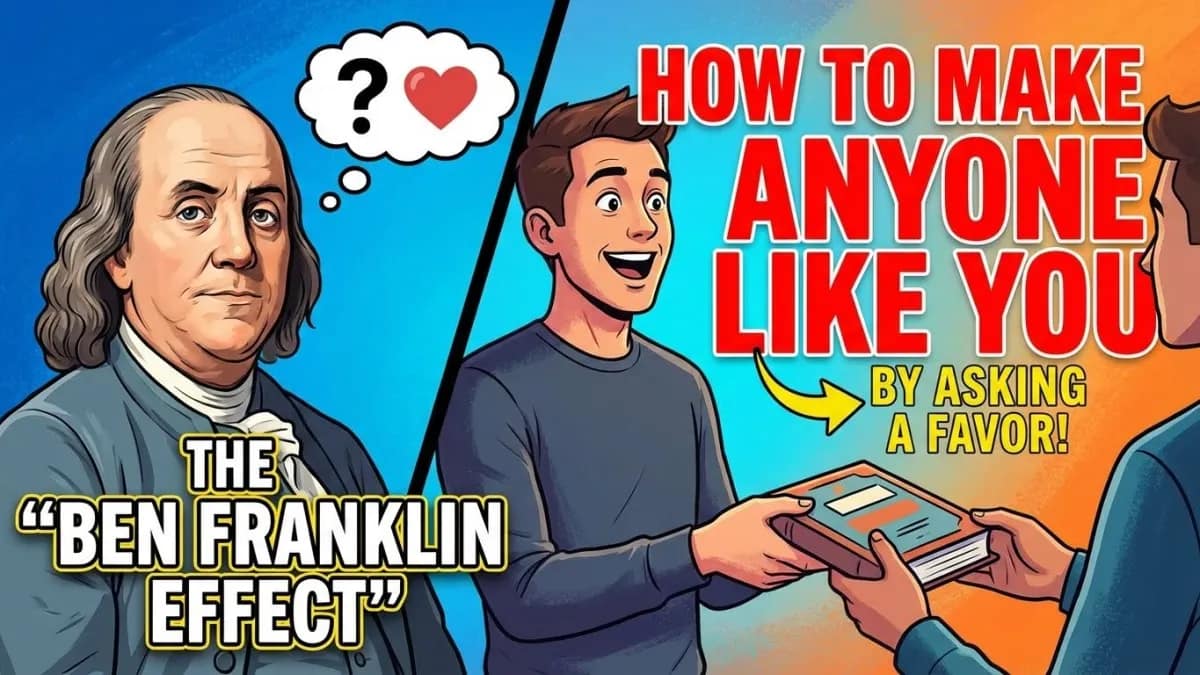
Benjamin Franklin discovered this over 250 years ago. He had a rival in the Pennsylvania legislature who hated him. Instead of trying to win him over with compliments, Franklin did something clever.
He asked his enemy to lend him a rare book.
The rival agreed. They became lifelong friends.https://www.biography.com/political-figure/benjamin-franklin
Why Does This Actually Work?
Here’s the psychology behind it, and I promise to keep it simple.
When someone does you a favor, their brain goes through a quick process. It thinks: “Why did I just help this person?”
The answer their mind comes up with is: “I must like them.”
Cognitive dissonance is the technical term. People need their actions and beliefs to match. If they help you, they convince themselves you’re worth helping.
I’ve seen this play out dozens of times in my own life. The people who help me always warm up to me faster than the people I help.
The Science That Proves It Works
Psychologists Jon Jecker and David Landy tested this in 1969.
They had students win money in a quiz. Then they split the students into three groups:
- Group 1: The researcher asked if students could return the money because he paid from his own pocket
- Group 2: A secretary asked students to return money because the department was running low on funds
- Group 3: Nobody asked for anything back
Later, students rated how much they liked the researcher.
Group 1 liked him the most. The ones who did him a personal favor rated him highest.
The students who kept all their money? They liked him the least.
I reference this study because it changed how I approach networking forever.
How to Use the Ben Franklin Effect (The Right Way)
You can’t just ask anyone for anything and expect magic. There’s a right way to do this.
1. Start With Small Favors
Don’t ask someone you barely know to help you move apartments.
Try these instead:
- “Could you recommend a good coffee shop around here?”
- “Do you have a pen I could borrow?”
- “Can you help me understand this report?”
Small requests feel easy to say yes to. That’s the whole point.
2. Make It Personal
The favor needs to feel like it’s specifically for you, not just anyone.
Bad example: “Can someone send me the meeting notes?”
Good example: “Sarah, you take amazing notes. Could you send me yours from today’s meeting?”
See the difference? The second one makes Sarah feel valued.
3. Show Real Gratitude
This step matters more than people think.
When someone helps you, thank them specifically. Tell them WHY it helped.
Don’t just say “Thanks.” Say “Thanks for that book recommendation. I started it last night and I’m already hooked.”
I make it a rule to follow up and let people know their favor made a difference.
4. Give Them a Chance to Help Again
Once someone helps you once, they’re primed to help again.
A few weeks later, you can ask for another small favor. This builds the relationship even deeper.
But don’t overdo it. Space out your requests.
Pro Tip: The “Expert Ask” Method
Here’s something I learned from years of building relationships:
Instead of asking for a favor that takes their time or resources, ask for their expertise or opinion.
People LOVE sharing what they know. It makes them feel valued and smart.
Try these:
- “You’ve been in this industry longer than me. What would you do in my situation?”
- “I noticed you’re great at presentations. Any tips for my pitch next week?”
- “You always seem so organized. How do you manage everything?”
This works because you’re not taking anything from them. You’re giving them a chance to shine.
I’ve used this technique to turn cold contacts into warm connections dozens of times.
Where You Can Use This in Real Life
Let me give you practical examples I’ve either used or seen work.
At Work
- Ask a coworker to explain a process you’re learning
- Request feedback on a project from someone senior
- Ask your boss for book recommendations
I once asked a difficult manager for advice on handling a client. She spent 20 minutes helping me. Our relationship improved immediately.
In Social Situations
- Ask someone at a party for a restaurant recommendation
- Request help reaching something on a high shelf
- Ask a neighbor if you can borrow a tool
These tiny interactions create connection where none existed before.
With New Acquaintances
- Ask for their opinion on something you’re considering buying
- Request an introduction to someone they know
- Ask them to suggest a podcast or article
The key is making them feel like their input matters to you.
Even in Dating
- Ask them to recommend a place for your next meetup
- Request their opinion on something you’re considering
- Ask them to teach you something they’re good at
People want to feel helpful and valued. You’re giving them that chance.
Common Mistakes That Kill the Effect
I’ve watched people try this and fail. Here’s what NOT to do.
Asking for Too Much Too Soon
If your first interaction is asking someone to review your 50-page business plan, you’ve lost them.
Start small. Build up.
Being Fake About It
People can smell manipulation from a mile away.
Your request needs to be genuine. Don’t ask for advice you’ll ignore just to use this technique.
Forgetting to Show Appreciation
If someone helps you and you don’t acknowledge it, the effect dies.
Always, always follow up with gratitude.
Using It on the Same Person Too Often
I learned this the hard way. If you constantly ask the same person for favors, they’ll feel used.
Spread your requests across different people. And help others too.
Why This Works Better Than Compliments
You might be thinking: “Why not just compliment people instead?”
Here’s what I’ve noticed. Compliments are nice, but they’re passive. The person receives something from you and that’s it.
When someone DOES something for you, they’re invested. They’ve taken action. Their brain needs to justify that action.
That’s why the Ben Franklin Effect is more powerful than flattery.
I’m not saying don’t compliment people. But if you want to build real connection, get them involved.
The Dark Side (And Why You Should Care)
Let me be honest with you about something important.
This technique can be manipulative if used wrong. I’ve seen salespeople and manipulators use it to take advantage of kind people.
Don’t do that.
Use this to build genuine relationships. Help the people who help you. Create reciprocal connections.
The moment you start using psychology tricks to exploit people, you’ve crossed a line.
I only teach this because I believe in creating authentic connections. Not manipulation.
How I Use This in My Own Life
I want to share a personal story so you can see this in action.
A few years ago, I moved to a new city. I didn’t know anyone.
Instead of waiting for friendships to happen, I started asking small favors:
- I asked my neighbor which internet provider she recommended
- I asked a coworker to show me the best lunch spots
- I asked the gym staff for form tips on exercises
Within three months, I had real friendships. People who barely knew me started inviting me to things.
The secret? I made them part of my life by letting them help me. Then I helped them back when I could.
That’s the Ben Franklin Effect in action.
Quick Reference Guide
Let me give you a simple framework you can use today:
Step 1: Identify someone you want to connect with better
Step 2: Think of a small, genuine favor that matches their strengths
Step 3: Ask them directly and personally (use their name)
Step 4: Show real gratitude and tell them how it helped
Step 5: Follow up later and look for ways to help them too
This five-step process has worked for me over and over again.
Q: Does this work on everyone?
No technique works on everyone. But I’ve seen it work on most people most of the time. The key is keeping requests small and genuine. Some people are naturally suspicious, and that’s okay.
Q: How long does it take to see results?
Sometimes the effect is immediate. Other times it takes a few interactions. I’ve noticed people warm up after the second or third small favor. Be patient and don’t force it.
Q: What if someone says no to my favor?
That’s perfectly fine. Not everyone will help, and you shouldn’t take it personally. Just move on. The technique only works with people who actually help you.
Q: Is this manipulation?
It’s only manipulation if you’re being fake or using people. If your requests are genuine and you care about building real relationships, it’s just smart psychology. I always make sure I’m ready to help people back.
Q: Can I use this on my boss?
Absolutely. Asking your boss for advice or recommendations is one of the best ways to improve your relationship. Just make sure your requests are professional and not too frequent.
Q: What’s the difference between this and just being needy?
Big difference. Needy people ask for emotional validation constantly. The Ben Franklin Effect uses specific, small, practical requests. You’re not draining people’s energy. You’re giving them a chance to help in small ways.
Q: How often can I ask the same person for favors?
I follow the “once a month” rule with any single person. Space it out. And make sure you’re helping them too. Relationships need to be balanced.
Q: Does this work in online relationships too?
Yes, but you need to adapt it. Ask for digital favors like recommendations, opinions, or feedback. I’ve built strong online connections by asking people to review my work or suggest resources.
Q: What if I’m naturally independent and hate asking for help?
I get it. I used to be the same way. Start with really small things that don’t feel like a burden. Remember: you’re actually giving people a gift by letting them help you. Most people want to feel useful.
Q: Can this backfire?
Yes, if you ask for too much too soon, or if you never help people back, or if you’re clearly manipulating them. Use it with genuine intentions and it won’t backfire.
Read more:https://mrpsychics.com/how-to-handle-awkward-silences-in-conversation/
Final Thoughts
The Ben Franklin Effect taught me something important about human nature.
We like people we help more than people who help us. It sounds backwards, but it’s true.
I’ve used this technique to build friendships, improve work relationships, and connect with strangers. It works because it’s based on real psychology, not tricks.
Start small today. Ask someone for a tiny favor. Thank them genuinely. Watch what happens.
You’ll be surprised how quickly relationships change when you give people a chance to help you.
And remember: the goal is building real connections, not manipulating people. Use this wisely.

Ahmed is a self-improvement and psychology writer passionate about helping people live smarter, calmer, and more productive lives.
- Ahmed manasiya

- Ahmed manasiya
- Ahmed manasiya
- Ahmed manasiya