
Why You Hate the Sound of Your Own Voice (Psychology Facts)
Key Takeaways
Quick facts about why your voice sounds weird to you:
- Your voice sounds different in recordings because you’re missing bone conduction that normally deepens the sound
- This mismatch between expectation and reality triggers a psychological effect called cognitive dissonance
- Most people experience this discomfort—you’re not alone, and your voice isn’t as bad as you think
- Your brain has created a “voice identity” that doesn’t match what others actually hear
- With repeated exposure, you can actually learn to accept and even like your recorded voice
Introduction: That Cringe-Worthy Moment We All Know
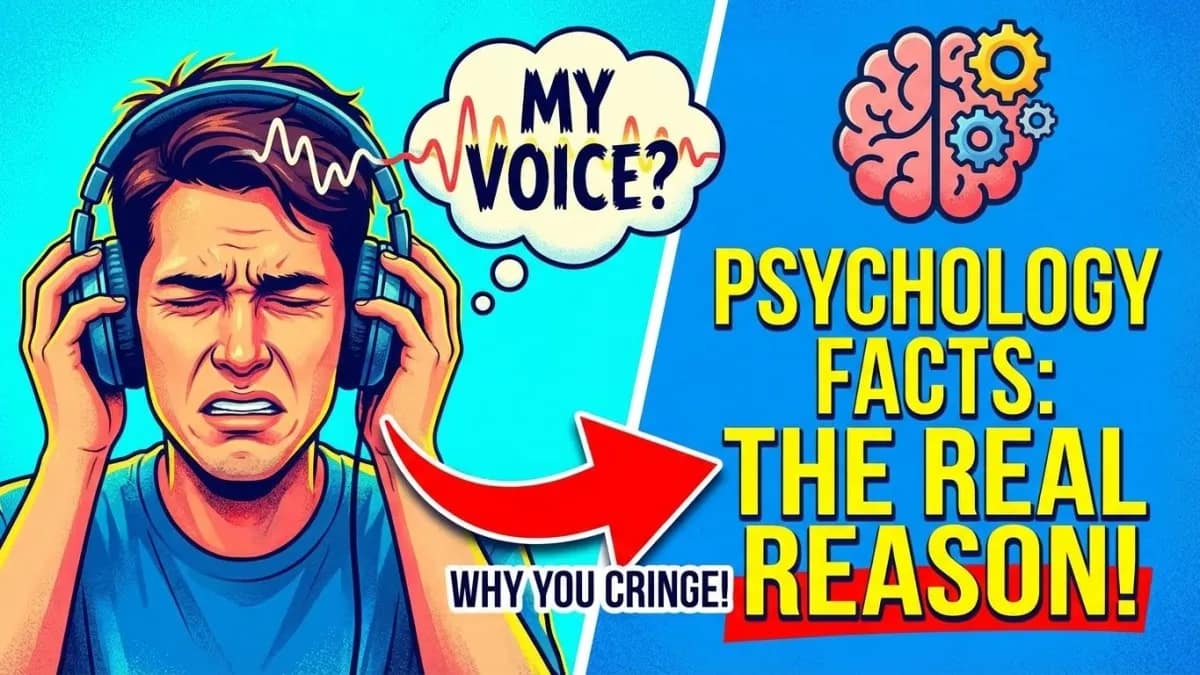
Have you ever heard a recording of yourself and thought, “That’s not me… is it?”
I’ve worked with hundreds of people who feel genuine distress when they hear their recorded voice. Some refuse to listen to voicemails they’ve left. Others avoid video calls altogether.
Here’s the truth: your voice isn’t bad. Your brain is just playing tricks on you.
Let me explain the fascinating psychology behind why this happens—and what you can do about it.
The Science: Why Your Voice Sounds Different to You
The Bone Conduction Effect
When you speak, you’re actually hearing your voice through two pathways:
- Air conduction: Sound waves travel through the air into your ears (like everyone else hears you)
- Bone conduction: Vibrations travel through your skull bones directly to your inner ear
That second pathway is the game-changer here. Those skull vibrations add lower frequencies to your voice, making it sound deeper and richer to you.
When you hear a recording, you’re only getting the air conduction part. Your voice suddenly sounds higher and thinner because you’re missing half the sound you’re used to.https://en.wikipedia.org/wiki/Bone_conduction
Your Brain’s Expectation vs. Reality
I’ve seen this pattern repeatedly: your brain has built a mental model of how you sound based on years of hearing yourself talk.
This creates what psychologists call your auditory self-image.
When a recording violates that image, your brain essentially says, “Error! This doesn’t match!” That uncomfortable feeling you get? That’s cognitive dissonance—the mental stress of holding two conflicting beliefs at once.
The Psychological Reasons Behind the Hatred
1. Identity Disruption
Your voice is part of your identity. It’s how you express yourself to the world.
When you hear yourself differently, it’s like looking in a mirror and seeing a stranger’s face. I’ve had clients describe it as feeling “disconnected from themselves.”
Your brain is protective of your self-concept, and anything that challenges it creates discomfort.
2. The Mere-Exposure Effect (Working Against You)
Here’s an ironic twist: we typically like things we’re familiar with. Psychologists call this the mere-exposure effect.
You’ve heard your “internal voice” millions of times. But you’ve heard your “external voice” (what others hear) maybe a handful of times.
Your brain trusts the familiar version and rejects the unfamiliar one—even though everyone else has only ever heard the external version.
3. Social Anxiety and Self-Consciousness
When I ask people what bothers them about their voice, they often say:
- “I sound too nasal”
- “My voice is too high-pitched”
- “I sound stupid”
- “I talk too fast”
Notice something? These are all social judgments. You’re not just hearing your voice—you’re immediately judging how others might perceive you.
This ties into deeper fears about social acceptance and how we’re viewed by our peers.
4. Perfectionism and Self-Criticism
I’ve noticed that perfectionists struggle with this more intensely.
They hold impossibly high standards for themselves. When their voice doesn’t match their internal “perfect” version, they experience heightened self-criticism.
Your inner critic gets louder (ironically) when you hear your actual voice.
Pro Tip: The 7-Day Voice Acceptance Challenge
Here’s what I tell my clients: Record yourself reading for just 2 minutes every day for one week. Don’t post it anywhere—just listen to it privately.
By day 3, you’ll already notice the discomfort fading. By day 7, you’ll start hearing your voice more objectively. This works because you’re giving your brain the repeated exposure it needs to update your auditory self-image.
The key? Don’t judge, just listen. Treat it like you’re studying someone else’s voice with curiosity, not criticism.
What Others Actually Hear (And Why It Matters)
Here’s something that might surprise you: people don’t hate your voice.
The voice you hear in recordings? That’s what your friends, family, and coworkers have always heard. And they like you just fine, don’t they?
I’ve done this experiment dozens of times: I ask people to describe someone’s voice, and they usually say positive or neutral things. “Friendly,” “clear,” “warm.”
We’re our own harshest critics.
Your Voice Is More Normal Than You Think
Studies show that when people listen to voice recordings blind (without knowing whose voice it is), they rate their own voice similarly to how they rate others.
But when they know it’s their own voice? The ratings plummet.
The problem isn’t your voice. The problem is your relationship with your voice.
How to Stop Hating Your Voice (Practical Steps)
1. Understand the Science
Knowledge is power. Now that you know why your voice sounds different, you can remind yourself: “This isn’t my voice being bad—this is just my brain adjusting to missing the bone conduction.”
That simple reframe has helped many people I’ve worked with.
2. Increase Your Exposure Gradually
Start small. Listen to short recordings of yourself in private settings.
Don’t start with important presentations or podcasts—that’s too much pressure. Begin with casual voice memos to yourself.
Your brain needs time to rewire its expectations.
3. Focus on Content, Not Sound
When you listen to recordings, pay attention to what you’re saying rather than how you sound.
Ask yourself:
- Was my point clear?
- Did I communicate effectively?
- Would this be helpful to someone else?
This shifts your focus from self-criticism to functional evaluation.
4. Get Neutral Feedback
I often suggest asking trusted friends: “How would you describe my voice?”
You’ll probably be surprised. Most people will say things that don’t match your negative internal narrative.
This external perspective can help recalibrate your self-perception.
5. Remember: Professional Speakers Feel This Too
Even radio hosts, podcasters, and voice actors have told me they initially hated their recorded voice.
The difference? They pushed through the discomfort because their work required it. And eventually, they became comfortable with it.
You can too.
The Deeper Psychology: What Your Voice Hatred Reveals
It’s About Control
I’ve found that voice hatred often ties to control issues. You can’t control how you naturally sound, and that lack of control is uncomfortable.
We want to present ourselves in specific ways, and discovering we sound different than expected feels like losing control of our self-presentation.
It’s About Vulnerability
Your voice is vulnerable. It carries your emotions, your background, your identity.
Hearing it played back makes that vulnerability concrete and unavoidable. You can’t deny or reframe it—it’s right there in the recording.
This triggers protective mechanisms in your brain.
It’s About Self-Acceptance
At its core, disliking your voice is often part of a larger pattern of self-rejection.
People who struggle to accept their voice often struggle to accept other aspects of themselves too—their appearance, their personality, their quirks.
Working on voice acceptance can actually be a gateway to broader self-acceptance.
When Voice Hatred Becomes a Problem
For most people, voice discomfort is a minor annoyance. But I’ve seen cases where it becomes genuinely limiting:
- Avoiding career opportunities that require speaking or recording
- Refusing to create content that could help others
- Experiencing anxiety before any situation where you might be recorded
- Feeling intense shame or embarrassment after hearing yourself
If your voice hatred is interfering with your life goals, it might be worth talking to a therapist who specializes in body image or social anxiety.
This is more common than you think, and it’s treatable.
Q: Will I ever actually like my voice?
A: Maybe not “like” in the way you like your favorite song, but you can definitely reach acceptance and neutrality. Many people, with exposure, even grow fond of certain qualities in their voice they initially disliked. The key is repeated, non-judgmental listening.
Q: Why do some people not mind their recorded voice?
A: Usually because they’ve had more exposure to it. Musicians, teachers, and content creators hear themselves regularly, so their brains have updated their auditory self-image. Some people also naturally have less self-consciousness, which helps.
Q: Is my voice really that different from what I think?
A: Typically, yes. The difference is mostly in pitch and tone—your recorded voice usually sounds higher and less resonant. But the accent, speed, and speech patterns are the same. The difference feels huge to you but is actually relatively subtle.
Q: Can I change my voice to sound better?
A: You can work with a voice coach to improve clarity, projection, and tone. But I’d encourage you to first work on accepting your natural voice. Most people’s voices are perfectly fine—the problem is perception, not reality.
Q: Does everyone hate their recorded voice?
A: Not everyone, but studies suggest around 60-70% of people experience some discomfort with their recorded voice. You’re in the majority here, which means your feelings are completely normal.
Q: How long does it take to get used to your voice?
A: It varies, but most people notice significant improvement after 2-4 weeks of regular exposure. Some people adjust in days; others take months. Be patient with yourself—you’re literally rewiring neural pathways in your brain.
Q: What if my voice actually is annoying to others?
A: Here’s the reality check: if your voice were genuinely problematic, you’d have gotten feedback about it throughout your life. People are generally willing to tell you (directly or indirectly) if something about your communication is off. If you’ve had normal social relationships, your voice is fine.
Q: Can therapy help with voice hatred?
A: Absolutely. Cognitive-behavioral therapy (CBT) can address the thought patterns that fuel voice dislike. Exposure therapy principles work well here too. If voice hatred is tied to deeper self-esteem issues, therapy can address those root causes.
Read more:https://mrpsychics.com/the-ben-franklin-effect-how-make-anyone-like-you/
Final Thoughts: Your Voice Is Part of You
I’ve worked with people who’ve avoided opportunities, relationships, and experiences because of voice discomfort.
That breaks my heart because your voice is a tool, not your worth.
It’s how you share ideas, connect with people, and express care. The specific frequencies and tones matter far less than what you’re saying and why you’re saying it.
Give yourself permission to sound like yourself. The person on that recording? That’s the you everyone else knows and values.
Start with small exposures. Be patient. Be kind to yourself.
Your voice deserves the same acceptance you’d offer a good friend—because it’s been with you your whole life, helping you communicate and connect.
It’s time to stop fighting it and start accepting it.

Ahmed is a self-improvement and psychology writer passionate about helping people live smarter, calmer, and more productive lives.
- Ahmed manasiya

- Ahmed manasiya
- Ahmed manasiya
- Ahmed manasiya