
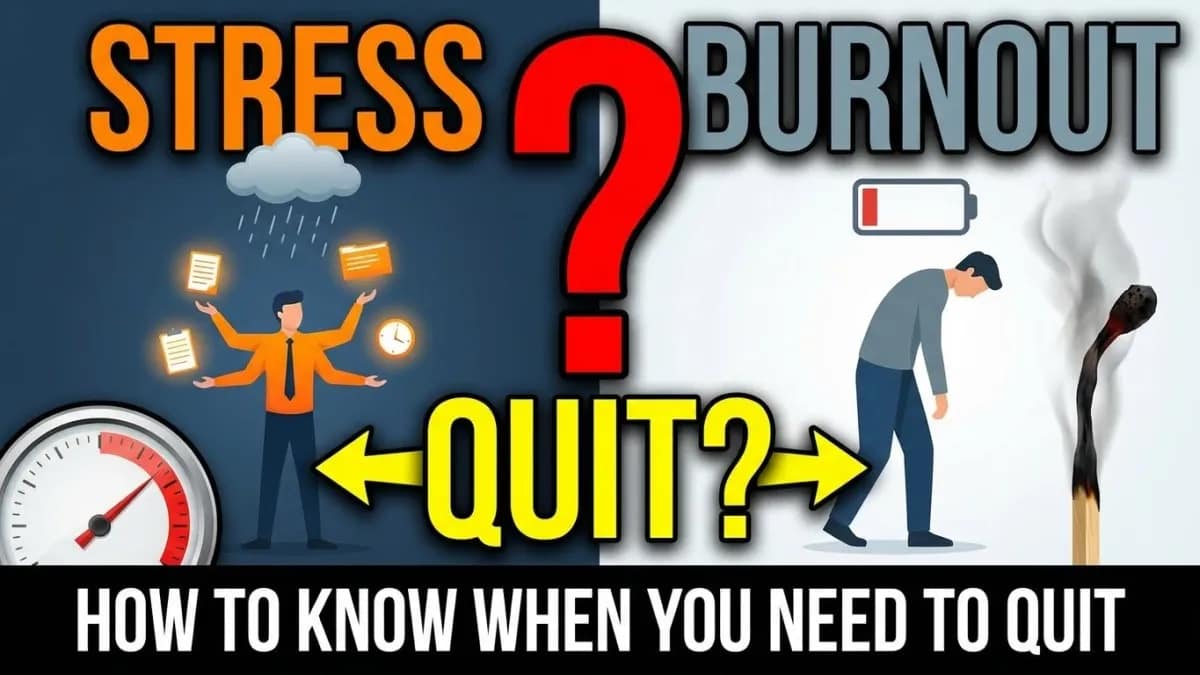
Burnout vs. Stress: How to Know When You Need to Quit
Key Takeaways
What you need to know right now:
- Stress is temporary and goes away when the situation ends. Burnout is deep exhaustion that doesn’t lift even after rest.
- Warning signs include chronic fatigue, cynicism, feeling detached from work, and physical symptoms that won’t go away.
- You might need to quit when burnout affects your health, relationships, and sense of self—not just your job performance.
- There are steps between “push through” and “quit tomorrow” that can help you recover.
- Your mental and physical health are more important than any job title or paycheck.
Introduction: Why This Matters More Than You Think
I’ve talked to hundreds of people who ignored the signs until they ended up in a doctor’s office with panic attacks or unexplained pain.
Here’s what I’ve learned: Most people can’t tell the difference between normal stress and actual burnout. They think if they just work harder or sleep more on weekends, everything will be fine.
But burnout doesn’t work that way. And knowing the difference could literally save your career, your health, and your relationships.
What Is Stress? (And Why It’s Not Always Bad)
Stress is your body’s response to pressure. It’s that feeling when you have a deadline, a difficult conversation coming up, or too much on your plate.
Here’s the thing about stress:
- It comes with specific triggers (a big presentation, a tough week, a family issue)
- It goes away when the situation resolves
- You can still feel moments of joy and accomplishment
- You still care about doing good work
I’ve seen people handle incredible stress for short periods and bounce back completely. That’s normal. That’s life.
Common stress symptoms:
- Feeling overwhelmed or anxious
- Trouble sleeping before big events
- Irritability during busy periods
- Racing thoughts about specific problems
- Physical tension (tight shoulders, headaches)
The key word here is temporary. Stress has an end date, even if you can’t see it yet.https://www.apa.org/topics/stress
What Is Burnout? (The Difference That Changes Everything)
Burnout is complete physical, emotional, and mental exhaustion that doesn’t go away with a good night’s sleep or a vacation.
I’ve watched people come back from two-week vacations and feel exhausted again by day three. That’s burnout.
Here’s what makes burnout different:
- It feels permanent and hopeless
- Rest doesn’t help anymore
- You stop caring about things that used to matter
- You feel emotionally numb or detached
- Your personality changes (you become cynical or withdrawn)
The three core signs of burnout:
- Exhaustion: Bone-deep tiredness that never lifts. You wake up tired even after sleeping 8 hours.
- Cynicism: You stop believing your work matters. You become sarcastic, negative, or detached from colleagues.
- Ineffectiveness: Even simple tasks feel impossible. Your brain feels foggy. You can’t concentrate like you used to.
When all three show up together and stay for months, you’re looking at burnout.
The Physical Signs Your Body Is Screaming at You
Your body knows you’re burned out before your mind admits it.
I’ve seen people ignore these signs for years until something breaks:
Physical symptoms of burnout:
- Chronic fatigue that doesn’t improve with rest
- Frequent headaches or migraines
- Stomach problems (nausea, digestive issues, loss of appetite)
- Getting sick constantly (weak immune system)
- Unexplained aches and pains
- Insomnia or sleeping too much
- Heart palpitations or chest tightness
- Weight loss or gain without trying
Here’s what I tell everyone: If you’re getting physical symptoms that doctors can’t fully explain, stress or burnout might be the real cause.
I’ve talked to people who had every medical test done, only to discover their body was reacting to chronic workplace stress.
The Emotional and Mental Red Flags
Burnout changes who you are. That’s what makes it so dangerous.
You might notice:
- You don’t enjoy things you used to love (hobbies feel like chores)
- You feel emotionally numb or empty
- Small problems make you want to cry or explode
- You fantasize about disappearing or running away
- You feel trapped with no way out
- You don’t recognize yourself anymore
The Sunday scaries become Sunday dread. Not just “ugh, Monday tomorrow” but actual physical anxiety or depression that starts days before the work week.
I’ve seen people describe it as “feeling like a shell of myself” or “going through the motions like a robot.”
If that sounds familiar, pay attention.
Pro Tip Box
💡 PRO TIP: The “Three Bad Days” Rule
Here’s something I’ve learned that helps people make decisions:
Track your bad days for one month. If you have more bad days than good days three months in a row, that’s not stress—that’s burnout telling you something needs to change.
Use your phone calendar and mark each day with a simple red (bad), yellow (meh), or green (good) emoji. This gives you real data instead of gut feelings.
Most people are shocked when they see the pattern. They thought they were “fine most of the time” but the calendar shows 20 red days and 8 green days.
Numbers don’t lie.
How to Tell If It’s Time to Quit (The Hard Questions)
Not every burnout situation requires quitting. But some do.
Ask yourself these questions honestly:
About your health:
- Has your doctor mentioned stress-related problems?
- Are you using alcohol, drugs, or other substances to cope?
- Do you have anxiety or depression that started or got worse with this job?
About your relationships:
- Are you snapping at people you love?
- Have friends or family said you’ve changed?
- Are you isolating yourself from people who care about you?
About your values:
- Does this job require you to act against your values?
- Do you feel ashamed or guilty about what you do?
- Have you lost respect for yourself?
About your future:
- Can you imagine doing this for one more year?
- Is there any scenario where this gets better?
- Are you staying out of fear rather than desire?
If you answered yes to most of these, quitting might not be giving up—it might be saving yourself.
What to Try Before You Quit
I always tell people to try these steps first. You deserve to know you tried everything:
1. Set hard boundaries
- Stop checking email after 6 PM
- Say no to non-essential meetings
- Take your full lunch break
- Use all your vacation days
2. Talk to your manager
- Be honest about your workload
- Ask for specific changes (not just “I’m stressed”)
- Request a temporary reduction in responsibilities
3. See a therapist or counselor
- Sometimes burnout has roots in patterns you can change
- Professional help can give you coping strategies
- They can help you see the situation more clearly
4. Take real time off
- Not a long weekend—at least one full week
- Actually disconnect (delete work apps from your phone)
- See if rest helps at all
5. Look for internal changes
- Different department
- Different role
- Different schedule (if possible)
If none of these help after 3-6 months, you have your answer.
When Quitting Is the Right Choice (And Not “Giving Up”)
Quitting is not failure. Sometimes it’s the smartest, bravest thing you can do.
I’ve seen people transform after leaving toxic jobs. Within months, they’re laughing again, sleeping better, and recognizing themselves in the mirror.
You should seriously consider quitting if:
- Your physical or mental health is in danger
- The environment is toxic and won’t change
- You’ve tried everything and nothing improved
- Staying will cause long-term damage
- You can’t be yourself or speak up without consequences
- The work itself conflicts with who you are as a person
Here’s the truth: You can find another job. You can’t find another you.
I’ve never met someone who regretted leaving a job that was destroying them. But I’ve met plenty who regretted staying too long.
How to Quit Without Burning Bridges
If you decide to quit, do it professionally:
Create a plan:
- Save at least 3-6 months of expenses if possible
- Line up references (people who will vouch for you)
- Update your resume and LinkedIn
- Start looking for your next opportunity
Give proper notice:
- Two weeks is standard in most industries
- Offer to help train your replacement
- Finish your current projects if you can
Don’t trash talk:
- Keep your resignation letter simple and professional
- Don’t burn bridges in your exit interview
- Stay calm even if they react badly
Take care of logistics:
- Know your last day and final paycheck date
- Understand your health insurance situation
- Get copies of your work for your portfolio (if allowed)
You never know when you’ll cross paths with these people again. Leave with dignity.
What Happens After You Quit (The Recovery Nobody Talks About)
Here’s what most people don’t tell you: Recovery from burnout takes time. Real time.
I’ve watched people expect to feel amazing immediately after quitting. Instead, they feel:
- Exhausted for weeks (your body finally feels safe enough to crash)
- Emotional (crying, anger, grief for time lost)
- Worried they made a mistake
- Guilty for “giving up”
This is all normal. You’re healing from a wound. That takes time.
Give yourself:
- At least 2-4 weeks of doing almost nothing
- Permission to sleep a lot
- Space to feel your feelings
- Time to remember who you are outside of work
Most people I’ve worked with say it took 3-6 months to feel like themselves again after severe burnout.
Be patient with yourself.
Q: How long does burnout last?
Without changes, burnout can last indefinitely. With proper rest and removal from the stressful situation, most people start feeling better within 3-6 months. But full recovery can take a year or more.
Q: Can you recover from burnout without quitting?
Yes, if the root causes can be addressed. This means significant changes to your workload, boundaries, or responsibilities. But if the environment itself is toxic or unchangeable, recovery while staying is very difficult.
Q: What’s the difference between burnout and depression?
They overlap and can occur together. Burnout is specifically tied to work or caregiving stress, while depression can happen without any clear cause. Both need professional help, and treating one often helps the other.
Q: Will quitting look bad on my resume?
Not if you handle it professionally. Short stints (under 6 months) might raise questions, but leaving a job after a year or more is completely normal. Focus on what you learned and what you’re looking for next.
Q: What if I can’t afford to quit?
Start planning immediately. Save money, reduce expenses, look for new jobs while still employed, and consider part-time work as a bridge. Your health is worth the financial sacrifice, even if it’s hard.
Q: How do I know if it’s really burnout or if I’m just lazy?
Lazy people don’t care and don’t feel guilty. Burned out people care desperately but can’t function. If you’re asking this question, you’re probably not lazy—you’re exhausted and need help.
Q: Should I tell my next employer why I left?
Keep it professional and brief. “I needed a better work-life balance” or “I’m looking for an environment that aligns better with my values” works fine. Don’t badmouth your old employer.
Q: What if I feel this way about every job?
This might point to deeper patterns worth exploring with a therapist. It could be about boundary-setting, people-pleasing, perfectionism, or past experiences that make any work feel overwhelming.
Read more:https://mrpsychics.com/psychology-of-salary-negotiation-5-phrases-to-raise/
Final Thoughts: You Deserve Better
Here’s what I want you to remember:
Your worth is not determined by your productivity. You’re not a machine. You’re a human being who deserves rest, joy, and purpose.
If you’re reading this and nodding along to most of the burnout signs, please take it seriously. I’ve seen too many people wait until they have a breakdown, a divorce, or a health crisis before they make changes.
You don’t have to hit rock bottom to deserve relief.
Start small: Set one boundary this week. Have one honest conversation. Take one day off without guilt.
And if you need to quit, know that walking away from something that’s destroying you isn’t giving up—it’s choosing yourself.
That’s not weakness. That’s wisdom.

Ahmed is a self-improvement and psychology writer passionate about helping people live smarter, calmer, and more productive lives.
- Ahmed manasiya

- Ahmed manasiya
- Ahmed manasiya
- Ahmed manasiya