
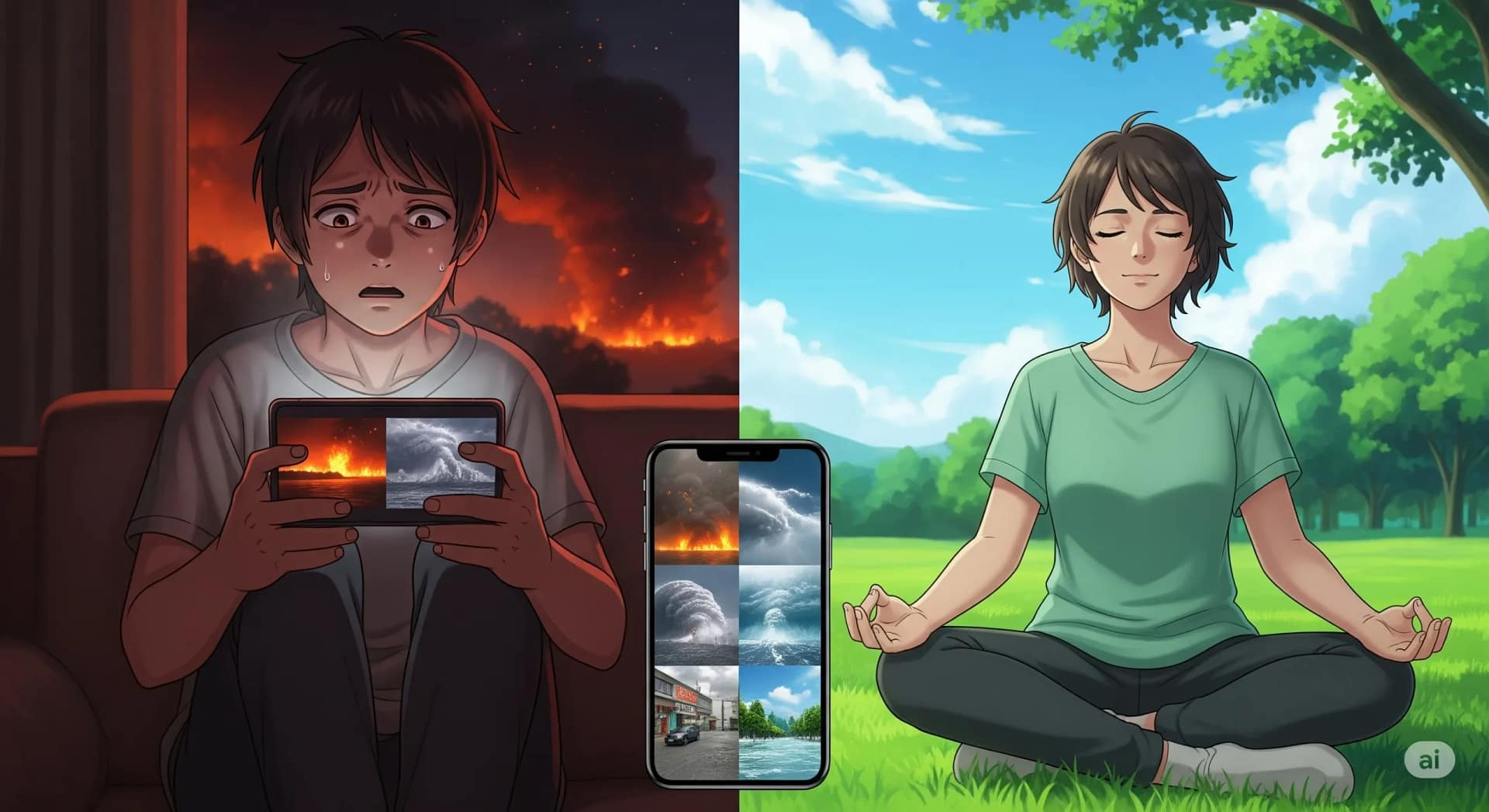
Summer’s record-breaking heat waves aren’t just melting roads—they’re melting minds. As extreme weather events accelerate globally, a new mental health crisis is emerging: climate anxiety.
This isn’t just worry about storms or floods. It’s a pervasive, chronic fear driven by the knowledge that our world is changing faster than we can adapt—and it’s fundamentally rewiring our brains.
What Is Climate Anxiety?
Climate anxiety—also called eco-anxiety—is persistent, overwhelming stress about climate change and its impacts. Unlike normal worry, it:
- Persists even when you’re not focused on the news
- Disrupts daily functioning and sleep
- Triggers physical stress responses
A 2024 survey found 70% of young people say climate anxiety is affecting their mental health, with 45% reporting panic attacks or sleeplessness linked to extreme weather coverage.
How Extreme Weather Hijacks Your Brain
1. The Chronic Stress Loop
Exposure to dramatic storm footage, incessant climate news, and apocalyptic predictions floods your brain with cortisol—your primary stress hormone. Over time, this results in:
- HPA axis overdrive: Your hypothalamus-pituitary-adrenal system becomes hypersensitive, triggering stress reactions to minor triggers
- Reduced hippocampal volume: Chronic stress literally shrinks the brain’s memory and learning center, impairing cognitive flexibility
2. Perceived Threat vs. Actual Safety
Our brains evolved to respond to immediate dangers—predators, fires, floods—by activating fight-or-flight. Media images of wildfires and storms trigger the same circuitry, even when you’re safe at home. This mismatch creates:
- Hypervigilance: Constant scanning for threats
- Intrusive thoughts: You can’t stop replaying disaster scenarios in your mind
3. Dopamine Deficit from Doomscrolling
Endless doomscrolling feels urgent, but it hijacks your reward pathways:
- Anticipation of new “breaking” updates spikes dopamine
- Relief when you close the app releases endorphins
- Over time, you need more extreme content for the same rush, fueling addiction cycles
The Real-Life Impact on Mental Health
Sleep Disruption and Fatigue
Hot nights and climate worry combine to wreck sleep. Studies link climate anxiety with 35% more insomnia symptoms—leading to fatigue, impaired concentration, and mood swings.
Anxiety and Depression
Climate anxiety correlates strongly with generalized anxiety and depressive disorders. One survey found 62% of respondents feeling powerless about climate change also reported depressive symptoms.
Social Withdrawal
Facing an overwhelming global crisis leads many to disengage:
- Avoiding conversations about climate
- Isolating from friends who dismiss their concerns
- Reduced participation in previously enjoyed activities
This isolation deepens mental health struggles.
Who’s Most at Risk?
- Youth and young adults: They inherit a more unstable climate future and feel betrayed by older generations
- Coastal and flood-prone communities: Direct exposure to extreme weather magnifies trauma and anxiety
- People with preexisting mental health conditions: Climate news triggers relapse into anxiety or depression
Breaking the Climate Anxiety Spiral
1. Limit Doomscrolling
Set strict news-checking windows—15 minutes twice a day—then switch to uplifting or solution-focused content.
2. Grounding and Mindfulness
Use breathing exercises, progressive muscle relaxation, or nature immersion to reset your stress response.
3. Take Collective Action
Joining local climate groups or activism turns helplessness into empowerment, boosting brain regions tied to reward and social connection.
4. Cognitive Reframing
Challenge catastrophic thoughts:
- Replace “We’re doomed” with “Solutions are emerging”
- Focus on personal impact: “What can I do today to help?”
5. Seek Professional Support
Therapists trained in environmental psychology can guide you through eco-grief and anxiety using evidence-based techniques.
Climate anxiety isn’t a fad—it’s a legitimate mental health issue driven by real, escalating threats. But you don’t have to be paralyzed by fear. By managing information intake, practicing grounding techniques, and channeling concern into action, you can rewire your brain for resilience instead of doom.
Every small step—from reducing your carbon footprint to supporting climate policies—helps heal both the planet and the collective psyche. The climate crisis demands our attention, but it doesn’t have to cost us our sanity.

Ahmed is a self-improvement and psychology writer passionate about helping people live smarter, calmer, and more productive lives.
- Ahmed manasiya

- Ahmed manasiya
- Ahmed manasiya
- Ahmed manasiya