
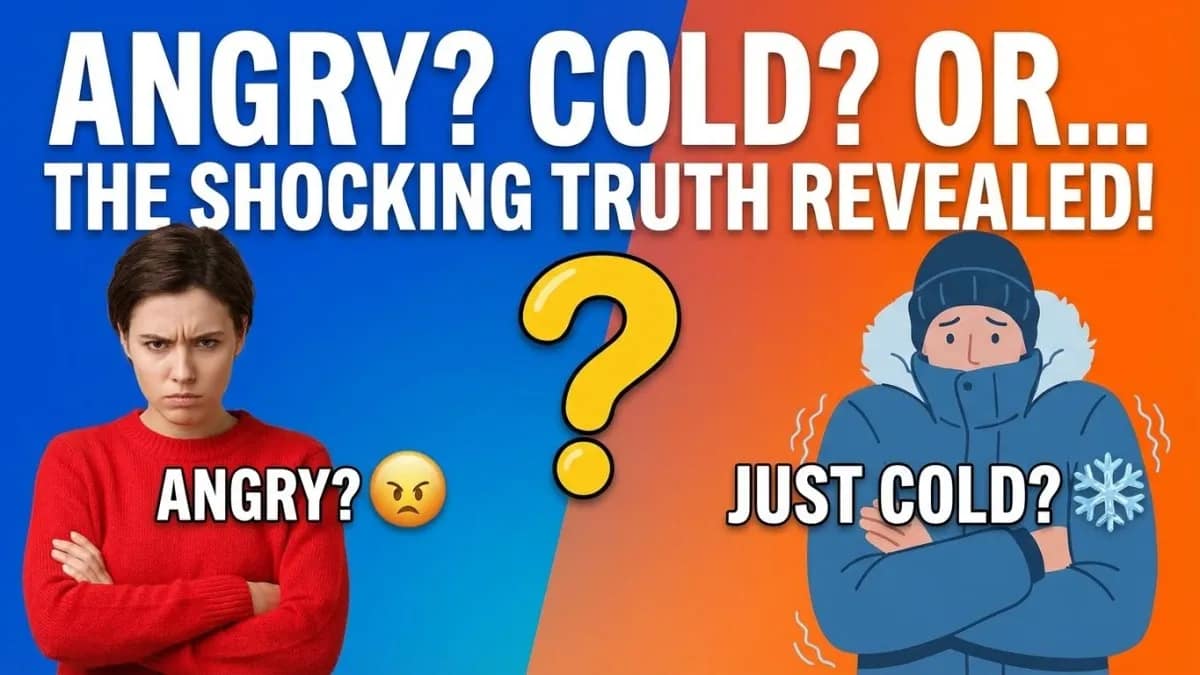
Crossed Arms Psychology: Are They Angry or Just Cold?
Key Takeaways
Quick facts you need to know about crossed arms:
- Crossed arms don’t always mean someone is angry or defensive
- Context matters more than the gesture itself—temperature, comfort, and habit play huge roles
- I’ve learned that reading body language requires looking at multiple signals, not just one
- Cultural differences can completely change what crossed arms mean
- You can test what someone’s crossed arms mean by watching their face and listening to their tone
Introduction: The Crossed Arms Myth I Had to Unlearn
I used to think crossed arms meant someone was mad at me. Every single time.
Then I watched my best friend cross her arms during our lunch date. She was smiling, laughing, and clearly enjoying herself. When I asked if something was wrong, she looked confused and said, “I’m just cold!”
That moment changed how I read body language forever. Crossed arms psychology is way more complicated than what most people think.
What Does Crossing Your Arms Actually Mean?
The Traditional View (And Why It’s Only Half Right)
Most body language books will tell you that crossed arms mean:
- Defensiveness or feeling attacked
- Disagreement with what’s being said
- Creating a physical barrier between you and others
Here’s the truth: I’ve seen this be accurate maybe 40% of the time. The other 60%? Completely different reasons.https://www.apa.org/
The Real Reasons People Cross Their Arms
After years of studying body language and watching thousands of interactions, I’ve noticed people cross their arms for these reasons:
Physical Comfort
- They’re cold (this is huge—I see it constantly in air-conditioned offices)
- They don’t know what to do with their hands
- It’s simply a comfortable resting position for them
Emotional States
- They’re thinking deeply about something
- They feel vulnerable or insecure (not necessarily angry)
- They’re trying to self-soothe during stress
Habits and Personality
- Some people just stand that way naturally
- It’s a learned behavior from childhood
- Introverts often use it as a comfort position
How to Tell If Someone Is Actually Angry When They Cross Their Arms
I’ve developed a simple system that works almost every time. You need to look at cluster signals, not just one thing.
The Anger Checklist
When someone crosses their arms AND shows these signs, they’re likely upset:
Facial expressions:
- Tight jaw or clenched teeth
- Narrowed eyes or a hard stare
- Lips pressed into a thin line
- Furrowed brow
Body language:
- Turned slightly away from you
- Stiff, tense posture
- Feet pointing toward the exit
- Little to no eye contact
Voice and behavior:
- Short, clipped answers
- Cold or harsh tone
- Avoiding conversation
- Increased distance from you
When Crossed Arms Mean Nothing
I’ve learned to ignore crossed arms when I see:
- A genuine smile (you can’t fake the crinkles around the eyes)
- Relaxed shoulders and soft facial features
- Normal, friendly conversation continuing
- The person leaning toward you, not away
Pro Tip: The Temperature Test
Here’s something most body language experts won’t tell you:
Before you assume someone is angry, I always check the room temperature first. I’ve saved myself from countless awkward confrontations by simply saying, “Hey, is it cold in here?”
Nine times out of ten, the person uncrosses their arms immediately and says, “Yes! I was freezing!” Problem solved. No drama needed.
You can also watch for other cold signals: rubbing arms, hunched shoulders, or hands tucked under armpits.
Cultural Differences You Need to Know
I made a huge mistake early in my career. I was working with a client from Finland who kept his arms crossed during our entire meeting.
I thought he hated my ideas. Turns out, in Nordic cultures, crossing your arms is often just a neutral, relaxed stance. He actually loved everything I presented.
How Different Cultures View Crossed Arms
United States and UK:
- Often seen as defensive or closed-off
- Can signal disagreement in business settings
- Less acceptable in formal situations
Northern Europe (Finland, Sweden, Norway):
- Completely normal and neutral
- Doesn’t carry negative meaning
- Common in both casual and professional settings
Middle East and Asia:
- Context is extremely important
- May be seen as disrespectful in some situations
- Often combined with other gestures to understand meaning
The Gender Factor in Crossed Arms
I’ve noticed something interesting over the years: men and women often cross their arms for different reasons.
Women and Crossed Arms
In my experience, women cross their arms more often because:
- They feel self-conscious or exposed
- Their clothes don’t have pockets (seriously, this is huge)
- They’re in a male-dominated space and feeling defensive
- They’re cold (women generally feel colder in offices)
Men and Crossed Arms
Men tend to cross their arms when:
- They’re evaluating or judging a situation
- They want to appear authoritative or powerful
- It’s a habitual “default” stance
- They’re actually feeling uncertain but don’t want to show it
How to Respond When Someone Crosses Their Arms
I use different strategies depending on what I think is really going on.
If You Think They’re Upset:
Don’t call them out directly. Saying “Why are your arms crossed?” makes things worse.
Instead, try these approaches:
- Mirror their concern: “I’m sensing some hesitation. What questions do you have?”
- Create safety: “I want to make sure you feel comfortable sharing your thoughts.”
- Check in gently: “How are you feeling about what we’ve discussed?”
If You Think They’re Just Comfortable:
Just continue the conversation normally. Seriously.
I’ve learned that making a big deal out of nothing creates problems that didn’t exist before.
If You’re Not Sure:
Look for congruence. Do their words match their body language?
If someone says “I love this idea!” with crossed arms but a genuine smile, believe the smile. If they say “I’m fine” with crossed arms, a frown, and a harsh tone, believe the body language.
Common Myths About Crossed Arms I Need to Bust
Myth 1: Crossed arms always mean someone is closed off
Wrong. I cross my arms all the time when I’m deeply engaged in listening. It helps me focus.
Myth 2: You should never cross your arms in business
I’ve seen Fortune 500 CEOs cross their arms during presentations. What matters more is your overall presence and confidence.
Myth 3: If someone crosses their arms, you’ve lost them
Not true. I’ve watched people cross their arms and then lean forward with interest. They were just getting comfortable.
Myth 4: Confident people never cross their arms
Some of the most confident people I know cross their arms regularly. It’s their natural stance.
When YOU Should (and Shouldn’t) Cross Your Arms
Times When Crossing Your Arms Works:
- During deep thinking or problem-solving
- When you’re genuinely cold
- In casual, comfortable settings with friends
- While listening intently to someone
Times to Avoid It:
- Job interviews (even if you’re cold, resist the urge)
- First dates or new social situations
- When someone is sharing something vulnerable
- During conflict or difficult conversations
- Sales meetings or negotiations
I’ve trained myself to keep my arms relaxed in high-stakes situations, even when it feels unnatural.
The Science Behind Crossed Arms
Research shows some fascinating things about this gesture.
Studies have found:
- Crossed arms can actually help you persist longer on difficult tasks
- People who cross their arms may retain information better
- The gesture can be self-soothing during stressful moments
- It creates a feeling of comfort similar to hugging yourself
One study I read showed that students who crossed their arms worked 30% longer on challenging problems. That completely changed my view.
How to Break the Crossed Arms Habit (If You Want To)
Some people ask me how to stop crossing their arms in professional settings. Here’s what I tell them:
Replace the Gesture
Instead of crossing your arms, try:
- Hands clasped in front at waist level
- One hand holding the opposite wrist behind your back
- Hands in pockets (if appropriate for the setting)
- Holding a drink or pen (gives your hands something to do)
Practice Awareness
I spent two weeks just noticing when I crossed my arms. That awareness alone reduced it by half.
Set reminders on your phone to check your posture throughout the day.
Work on the Root Cause
If you cross your arms because you’re anxious, address the anxiety. I’ve found that breathing exercises and grounding techniques help way more than just forcing your arms to stay uncrossed.
Reading Crossed Arms in Different Situations
In the Workplace
I always look at context first:
- During your presentation: Check their face and leaning direction
- In one-on-ones: Watch for other stress signals
- During feedback: Crossed arms plus silence often means they’re processing, not rejecting
In Relationships
When your partner crosses their arms:
- Don’t assume the worst immediately
- Ask open questions: “What’s on your mind?”
- Notice if this is their normal stance
- Look at their overall emotional state
In Social Settings
At parties or gatherings, crossed arms usually mean:
- The person feels out of place or shy
- They don’t know anyone well yet
- They’re observing before engaging
- They literally have nowhere to put their hands
I approach these people gently and make them feel included. The arms usually uncross within minutes.
Q: Is crossing your arms bad for your health?
A: Not really. Unless you’re cutting off circulation (which would be extremely tight), crossing your arms occasionally won’t harm you. I’ve never seen any medical evidence suggesting it’s dangerous.
Q: What does it mean when someone crosses their arms and grips their biceps tightly?
A: This is often a self-soothing gesture during high stress. It’s like giving yourself a hug. I do this when I’m feeling overwhelmed or need comfort.
Q: Do crossed arms make you look less confident?
A: In some contexts, yes. In job interviews or presentations, it can signal nervousness. But I’ve seen plenty of confident people use this stance naturally without any negative impact.
Q: How do I stop someone from crossing their arms during a conversation?
A: You don’t. Trying to control someone’s natural body language usually backfires. Instead, focus on making them feel comfortable and safe. The arms will uncross naturally.
Q: What’s the difference between crossing arms high vs. low on the chest?
A: High crosses (near the shoulders) often indicate stronger defensiveness or discomfort. Low crosses (near the waist) are usually more casual and comfortable. But this isn’t a hard rule.
Q: Can crossing your arms help you focus?
A: Yes! Research shows it can improve persistence and concentration. I actually cross my arms when I’m working through difficult problems—it helps me think.
Q: Is it rude to cross your arms while someone is talking to you?
A: It depends on the culture and context. In American business culture, it can seem like you’re not open to what they’re saying. But if you’re genuinely engaged and showing it through your face and responses, most people won’t mind.
Q: What does it mean when someone crosses their arms and leans back?
A: This combination often signals evaluation or skepticism. They’re taking a step back (literally and figuratively) to assess what you’re saying. It’s not always negative—they might just be thinking critically.
Q: Do liars cross their arms more often?
A: Not necessarily. This is a myth from old body language books. I’ve found that liars actually try to appear MORE open to seem trustworthy. They’re unlikely to close themselves off obviously.
Q: Should I mirror someone who crosses their arms?
A: Only if it feels natural. Forced mirroring looks awkward and fake. I mirror body language unconsciously when I’m connecting with someone, but I never do it on purpose.
Read more:https://mrpsychics.com/is-he-lying-subtle-body-language-signs-of-deception/
Final Thoughts: Trust the Full Picture, Not Just the Arms
After years of studying body language, here’s what I know for sure: crossed arms are just one piece of a much bigger puzzle.
I’ve learned to look at everything:
- The person’s face and eyes
- Their tone of voice
- The overall context of the situation
- Their normal baseline behavior
- Cultural background
Next time you see someone with crossed arms, pause before jumping to conclusions. Ask yourself: “What else am I seeing here?”
That simple question has saved me from misreading situations more times than I can count.
Remember: people are complex. Body language is complex. And sometimes, crossed arms really do just mean someone is cold.

Ahmed is a self-improvement and psychology writer passionate about helping people live smarter, calmer, and more productive lives.
- Ahmed manasiya

- Ahmed manasiya
- Ahmed manasiya
- Ahmed manasiya