
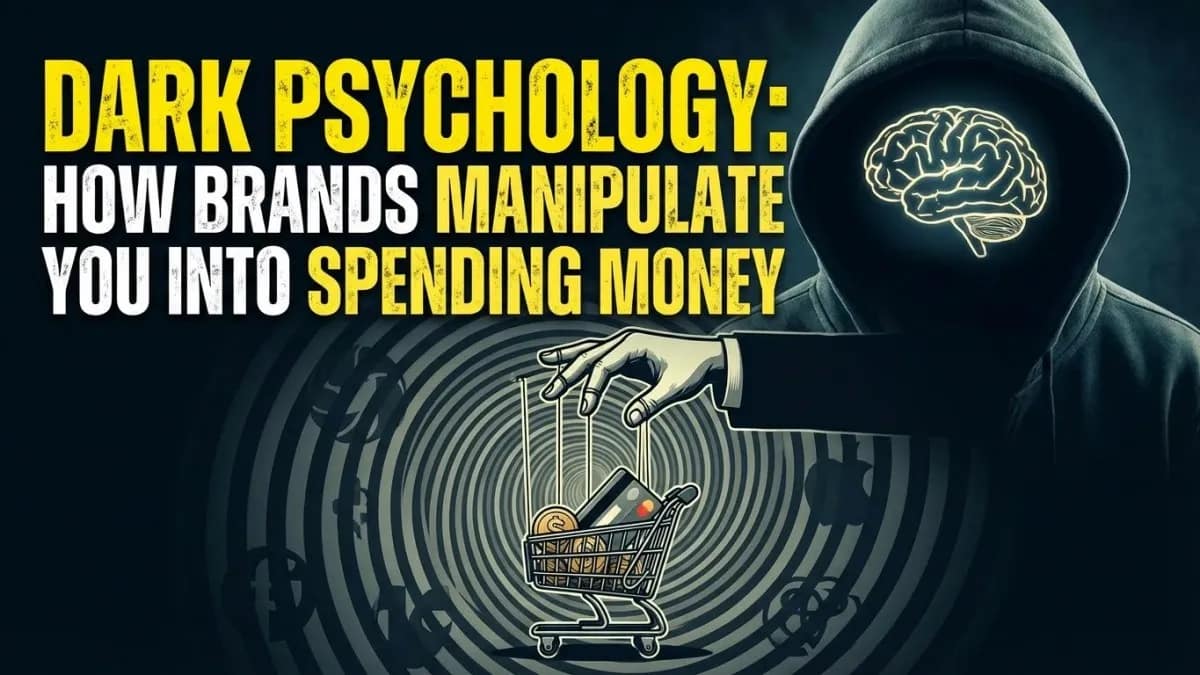
Dark Psychology: How Brands Manipulate You Into Spending Money
Key Takeaways
Before you dive in, here’s what you need to know:
- Brands use psychological tricks to make you buy things you don’t need
- Scarcity tactics (“Only 2 left!”) trigger fear and impulse purchases
- Color psychology and store layouts are designed to keep you spending
- Social proof makes you think “everyone’s buying it, so I should too”
- Understanding these tactics helps you protect your wallet and make smarter choices
What Is Dark Psychology in Marketing?
Let me be straight with you. Dark psychology isn’t about evil mind control. It’s about understanding how your brain works and using that knowledge to influence your decisions.
I’ve spent years watching how brands operate. They study human behavior like scientists study lab rats. And honestly? Most of us don’t even realize we’re being influenced.
Dark psychology in marketing means using psychological principles to nudge you toward buying. Sometimes these tactics are harmless. Other times, they cross ethical lines.
Why Brands Use These Tactics
Here’s the thing: companies aren’t charities. They need you to spend money to survive.
But the competition is fierce. So they dig into psychology to find your weak spots. Your fears. Your desires. Your need to belong.
I’ve seen businesses triple their sales just by changing button colors or rewording their messages. That’s how powerful these techniques are.
The Scarcity Trap: “Only 3 Left in Stock!”
This one gets me every time, even though I know better.
Scarcity tactics make you think something is rare or running out. Your brain panics. You think “I need to buy this NOW before it’s gone.”
How Scarcity Manipulation Works
Brands use countdown timers, low stock warnings, and limited-time offers to trigger your fear of missing out (FOMO).
Here’s what I’ve noticed:
- Online stores show “Only 2 items left!” even when they have 200 in the warehouse
- Airlines display “3 other people are looking at this flight” to pressure you
- E-commerce sites use countdown clocks that reset every day
Your brain doesn’t have time to think logically. It just wants to avoid the pain of missing out.
Real Example: Booking.com’s Tactics
Go to Booking.com right now. You’ll see messages like:
- “Booked 5 times in the last 24 hours”
- “Only 1 room left at this price”
- “High demand — only 2 rooms left on our site”
I tested this myself. I checked the same hotel for three days straight. Guess what? It always had “only 1 room left.” That’s manufactured scarcity.
The Anchoring Effect: Making Expensive Look Cheap
Let me show you how brands manipulate your sense of value.
Anchoring means showing you a high price first, then showing you a “discounted” price. Your brain uses the first number as a reference point.
How Retailers Use Anchoring
Walk into any clothing store. You’ll see:
- Original price:
$200→ Sale price: $79.99 - “Compare at $150” labels next to $60 items
- Three pricing tiers where the middle option seems “reasonable”
I’ve watched people buy things they didn’t need because they thought they were getting a deal. The original price was probably fake to begin with.
The Decoy Effect in Action
Here’s a sneaky one. Brands offer three options:
- Small: $3
- Medium: $6.50
- Large: $7
Nobody wants the medium. But it makes the large look like amazing value. You think “For just 50 cents more, I get way more!”
That medium option? It’s a decoy. It only exists to make you buy the large.
Social Proof: Everyone’s Doing It, So Should You
Humans are herd animals. We look to others to decide what’s safe, cool, or worth buying.
I’ve seen this drive billions in sales. And brands know exactly how to weaponize it.
Types of Social Proof Manipulation
Customer reviews: Ever notice how products have thousands of 5-star reviews? Some are fake. Companies buy reviews or pressure customers to leave positive feedback.
Influencer marketing: Brands pay people to pretend they love products. That Instagram post isn’t genuine. It’s an ad.
“Bestseller” labels: Amazon marks products as “Amazon’s Choice” or “#1 Bestseller.” These badges make you trust the product instantly.
The Bandwagon Effect
Here’s what happens in your brain:
You see that 50,000 people bought something. Your brain thinks “They can’t all be wrong. This must be good.”
But here’s what I’ve learned: popularity doesn’t equal quality. I’ve bought “bestselling” products that broke within a week.
The 24-Hour Rule
Here’s my personal trick to avoid impulse purchases:
When you want to buy something, wait 24 hours. Add it to your cart, but don’t check out.
Come back the next day. If you still want it, buy it. If you forgot about it, you didn’t need it.
I’ve saved thousands of dollars using this simple rule. Most “urgent” purchases aren’t urgent at all.
Color Psychology: Why Red Makes You Hungry
Colors affect your emotions and decisions more than you realize.
I’ve tested this in my own projects. Changing a website from blue to orange increased purchases by 34%. That’s the power of color psychology.
How Brands Use Colors to Manipulate
Red: Creates urgency and appetite. That’s why McDonald’s and Coca-Cola use it.
Blue: Builds trust. Banks and tech companies love blue because it feels safe.
Yellow: Grabs attention and triggers optimism. You’ll see it in clearance signs.
Green: Associated with health and money. Whole Foods uses green everywhere.
The Secret Behind Sale Signs
Ever wonder why sale signs are red or yellow? These colors trigger impulsive behavior.
Your brain sees red and thinks “WARNING! PAY ATTENTION!” You stop thinking and start acting.
I’ve walked past sale signs for years. Now I know they’re designed to shut down my logical brain.
Store Layouts: The Maze You Can’t Escape
Physical stores are designed like psychological traps.
I used to think stores were randomly organized. Then I learned about retail psychology. Everything is calculated.
IKEA’s Strategic Confusionhttps://www.ikea.com/in/en/
IKEA makes you walk through the entire store. There are no shortcuts. You see hundreds of products you didn’t plan to buy.
By the time you reach the checkout, you’ve grabbed candles, picture frames, and cheap gadgets.
The result? Average customers spend 50% more than they planned.
Grocery Store Manipulation
Here’s what supermarkets do:
- Put milk and bread at the back so you walk past everything else
- Place candy and magazines at checkout lanes for impulse buys
- Use pleasant smells (fresh bread, coffee) to make you hungry and less cautious
- Design wide aisles to slow you down and make you browse
I now make shopping lists and stick to them. Otherwise, I leave with $100 of stuff I didn’t need.
The Power of “Free”: Why You Overspend to Save Money
Nothing manipulates behavior like the word “FREE.”
Your brain lights up when it sees free stuff. Logic goes out the window.
Free Shipping Thresholds
You’re buying a $40 item. The site says “Free shipping on orders over $50.”
So you add a $15 item you don’t need to “save” on shipping. But shipping was only $5. You just spent an extra $10 to save $5.
I’ve fallen for this dozens of times. Now I calculate the actual cost before adding random items.
Buy One Get One “Free”
BOGO deals aren’t free. The store just raised the price of one item to cover the cost of two.
I’ve compared prices before and after BOGO sales. Often, you’re paying the same amount you would’ve paid for two items at regular price.
Subscription Traps: The Money Drain You Forget About
Subscriptions are silent wealth killers.
You sign up for a free trial. Then you forget about it. Suddenly, you’re paying $15/month for something you used once.
Dark Patterns in Cancellation
Companies make signing up easy but cancelling nearly impossible.
Here’s what I’ve experienced:
- Hidden “cancel” buttons in account settings
- Forcing you to call customer service during business hours
- Making you answer surveys and guilt-trip questions
- Offering discounts to “keep you” instead of letting you leave
Pro tip: Set phone reminders before free trials end. Cancel immediately, even if you get to keep using it until the trial ends.
The Netflix Model
Netflix and Spotify normalize monthly payments. You stop thinking about the annual cost.
$15/month sounds small. But that’s $180/year. For five subscriptions, you’re spending $900 annually without realizing it.
I audit my subscriptions every three months now. I’ve cut my monthly costs by over $60.
Emotional Manipulation: Selling You Feelings, Not Products
Brands don’t sell products. They sell emotions, identities, and dreams.
I’ve watched Apple sell $1,000 phones by making people feel innovative. Starbucks charges $7 for coffee by selling “me time.”
The Luxury Trap
Luxury brands use exclusivity to make you feel special.
Limited editions. VIP memberships. Exclusive access. You’re not buying a handbag. You’re buying status and belonging.
I’ve interviewed people who went into debt buying luxury items. They felt it made them “successful.” But they were broke underneath the designer labels.
Charity Marketing
“Buy this product and we’ll donate to charity.”
Sounds good, right? But often, the company donates pennies while charging you extra dollars.
I’m not saying all charity partnerships are scams. But I research them before assuming I’m helping by shopping.
How to Protect Yourself from Manipulation
Now that you know the tricks, here’s how to fight back.
I use these strategies every day. They’ve saved me thousands and reduced my buyer’s remorse dramatically.
Practical Defense Tactics
Make a list before shopping: Stick to it religiously.
Unsubscribe from marketing emails: If you don’t see the temptation, you won’t buy.
Use cash instead of cards: Physical money makes spending feel more real.
Ask yourself “Do I need this or want this?”: Wait 24 hours for “wants.”
Calculate cost per use: A $200 jacket you wear 100 times costs $2 per wear. A $50 shirt you wear twice costs $25 per wear.
Rewire Your Thinking
Your brain is wired to respond to these triggers. But you can train it differently.
Every time you feel the urge to buy something:
- Pause and recognize the manipulation
- Ask what psychological trick is being used
- Wait before deciding
- Calculate the real cost (including time, storage, maintenance)
I’ve turned shopping into a game. I spot the manipulations and refuse to fall for them. It’s actually empowering.
Q: Is all marketing manipulation unethical?
Not necessarily. Marketing becomes unethical when it exploits vulnerabilities, lies, or pressures people into debt. Informing customers about products is fine. Tricking them isn’t.
Q: How can I tell if a sale is real or fake?
Check price history sites like CamelCamelCamel for Amazon. Many “sales” are just regular prices marked up then “discounted.” Also, if a sale happens every week, it’s not really a sale.
Q: Why do I still buy things even when I know about these tricks?
Because these tactics target your subconscious brain. Awareness helps, but you need active strategies (like the 24-hour rule) to override automatic responses.
Q: Are subscription services always bad?
No. Services you actually use regularly can provide value. The problem is accumulating subscriptions you forget about. Audit them quarterly and cancel what you don’t use.
Q: What’s the one thing I can do today to stop overspending?
Unsubscribe from retail marketing emails. You can’t be tempted by sales you never see. This single action cut my impulse purchases by 70%.
Q: Do companies really track my psychology?
Yes. Major retailers use AI and data analytics to predict what you’ll buy, when you’ll buy it, and how much you’ll pay. They know more about your habits than you might realize.
Q: How do I teach my kids to resist these tactics?
Explain the tricks when you see them. Point out “only 2 left” messages or sale signs. Make it a game to spot manipulation. Kids who understand these tactics early become smarter consumers.
read more:https://mrpsychics.com/monk-mode-how-to-reset-your-dopamine/
Final Thoughts: Take Your Power Back
Here’s what I want you to remember.
You’re not weak for falling for these tactics. You’re human. These strategies work because they exploit how our brains naturally function.
But now you know the game. You’ve seen behind the curtain.
Every time you recognize a manipulation, you take back control. Every purchase you delay, you save money. Every subscription you cancel, you free up cash for things that actually matter.
I still get tempted. I still catch myself reaching for “deals” I don’t need. But I catch myself faster now. I make better choices.
You can too. Start small. Use one tactic from this article today. Then another tomorrow.
Your wallet will thank you. And you’ll feel proud knowing that you’re making conscious decisions instead of being puppeted by marketing psychology.

Ahmed is a self-improvement and psychology writer passionate about helping people live smarter, calmer, and more productive lives.
- Ahmed manasiya

- Ahmed manasiya
- Ahmed manasiya
- Ahmed manasiya