
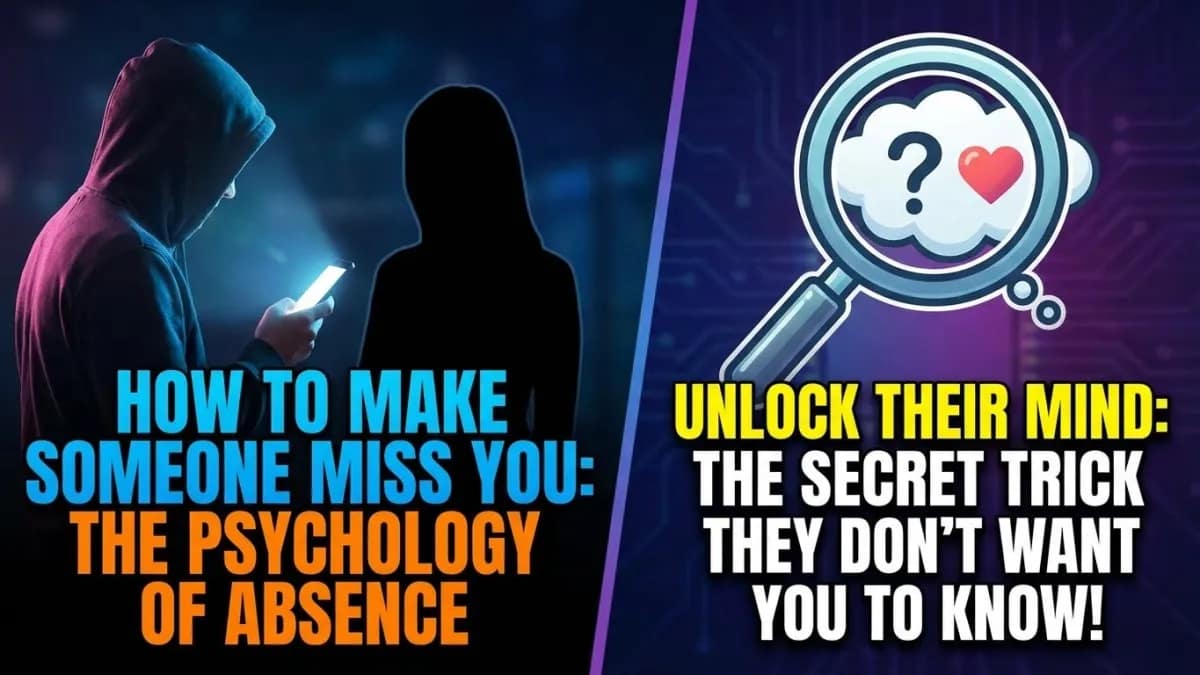
How to Make Someone Miss You: The Psychology of Absence
Key Takeaways
Here’s what you need to know about making someone miss you:
- Absence creates desire – When you’re always available, you become predictable and lose your appeal
- Quality beats quantity – Memorable moments matter more than constant contact
- Independence is attractive – People miss those who have their own life and interests
- Timing matters – Strategic space works better than disappearing completely
- You can’t force it – Real longing comes from genuine connection, not manipulation
Introduction: Why Absence Actually Works
I’ve spent years studying human psychology and relationship dynamics. And here’s what I’ve learned: making someone miss you isn’t about playing games.
It’s about understanding how the human brain processes value and desire.
When something is always available, we stop appreciating it. This is basic psychology called the scarcity principle. Your brain assigns more value to things that aren’t always there.
Think about it. Do you think about air? No, because it’s always there. But take it away for 30 seconds, and it’s all you can think about.
The same principle applies to relationships.
The Science Behind Missing Someone
How Your Brain Creates Longing
Your brain has a reward system controlled by dopamine. When someone you care about isn’t around, your brain actually increases dopamine activity.
I’ve seen this play out countless times. The anticipation of seeing someone creates more excitement than actually being with them 24/7.
Here’s what happens neurologically:
- Your brain remembers the positive moments more vividly when someone is absent
- Anticipation triggers dopamine – the same chemical behind addiction
- The brain fills gaps with idealized memories, making you seem even better
- Learn more:https://www.psychologytoday.com/us/basics/dopamine
The Psychological Concept of Reactance
When people feel their freedom is threatened, they want that thing even more. Psychologists call this reactance theory.
If you’re always available, there’s no reactance. No tension. No mystery.
But when you create space, something interesting happens. The other person’s brain starts to wonder: “What are they doing? Why aren’t they reaching out?”
That wondering? That’s the beginning of missing someone.
Step 1: Stop Being Always Available
The Biggest Mistake I See People Make
You know what kills attraction faster than anything? Being too available.
I’m not saying ignore people or play cruel games. But I am saying that responding to every text within 30 seconds makes you forgettable.
Here’s what to do instead:
- Live your actual life first, respond to messages second
- Don’t cancel your plans just because they’re suddenly free
- Let some calls go to voicemail (you can call back later)
Create Natural Distance
Distance doesn’t mean disappearing for weeks. It means having boundaries around your time.
When I started doing this in my own life, everything changed. People respected my time more. They also missed me more.
Try this:
- If you usually text good morning every day, skip a few days
- Don’t be the first one to reach out every single time
- When plans end, be the one who says goodbye first (not in a rude way)
Step 2: Build a Life They Want to Be Part Of
Become Genuinely Interesting
People miss those who are doing interesting things. Not people sitting around waiting for them.
I’ve watched this pattern repeat itself: The person with hobbies, goals, and passions becomes the person others think about.
What makes someone miss you:
- You’re learning new skills or pursuing goals
- You have stories to share from your actual experiences
- You’re growing as a person, not staying stagnant
- Your social media (if you use it) shows an active, fulfilling life
Develop Independence
Nothing makes someone miss you like strong independence. When you have your own world, they want to be in it.
I’ve seen people transform their relationships by simply focusing on themselves. Not to manipulate anyone, but because they genuinely invested in their own happiness.
Build these areas:
- Career or education – Work toward something meaningful
- Friendships – Maintain strong bonds outside the relationship
- Hobbies – Do things you love, with or without them
- Health – Take care of your body and mind
Step 3: Create Memorable Moments Together
Quality Over Quantity Every Time
Here’s a truth that surprised me when I first learned it: People miss experiences, not constant presence.
You could spend 7 days straight with someone and leave no impression. Or you could spend 3 hours having a meaningful adventure and live in their memory for weeks.
Focus on creating moments that stick:
- Do activities together, not just sitting around
- Have real conversations about meaningful topics
- Try new experiences they’ve never done before
- Be fully present (put your phone away)
The Peak-End Rule
Psychologists discovered something called the peak-end rule. People remember experiences based on the most intense moment and how it ended.
I use this knowledge constantly. If you want someone to miss you, make your time together memorable and end on a high note.
Don’t let interactions fizzle out. End them while things are still good.
Pro Tip: The Power of Positive Absence
Here’s something most people get wrong: They create space but fill it with negativity, drama, or passive-aggressive behavior.
That makes people relieved you’re gone, not miss you.
The secret is positive absence. When you’re apart:
- Don’t complain about the distance
- Don’t guilt-trip them for not reaching out
- Don’t post sad or angry content obviously directed at them
- Do share positive updates occasionally
- Do respond warmly when they do reach out
I’ve seen this approach work countless times. People miss the positive energy you bring, not the drama or neediness.
Step 4: Use Strategic Timing
When to Pull Back
Timing is everything. You can’t just randomly disappear and expect good results.
Pull back when:
- You notice you’re doing all the reaching out
- They seem to take you for granted
- The relationship feels one-sided
- You’re feeling more like an option than a priority
Don’t pull back when:
- They’re going through a crisis or hard time
- You just had a great, connecting moment
- They’ve shown clear effort and interest
- It would seem punishing or petty
The Ratio That Works
I recommend what I call the 70/30 approach. Be present and engaged 70% of the time. Create space 30% of the time.
This isn’t an exact science. But the principle matters: mostly available, occasionally not.
This keeps you valuable without being manipulative or cold.
Step 5: Don’t Fill Every Silence
The Problem with Over-Communication
I’ve counseled hundreds of people who killed their relationships with over-communication. They shared every thought, every meal, every moment.
There was nothing left to miss.
Silence is powerful. It gives the other person’s mind space to wander back to you.
What Not to Share
You don’t need to document your entire day. Leave some mystery:
- You don’t need to explain where you are constantly
- You don’t need to share every mundane detail
- You don’t need to post everything on social media
- You don’t need to justify having your own private time
When you do share, make it count.
Step 6: Let Them Reach Out Sometimes
The Chase Dynamic
Human beings value what they work for. This is called the effort justification effect in psychology.
If you always chase, you never give them the chance to realize they want to chase you.
I’ve seen relationships transform when people simply stopped initiating every conversation. Suddenly, the other person started reaching out.
How to Do This Without Playing Games
This isn’t about ignoring someone for days to “test” them. That’s immature.
It’s about balance:
- If you initiated the last 3 conversations, let them start the next one
- Match their energy level (don’t be way more invested)
- Give them space to miss you and naturally think of you
- Trust that if they care, they’ll reach out
If they never reach out? That tells you something important too.
Step 7: Focus on Self-Improvement
Why This Makes People Miss You
When you’re actively improving yourself, you become more valuable over time. People notice this.
I’ve watched people come back into someone’s life after months, amazed at their growth.
Areas to focus on:
- Physical health – Exercise, eat better, take care of yourself
- Mental health – Therapy, meditation, reading, learning
- Skills – Take classes, learn something new, develop talents
- Social life – Build friendships, expand your circle
- Career – Work toward professional goals
The Attractive Power of Growth
People miss those who are going somewhere. Not people who are stuck waiting for them.
When your life is moving forward, you naturally become more interesting. More confident. More worth missing.
Step 8: Be Mysterious (But Not Shady)
The Right Kind of Mystery
There’s a difference between healthy mystery and being sketchy. Mystery is attractive. Shadiness is a red flag.
Healthy mystery:
- Having parts of your life that are just yours
- Not explaining every detail of your day
- Letting them discover things about you over time
- Maintaining some privacy
Unhealthy shadiness:
- Lying about where you are
- Being secretive about who you’re with
- Hiding things that affect the relationship
- Creating drama for attention
I always tell people: be the book they want to keep reading, not the puzzle that frustrates them.
Step 9: Leave on a High Note
The Last Impression Matters Most
Remember the peak-end rule I mentioned? How you end interactions matters enormously.
I’ve made this mistake myself – staying too long, letting conversations drag out, overstaying my welcome.
How to end well:
- Leave while you’re both still having fun
- Don’t drag out goodbyes unnecessarily
- End phone calls before they get boring
- Be the one to say “I should let you go” sometimes
When you end interactions on a high note, they’re left wanting more. That’s when missing someone begins.
Step 10: Don’t Fake Your Absence
Authenticity Always Wins
Here’s the most important thing I can tell you: Don’t create fake absence just to manipulate someone.
Real absence comes from genuinely having a full life. That’s attractive. Fake absence where you’re actually sitting around thinking about them? That’s torture for you.
Build real absence by:
- Actually pursuing your hobbies and interests
- Genuinely spending time with other people
- Really focusing on your goals and dreams
- Honestly needing time for yourself
The person who misses you most is the person who sees you’re genuinely happy and fulfilled without them.
Common Mistakes That Backfire
What NOT to Do
I’ve seen these mistakes ruin countless attempts at creating healthy space:
- The disappearing act – Ghosting completely without explanation
- The jealousy game – Posting about other people to make them jealous
- The guilt trip – Making them feel bad for not missing you
- The fake life – Pretending to be busy when you’re not
- The cold shoulder – Being mean or distant when you do interact
The Difference Between Space and Punishment
Space is healthy. Punishment is toxic.
Space says: “I have my own life, and you’re welcome in it when we’re both ready.”
Punishment says: “I’m withdrawing to hurt you and teach you a lesson.”
People can feel the difference. Trust me.
When Creating Space Doesn’t Work
Signs This Isn’t the Right Approach
Sometimes, no matter what you do, someone won’t miss you. And that’s important information.
Red flags that this isn’t working:
- They seem relieved when you pull back
- They never initiate contact, even given opportunity
- They quickly move on to someone else
- They’ve explicitly said they’re not interested
In these cases, the problem isn’t your strategy. The problem is they’re not the right person for you.
Knowing When to Let Go
I’ve learned this the hard way: You can’t make someone miss you if they don’t value you in the first place.
Sometimes the best move is accepting that and moving forward. That’s not failure. That’s wisdom.
The Long-Term Strategy
Building Lasting Attraction
Making someone miss you isn’t just a short-term tactic. It’s about building lasting value in any relationship.
Long-term principles:
- Always maintain your independence
- Never lose yourself in any relationship
- Continue growing and evolving as a person
- Keep some mystery and privacy alive
- Balance presence with healthy space
Sustainable Relationships
The healthiest relationships have both connection and autonomy. Too much of either creates problems.
I’ve seen marriages that stay exciting for decades because both people maintained their individuality. And I’ve seen relationships die because people became the same person.
Find the balance.
Q: How long should I wait before reaching out?
There’s no magic number. It depends on your situation. Generally, if you’ve been doing all the reaching out, wait until they contact you. If it’s been mutual, a few days to a week of natural space can work. Trust your gut, not a timer.
Q: Will this work if they’re already losing interest?
Maybe. If they’re losing interest because you’ve been too available or too dependent, creating space can help. But if they’re losing interest because of incompatibility or they’ve met someone else, no strategy will fix that. Sometimes people just aren’t right for each other.
Q: Isn’t this just playing games?
No, if you’re doing it right. Games are about manipulation and deception. This is about having healthy boundaries and a full life. There’s a big difference between “I’m pretending to be busy to trick them” and “I’m actually busy because I have a life.”
Q: What if they move on while I’m creating space?
That’s a risk, yes. But here’s the truth: if someone moves on that quickly, they weren’t that invested anyway. You didn’t lose them by creating space – you discovered they weren’t yours to lose.
Q: Should I tell them I’m taking space?
It depends. In a committed relationship, communication is important. Say something like “I need some time to focus on myself.” In early dating or casual situations, you don’t need to announce it. Just naturally live your life with appropriate space.
Q: How do I know if I’m doing this wrong?
You’re doing it wrong if: you’re constantly checking their social media, you’re miserable the whole time, you’re calculating every move, or you’re being mean when you do interact. The right approach feels empowering, not anxious.
Q: Can this work in a marriage or long-term relationship?
Absolutely. Even in marriage, maintaining some independence and space keeps things healthy. Take separate trips with friends, have your own hobbies, give each other breathing room. It’s actually necessary for long-term relationship health.
Q: What if they never reach out first?
Then you have valuable information. Either they’re not interested, they’re too passive, or the relationship dynamic is unhealthy. All of these are things you need to know. Don’t waste your energy on someone who won’t meet you halfway.
Q: How can I tell if they actually miss me?
They’ll show you through actions: reaching out first, making plans, asking about your life, showing genuine interest when you do connect, making effort to spend time with you, and generally demonstrating that you matter to them.
Q: Is it too late to start doing this?
It’s never too late to develop healthy boundaries and independence. Yes, changing patterns in an existing relationship can feel awkward at first. But it’s worth it. Start gradually – you don’t need to suddenly become a different person overnight.
Read more:https://mrpsychics.com/why-ignore-those-who-like-us-psychology-explained/
Final Thought:
Making someone miss you isn’t about tricks or manipulation. It’s about being someone worth missing.
Focus on building a life so full and meaningful that your presence is a gift, not a given. That’s when people truly appreciate and miss you.

Ahmed is a self-improvement and psychology writer passionate about helping people live smarter, calmer, and more productive lives.
- Ahmed manasiya

- Ahmed manasiya
- Ahmed manasiya
- Ahmed manasiya