

How to Read People Like a Book: 5 Body Language Secrets
Key Takeaways
What you’ll learn in this post:
- Body language reveals more than words – I’ve watched countless people say one thing while their body screams another
- Five specific signals that tell you what someone is really thinking
- Practical techniques you can use today in conversations, meetings, and relationships
- Common mistakes that make you misread people (I made these for years)
- Context matters more than single gestures – one crossed arm doesn’t mean someone hates you
Introduction: Why Most People Miss the Obvious Signs
I used to think I was terrible at reading people.
Then I realized something. I wasn’t paying attention to what mattered. I focused on their words while their body was telling me the complete opposite story.
Here’s the truth: Research shows that 55% of communication is body language, 38% is tone of voice, and only 7% is the actual words.https://www.psychologytoday.com/us/blog/beyond-words/201109/is-nonverbal-communication-numbers-game
You’re already reading body language every day. You just don’t know you’re doing it. When someone crosses their arms, you feel something shift. When a person leans toward you, you sense interest.
I’m going to show you how to turn that gut feeling into a reliable skill.
Secret #1: The Eyes Never Lie (But You’re Reading Them Wrong)
What Most People Get Wrong
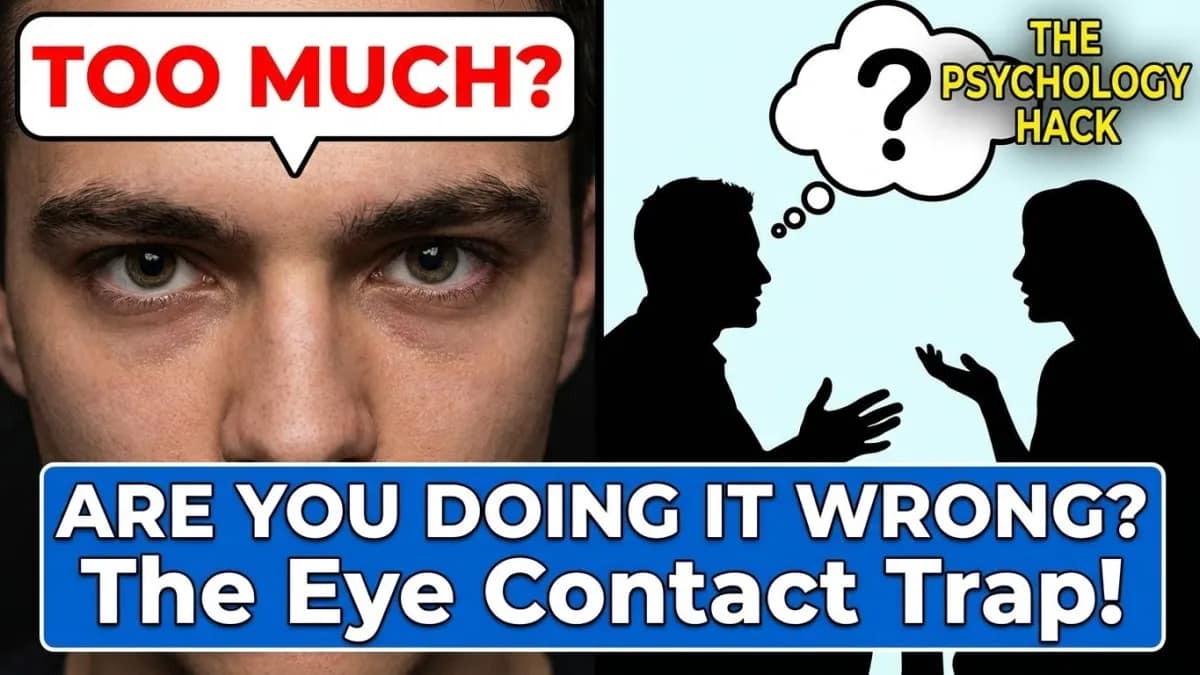
Everyone says “avoid eye contact means lying.” I’ve seen honest people avoid eye contact because they’re shy. I’ve also seen expert liars stare you down without blinking.
The real secret? It’s not about how much eye contact. It’s about the pattern changes.
What to Look For Instead
Baseline behavior is everything. Watch how someone normally looks at you. Then notice when they change.
Here’s what I pay attention to:
- Pupil dilation – When someone is interested or attracted, their pupils get bigger. You can’t fake this.
- Blink rate changes – Stressed people blink more. I’ve seen blink rates double during uncomfortable questions.
- Eye blocking – When people close their eyes longer than a blink or rub them, they’re trying to block out something unpleasant.
- Looking left vs right – This one is controversial, but I notice people often look in different directions when remembering versus creating stories.
Real-World Example
I once interviewed a candidate who maintained perfect eye contact. Too perfect. Every time I asked about her previous job, she didn’t blink for 10+ seconds.
That’s not confidence. That’s control. She was hiding something.
Normal people blink. They look away to think. They’re human.
Secret #2: Feet Point to What the Heart Wants
This one changed everything for me.
The Feet Don’t Lie
I learned this from an FBI agent’s book, and I’ve tested it hundreds of times. A person’s feet point toward what they want or where they want to go.
Even when someone’s face and torso are pointed at you, check their feet.
- Feet pointing toward you = genuine interest in the conversation
- Feet pointing toward the door = they want to leave (even if they’re smiling and nodding)
- One foot pointing away = they’re partially checked out
- Feet under their chair = discomfort or submission
Why This Works
Your brain controls your face. You learn to smile politely and maintain social norms. But your feet? Nobody teaches you to control your feet.
I’ve been at networking events where someone’s face said “I’m interested” but their feet were already walking away. Now I just politely end those conversations early.
Pro tip: In group settings, look at where everyone’s feet point. That’s who has the real power or who everyone wants to talk to.
Secret #3: Arm Barriers Aren’t Always Defensive
The Myth Everyone Believes
“Crossed arms mean someone is closed off.”
I believed this for years. Then I noticed I cross my arms when I’m cold. Or when I’m comfortable. Or when I have nowhere else to put my hands.
The Real Story
Context is king. Here’s what I actually look for:
- When did they cross their arms? – Right after you said something? That’s different than walking in with crossed arms.
- How tight is the cross? – Relaxed cross vs gripping their own arms (self-soothing).
- What else is happening? – Crossed arms + leaning back + minimal eye contact = defensive. Crossed arms + leaning forward + engaged face = just comfortable.
The Self-Soothing Secret
Watch for self-touch:
- Rubbing their neck
- Touching their face repeatedly
- Hugging themselves
- Playing with jewelry or watch
I’ve learned these are pacifying behaviors. The person is stressed and trying to calm themselves down.
When I see someone touch their neck during a conversation, I know I either said something uncomfortable or they’re about to tell me something difficult.
Pro Tip: Watch for Cluster Signals, Not Single Gestures
Here’s my biggest advice: Never read one signal alone.
I made this mistake for years. Someone would touch their nose, and I’d think “Liar!” Then I realized they had allergies.
Look for clusters of 3+ signals happening together:
Example of genuine discomfort:
- Crossed arms (barrier)
- Leaning back (distance)
- Minimal eye contact (avoidance)
- Touching neck (pacifying)
Example of thinking/processing:
- Looking up and away
- Touching chin
- Pausing before speaking
- Leaning back slightly
The more signals you see pointing the same direction, the more confident you can be.
Also important: Establish a baseline. Watch how someone acts when they’re comfortable. Then you’ll notice when they change.
Secret #4: Microexpressions Flash the Truth
The 1/25th of a Second Window
Microexpressions last less than a second. They’re involuntary. You can’t control them.
I started studying these after reading Paul Ekman’s research. Now I catch them everywhere.
The Seven Universal Expressions
These appear the same across all cultures:
- Happiness – Real smiles crinkle the eyes (crow’s feet). Fake smiles don’t.
- Sadness – Inner eyebrows raise and draw together.
- Anger – Eyebrows down, lips pressed, jaw clenched.
- Disgust – Nose wrinkles, upper lip raises.
- Fear – Eyes widen, eyebrows raise, mouth opens.
- Surprise – Similar to fear but all facial muscles activate simultaneously.
- Contempt – One-sided mouth raise (smirk). This is the most dangerous one in relationships.
What I Watch For
When someone says “I’m fine” but I catch a flash of sadness on their face, I know they’re not fine.
When someone congratulates me but I see contempt flicker across their face, I know they’re not happy for me.
The key: These happen fast. You need to pay attention. But once you start seeing them, you can’t unsee them.
Practice Exercise
Watch TV shows or movies with the sound off. Try to identify emotions just from faces. I did this for weeks and got dramatically better at reading people.
Secret #5: Matching and Mirroring Reveals Rapport
The Connection Code
When two people genuinely like each other, they mirror each other’s body language. It happens unconsciously.
I’ve seen this in:
- Couples who lean the same direction
- Friends who cross their legs at the same time
- Business partners who use similar gestures
How to Use This
Two ways to apply this secret:
- Read rapport – Notice if someone mirrors you. If they do, the conversation is going well. If their body language is completely opposite to yours, you’re not connecting.
- Build rapport – Subtly mirror the other person. Match their energy level, posture, and gestures (not immediately – wait a few seconds).
The Warning Signs
When mirroring suddenly stops, something changed.
I was once in a sales meeting where the client mirrored my posture perfectly for 20 minutes. Then I mentioned price, and he immediately shifted his entire body position.
I knew the deal was in trouble before he said a word.
Important: Don’t Be Obvious
Mirroring should be subtle. If you copy every gesture immediately, people notice and it feels creepy.
I match:
- General posture (leaning in vs leaning back)
- Energy level (calm vs animated)
- Speaking pace
I don’t copy:
- Every hand gesture
- Specific movements
- Facial expressions exactly
Putting It All Together: A Real Conversation Breakdown
Let me show you how this works in real life.
The Scenario
I’m having coffee with someone who says they’re excited about a new project. But here’s what I notice:
Eyes: Looking down more than usual, not matching their normal baseline
Feet: Pointing toward the door, not toward me
Arms: Started open, then crossed tightly after I asked “How’s it really going?”
Face: Forced smile, no eye crinkles
Microexpression: Flash of worry when mentioning deadlines
Mirroring: Not matching my forward-leaning posture
My Read
They’re not excited. They’re overwhelmed or scared. Something about this project is stressing them out.
I don’t call them out. Instead, I say “That sounds like a lot to handle. How are you managing it all?”
They immediately relax. Their arms uncross. They lean forward. Now we’re having a real conversation.
That’s the power of reading body language. You can respond to what people really feel, not just what they say.
Common Mistakes That Make You Misread People
I’ve made every one of these errors:
Mistake #1: Reading Body Language in Isolation
The problem: Thinking one gesture tells the whole story.
The fix: Look for clusters of 3+ signals before drawing conclusions.
Mistake #2: Ignoring Baseline Behavior
The problem: Judging someone’s anxiety level without knowing their normal state. Some people are naturally fidgety.
The fix: Spend the first few minutes observing their normal behavior. Then watch for changes.
Mistake #3: Cultural Assumptions
The problem: Assuming all body language is universal. Eye contact norms vary dramatically across cultures.
The fix: Research cultural differences. When in doubt, look for pattern changes rather than absolute behaviors.
Mistake #4: Confirmation Bias
The problem: Seeing what you expect to see. If you think someone is lying, you’ll interpret everything as deceptive.
The fix: Stay curious, not certain. Think “I wonder what’s causing that behavior” instead of “I know what that means.”
Mistake #5: Forgetting Physical Comfort
The problem: Thinking crossed arms mean defensiveness when the room is just cold.
The fix: Consider environment. Is the chair uncomfortable? Is it too hot or cold? Are they wearing uncomfortable shoes?
How to Practice Reading Body Language
Here’s what actually worked for me:
Week 1-2: Observe Without Judging
Just watch people. Notice what they do with their hands, feet, and face. Don’t assign meaning yet.
I did this at coffee shops, in meetings, watching TV. Just observe.
Week 3-4: Establish Baselines
Pick a few people you interact with regularly. Note their normal behavior:
- How much eye contact do they usually make?
- What’s their default posture?
- How animated are they typically?
Week 5-6: Look for Changes
Now notice when people deviate from their baseline. What triggered the change?
Week 7-8: Test Your Reads
Start making predictions. “I think this person is uncomfortable.” Then check later – ask how they felt in that moment.
I was wrong a lot at first. That’s fine. You learn faster from mistakes.
Ongoing: Watch Interactions Between Others
The best practice? Watch two other people interact. You’ll see things you miss when you’re part of the conversation.
I learned more from observing my friends talk to each other than from any book.
Can someone fake body language if they know these secrets?
Yes and no. You can control obvious gestures like posture and hand placement. But you can’t control everything.
Microexpressions are involuntary. Pupil dilation is automatic. Pacifying behaviors under stress are unconscious.
Even trained actors and professional poker players leak signals. I focus on the things people can’t fake.
Is it possible to have “neutral” body language?
Not really. Even trying to stay neutral sends a message (usually discomfort or control).
The goal isn’t to have neutral body language. It’s to be aware of what you’re signaling and adjust when needed.
How accurate is body language reading?
It’s not mind reading. You’re making educated guesses based on probability.
I’m probably 70-80% accurate on reading basic emotions (comfort vs discomfort, interest vs boredom). I’m maybe 50-60% accurate on specific thoughts.
The key is staying humble and checking your assumptions.
What if I overthink every interaction now?
This happened to me. I became hyperaware and it made conversations exhausting.
The solution: Practice until it becomes automatic. You don’t consciously think about driving a car anymore. Body language reading becomes the same way.
Also, remember that most conversations don’t need deep analysis. Save it for important moments.
Can I use this to manipulate people?
You can. But don’t.
I teach this for two reasons:
To understand people better and respond with empathy
To protect yourself from manipulation
Using these skills to deceive or control others always backfires. People sense when you’re being inauthentic.
How do I read body language on video calls?
It’s harder because you only see shoulders-up and the angle is fixed.
Focus on:
Facial expressions and microexpressions
Eye behavior (though note they might be looking at another screen)
Shoulder tension and position
How engaged they seem
I pay extra attention to tone of voice on video since I’m missing lower body cues.
What’s the fastest way to tell if someone is lying?
There’s no single “lying signal.” I’ve met terrible liars who show every tell and skilled liars who show none.
What I look for:
Inconsistencies between words and body language
Pacifying behaviors when discussing specific topics
Breaking established baseline behavior
Excessive control (too much eye contact, too still, overly rehearsed)
But remember: stress, anxiety, and fear of not being believed can create the same signals as lying.
Should I tell people I’m reading their body language?
Usually no. It makes people self-conscious and ruins the natural signals.
Exception: Close relationships where you’re trying to communicate better. “I noticed you seemed uncomfortable when I brought up X. Want to talk about it?”
How do I control my own body language?
Step 1: Notice what you’re doing. Most people have no idea how they come across.
Step 2: Identify your stress tells. Record yourself or ask trusted friends. Do you touch your face? Cross your arms? Look down?
Step 3: Practice the behavior you want. Want to seem confident? Practice open posture, steady eye contact, and calm breathing.
But here’s the thing: The best body language comes from actually feeling confident, not faking it. Work on genuine confidence, and your body language follows.
Does body language work differently with neurodivergent people?
Yes, sometimes. Autistic individuals, for example, might:
Make less or more intense eye contact
Have different baseline behaviors
Interpret or display emotions differently
The principle of watching for baseline behavior and changes becomes even more important. Don’t assume someone’s body language means the same thing as a neurotypical person’s might.
When in doubt, ask directly. Many neurodivergent people appreciate clear, direct communication.
Read more:https://mrpsychics.com/the-power-of-silence-being-quiet-makes-intimidating/
Final Thoughts: It’s About Connection, Not Control
I’ve spent years learning to read body language.
The biggest lesson? Use this skill to connect with people, not to judge them.
When you notice someone is uncomfortable, ask if they’re okay. When you see someone hiding excitement, celebrate with them. When you catch stress signals, offer support.
Body language reading makes you a better friend, partner, colleague, and leader. But only if you use it with empathy.
Start with one secret. Master it. Then add the next.
You’ll be amazed how much people tell you without saying a word.
What body language signal surprised you most? Let me know in the comments below.

Ahmed is a self-improvement and psychology writer passionate about helping people live smarter, calmer, and more productive lives.
- Ahmed manasiya

- Ahmed manasiya
- Ahmed manasiya
- Ahmed manasiya