
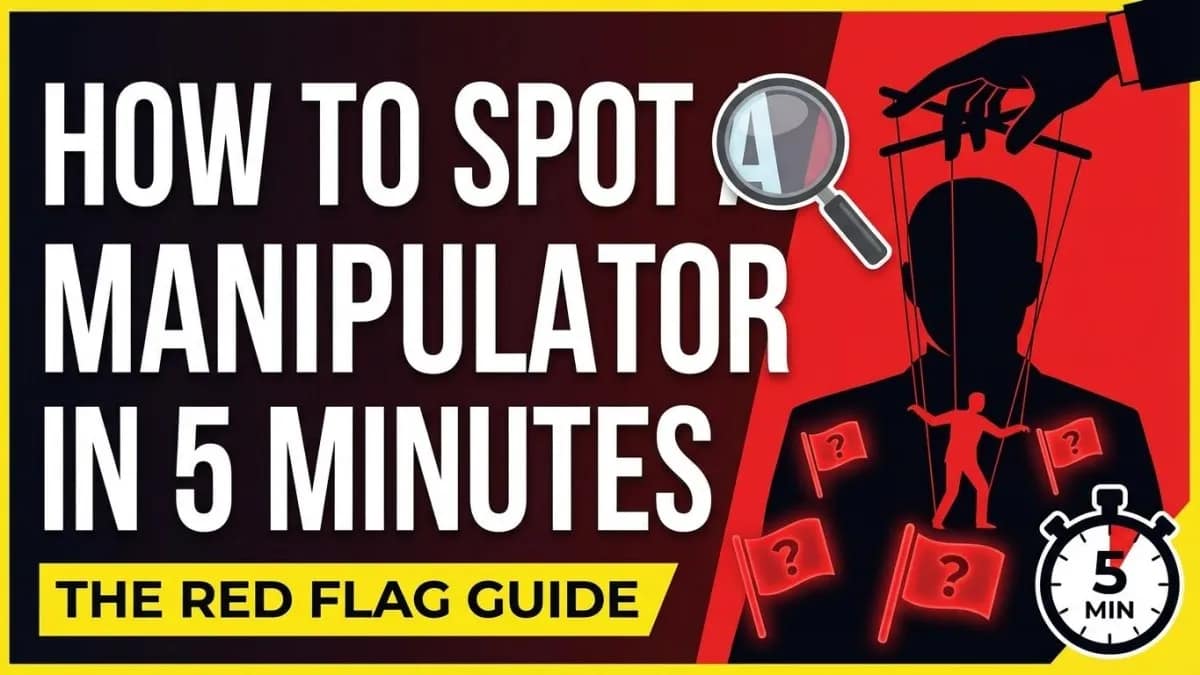
How to Spot a Manipulator in 5 Minutes: The Red Flag Guide
Key Takeaways
Quick Reference Guide:
- Manipulators test boundaries within the first few minutes of meeting you
- Watch for excessive charm followed by subtle put-downs or guilt trips
- Trust your gut feeling when something feels “off” about someone’s behavior
- Manipulators rush intimacy and share too much too soon to create false closeness
- You can protect yourself by recognizing these patterns early and setting firm boundaries
Why You Need to Spot Manipulators Fast
I’ve worked with hundreds of people who told me the same thing: “I wish I had seen the signs sooner.”
Manipulators don’t wait. They start working on you from the first conversation. The faster you recognize their tactics, the better you can protect yourself.
Here’s what most people don’t know: manipulative behavior follows predictable patterns. Once you learn these patterns, you’ll spot them in minutes, not months.
What Makes Someone a Manipulator?
A manipulator is someone who uses psychological tactics to control or influence you for their own benefit.
They don’t care about your needs. They care about getting what they want from you.
The difference between persuasion and manipulation:
- Persuasion respects your right to say no
- Manipulation makes you feel bad for saying no
- Persuasion is transparent about intentions
- Manipulation hides the true agenda
The 5-Minute Red Flag Checklist
I’m going to give you five major red flags that show up fast. You can spot these in a single conversation.
Red Flag #1 – They Test Your Boundaries Immediately
Boundary testing is the manipulator’s favorite opening move.
Watch for these behaviors in your first interaction:
- Asking overly personal questions too soon
- Making small requests that feel slightly uncomfortable
- Ignoring a “no” and asking again in a different way
- Standing too close or touching you without permission
- Making jokes at your expense and saying “I’m just kidding” when you react
Why they do this: They’re checking how easy you are to push around.
I’ve seen this happen countless times. Someone meets a new person who immediately asks to borrow something or wants a “small favor.” Your instinct says it’s weird, but you ignore it.
Trust that instinct.
Red Flag #2 – Love Bombing or Excessive Flattery
Love bombing means showering you with attention, compliments, and affection way too fast.
Here’s what it looks like:
- Calling you their “soulmate” or “best friend” after one meeting
- Texting you constantly from day one
- Making grand statements like “I’ve never met anyone like you”
- Offering help you didn’t ask for
- Acting like you’ve known each other for years
Why this matters: Real relationships build gradually. Manipulators rush intimacy to make you feel obligated to them.
I tell my clients this: If someone seems too good to be true in the first five minutes, they probably are.
Red Flag #3 – The Backhanded Compliment
This one is sneaky. They say something that sounds nice but makes you feel bad.
Examples I hear all the time:
- “You’re so confident for someone your size”
- “I love how you don’t care what you look like”
- “You’re smarter than you seem”
- “Wow, you actually did a good job for once”
The goal: Lower your self-esteem while keeping you off-balance.
When you feel confused about whether you were just insulted or complimented, that’s a massive red flag.
Red Flag #4 – They Play the Victim Immediately
Victim mentality is a powerful manipulation tool.
Watch for these statements early on:
- Everyone has hurt them or betrayed them
- They’ve had the worst luck with relationships/jobs/family
- They need your help right away because they’re in crisis
- They share traumatic stories to create instant emotional connection
- They make you feel guilty if you don’t help them
I’ve watched manipulators use sob stories to hook empathetic people in minutes.
Here’s the truth: People going through real hardship don’t usually dump it all on strangers. Manipulators do this strategically.
Red Flag #5 – Your Gut Screams “Something Is Off”
Your body knows before your brain does.
Physical warning signs you might feel:
- Tightness in your chest or stomach
- Sudden exhaustion around this person
- Feeling anxious or on edge for no clear reason
- The urge to escape the conversation
- Second-guessing yourself constantly
I can’t stress this enough: Your intuition is picking up on micro-behaviors your conscious mind hasn’t processed yet.
Don’t talk yourself out of that feeling. Don’t tell yourself you’re being paranoid or judgmental.
Pro Tip: The “Grey Rock” Response
When you spot a manipulator, become boring immediately.
I teach this technique to everyone. It’s called the Grey Rock Method.
Give short, uninteresting answers. Show no emotion. Don’t share personal information.
Example:
- Manipulator: “Wow, you seem upset. What’s wrong?”
- You: “Nothing. I’m fine.”
- Manipulator: “Come on, you can tell me anything!”
- You: “Thanks, but I’m good.”
Why this works: Manipulators feed on emotional reactions. When you give them nothing to work with, they usually move on to easier targets.
What Manipulators Say vs. What They Mean
Learning to decode manipulative language helps you spot danger fast.
Common Phrases to Watch For
“I’m just being honest” or “I’m just trying to help”
- Translation: I want to insult you without consequences
- They’re about to say something cruel and blame you if you get upset
“You’re too sensitive” or “You can’t take a joke”
- Translation: Your feelings are wrong, and I won’t be held accountable
- This is gaslighting—making you doubt your own reactions
“After everything I’ve done for you…”
- Translation: I kept score, and now you owe me
- Real kindness doesn’t come with strings attached
“If you really cared about me, you would…”
- Translation: I’m using guilt to control your decisions
- Love and care should never be used as leverage
“Nobody else will understand you like I do”
- Translation: I’m trying to isolate you from other people
- This is how emotional abuse starts
The Manipulation Formula
I’ve noticed manipulators follow a pattern:
Step 1: Hook you with charm or vulnerability Step 2: Test your boundaries with small violations
Step 3: Gradually increase their demands Step 4: Make you feel guilty or crazy when you resist Step 5: Alternate between punishment and reward to keep you confused
When you see steps 1 and 2 happening in the first five minutes, that’s your exit sign.
How to Protect Yourself Right Awayhttps://www.mayoclinic.org/
You don’t need to confront them. You don’t need to explain yourself.
You just need to create distance.
Set Immediate Boundaries
Be direct and unemotional:
- “I’m not comfortable with that”
- “That doesn’t work for me”
- “I need to think about it”
- “No, thank you”
Don’t justify. Don’t over-explain. Don’t apologize.
I’ve seen people try to soften their boundaries with manipulators. It never works. Manipulators see soft boundaries as invitations.
Limit Your Availability
Make yourself less accessible:
- Don’t respond to texts immediately
- Keep conversations short
- Decline personal invitations
- Share less information about your life
- Have an exit strategy before social situations
Remember: You don’t owe anyone your time, energy, or personal details.
Trust Your First Impression
Most people ignore red flags because they want to give others the benefit of the doubt.
That’s admirable but dangerous with manipulators.
I tell my clients: If someone shows you who they are in the first five minutes, believe them.
Don’t wait for more evidence. Don’t hope they’ll change. Don’t convince yourself you misunderstood.
The Difference Between Manipulation and Normal Behavior
Not every awkward person is a manipulator. Not every boundary test is malicious.
Here’s how to tell the difference:
Normal Social Mistakes vs. Manipulation
Normal people:
- Apologize when they cross a line
- Respect your “no” without arguing
- Give you space when you ask for it
- Take responsibility for their behavior
- Feel genuinely bad when they hurt you
Manipulators:
- Blame you for being offended
- Keep pushing after you say no
- Make you feel guilty for needing space
- Always have excuses for their behavior
- Turn the situation around so you apologize to them
The key difference: Normal people adjust their behavior. Manipulators double down and make you the problem.
What to Do After You Spot a Manipulator
You caught the red flags early. Good job. Now what?
Option 1 – Limit Contact
For people you can’t completely avoid (coworkers, family members, neighbors):
- Keep interactions brief and superficial
- Use the Grey Rock Method
- Never share personal information
- Don’t engage with emotional hooks
- Document interactions if necessary
Option 2 – Cut Them Off Completely
For people you just met or can easily avoid:
- You don’t owe them an explanation
- Block their number and social media
- Tell mutual friends you’re not interested in contact
- Trust that you made the right choice
I’ve never had a client regret cutting off a manipulator. But I’ve had many regret giving them second, third, and fourth chances.
Process Your Feelings
It’s normal to feel:
- Guilty for “judging” someone
- Confused about what happened
- Angry at yourself for not seeing it sooner
- Worried you’re being mean
Let me be clear: Protecting yourself from manipulation is not mean. It’s necessary.
You’re not responsible for fixing broken people. You’re not obligated to be someone’s emotional support when they’re actively harming you.
Q: What if I’m wrong and they’re not actually a manipulator?
If someone’s behavior triggers multiple red flags and makes you uncomfortable, your safety matters more than their feelings. It’s better to be cautious and wrong than to ignore warning signs and get hurt.
Q: Can manipulators change?
Change requires self-awareness and genuine desire to improve. Most manipulators don’t see their behavior as wrong. They see it as effective. Without professional help and personal commitment, lasting change is rare.
Q: How do I explain to others why I’m avoiding this person?
You don’t need to justify your boundaries. If pressed, keep it simple: “I’m not comfortable around them” or “Our personalities don’t mesh well.” Real friends will respect this without demanding details.
Q: What if the manipulator is a family member?
Family manipulation is especially difficult because you feel obligated to maintain the relationship. Set firm boundaries, limit contact to necessary events, and never be alone with them. You can love someone from a distance while protecting yourself.
Q: Is it manipulation if they don’t realize they’re doing it?
Intent doesn’t erase impact. Whether someone manipulates consciously or unconsciously, the effect on you is the same. You’re still allowed to protect yourself from harmful behavior.
Q: How can I become better at spotting manipulators?
Practice noticing how people make you feel. Keep a mental note of red flags. Trust your gut reactions instead of talking yourself out of them. The more you honor your boundaries, the faster you’ll recognize people who violate them.
Q: What if I’ve been manipulated for a long time already?
It’s not too late to protect yourself. Acknowledge what happened without self-blame. Start setting boundaries now. Consider talking to a therapist who specializes in manipulation and emotional abuse recovery.
Q: Do manipulators target specific types of people?
Yes. Manipulators often target empathetic, kind, and accommodating people. They look for individuals who avoid conflict, want to help others, and give second chances easily. If this describes you, be extra vigilant about red flags.
Read more:https://mrpsychics.com/7-dark-psychology-tricks-to-get-what-you-want/
Final Thoughts
Five minutes can save you years of pain.
The manipulators I’ve studied count on people ignoring their instincts. They count on you being “nice” even when you feel uncomfortable.
Don’t give them that advantage.
Watch for boundary testing, excessive charm, backhanded compliments, instant victim stories, and that uncomfortable gut feeling.
When you see red flags, act immediately. Set boundaries. Create distance. Trust yourself.
You’re not being paranoid. You’re being smart.
Your peace of mind is worth more than anyone’s approval.

Ahmed is a self-improvement and psychology writer passionate about helping people live smarter, calmer, and more productive lives.
- Ahmed manasiya

- Ahmed manasiya
- Ahmed manasiya
- Ahmed manasiya