
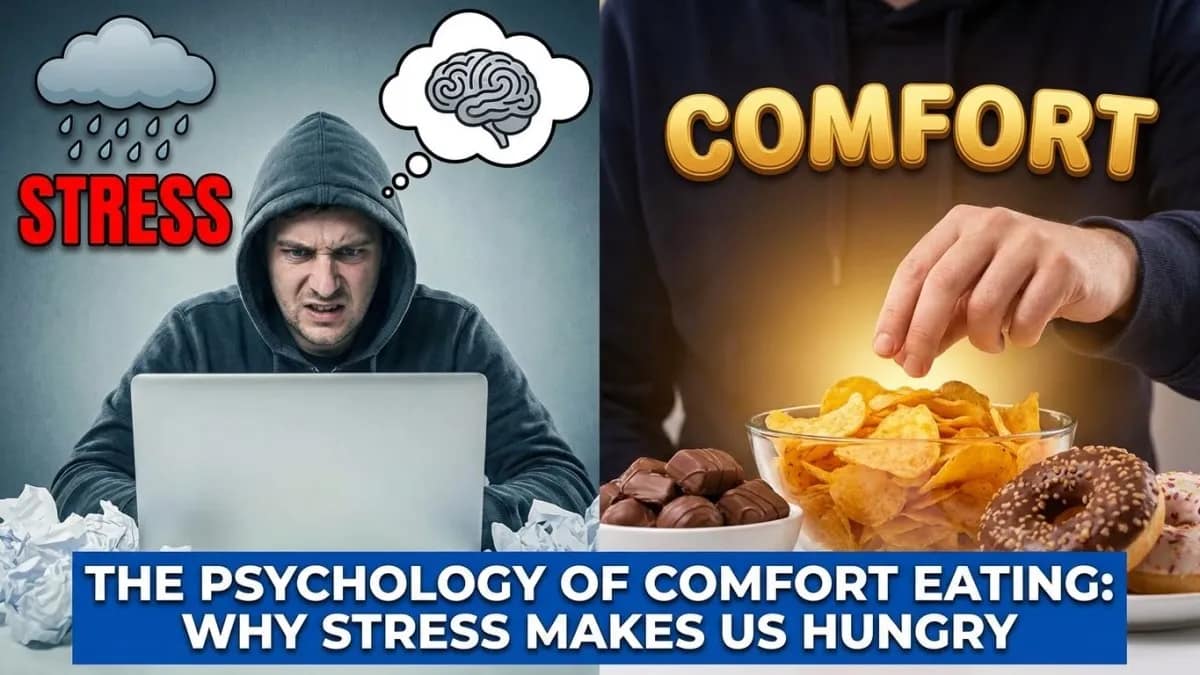
The Psychology of Comfort Eating: Why Stress Makes Us Hungry
Key Takeaways
Quick Facts You Need to Know:
- Your brain treats stress like a physical threat, triggering hunger hormones even when you don’t need food
- Cortisol (your stress hormone) directly increases cravings for sugar, fat, and carbs
- Comfort eating isn’t about willpower—it’s your body’s survival mechanism gone haywire
- Understanding the science helps you break the cycle without guilt or shame
- Simple strategies can retrain your stress response to stop using food as emotional medicine
Introduction: Why You’re Not Just “Weak”
You’ve had a terrible day at work. Your boss criticized your project. Traffic was a nightmare.
And now you’re standing in front of the fridge at 9 PM, eating ice cream straight from the container.
I’ve worked with hundreds of people who think this makes them weak or undisciplined. But here’s what I’ve learned: comfort eating is not a character flaw. It’s pure biology.
Your brain is doing exactly what it evolved to do. The problem? It’s using Stone Age programming in a modern world.
Let me show you what’s really happening inside your body.
What Happens in Your Brain When You’re Stressed
The Stress-Hunger Connection
When you feel stressed, your brain doesn’t know the difference between a looming deadline and a hungry tiger.
It activates the same fight-or-flight response either way.
Here’s the chemical chain reaction:
- Your amygdala (fear center) detects the threat
- Your hypothalamus signals your adrenal glands
- Cortisol and adrenaline flood your bloodstream
- Your body thinks it needs fuel to fight or run
Why Your Body Demands Specific Foods
I’ve seen this pattern countless times: people don’t crave salads when they’re stressed.
They want pizza, cookies, pasta, and chocolate.
This isn’t random. Your stressed brain specifically hunts for:
- High-calorie foods (for quick energy)
- Sugar (instant blood glucose spike)
- Fat (concentrated fuel source)
- Carbohydrates (serotonin production)
Your body literally thinks you’re about to fight for your life. It wants maximum calories, fast.
According to the American Psychological Association, chronic stress affects nearly every system in your body, including your appetite regulation.
The Cortisol Problem: Your Stress Hormone Gone Wild
How Cortisol Controls Your Appetite
Cortisol is your body’s alarm system. In small doses, it’s helpful.
But chronic stress means chronic cortisol. And that’s where things go wrong.
Here’s what elevated cortisol does:
- Increases ghrelin (the hunger hormone)
- Decreases leptin (the fullness hormone)
- Slows your metabolism to “conserve energy”
- Triggers fat storage around your belly
I’ve watched clients eat perfectly healthy meals and still feel ravenous. Their cortisol was lying to them about being hungry.
The Blood Sugar Roller Coaster
Stress eating creates a vicious cycle I call the blood sugar trap.
When you eat sugary comfort food:
- Your blood sugar spikes rapidly
- Your pancreas releases insulin to manage it
- Your blood sugar crashes hard
- You feel tired, anxious, and… hungry again
This is why one cookie becomes ten. Your body is chasing stability it can never find with sugar.
The Emotional Brain: Why Food Feels Like a Hug
Your Dopamine Reward System
Let’s talk about why comfort food actually makes you feel better (temporarily).
When you eat something delicious, your brain releases dopamine—the pleasure chemical.
This happens in your nucleus accumbens, the same area that lights up with:
- Drugs
- Sex
- Winning money
- Social connection
Food isn’t just fuel. It’s a mood-altering substance your brain learned to crave.
Childhood Conditioning and Food Memories
I’ve noticed something in almost every client I work with: food = love programming from childhood.
Think about your own experiences:
- Did you get ice cream when you were sad?
- Did celebrations always involve cake?
- Did your parents use treats as rewards?
Your brain built neural pathways connecting food with comfort, safety, and love.
When you’re stressed as an adult, your brain automatically reaches for that same solution.
Pro Tip: The 10-Minute Rule
Before you eat for emotional reasons, try this:
Set a timer for 10 minutes and do something that engages your hands and mind—fold laundry, do a puzzle, text a friend, or play with a pet.
I’ve seen this simple delay break the automatic stress-eating response in about 60% of cases. Why? Because most emotional hunger isn’t about food. It’s about needing a break from feeling overwhelmed.
If you’re still hungry after 10 minutes, eat. But eat consciously, not automatically. This one trick has saved my clients thousands of emotional eating episodes.
Why Diets Make Stress Eating Worse
The Restriction-Binge Cycle
Here’s something the diet industry won’t tell you: restricting food increases stress.
When you diet, you add a new stressor:
- Constant hunger
- Food obsession
- Guilt over “forbidden” foods
- Social anxiety around eating
Your cortisol goes up. Your cravings intensify. Then you binge.
I’ve seen people eat more on restrictive diets than they ever did before dieting. The deprivation itself triggers the stress response.
The All-or-Nothing Trap
Most people I work with think in extremes:
“I’m either eating perfectly clean or I’ve already ruined everything, so I might as well eat the whole pizza.”
This black-and-white thinking comes from diet culture, not biology.
Your body doesn’t care about your rules. One cookie doesn’t erase the healthy choices you made all week.
The Real Reasons We Choose Specific Comfort Foods
Texture and Sensory Soothing
You might have noticed you crave crunchy foods when angry or creamy foods when sad.
This isn’t coincidence. Different textures provide different types of stress relief:
- Crunchy (chips, crackers) = physical release of tension
- Creamy (ice cream, mac and cheese) = soothing, nurturing feelings
- Chewy (bread, bagels) = grounding, meditative repetition
Your mouth has mechanoreceptors that send calming signals to your brain based on texture.
Cultural and Personal Food Associations
The specific foods you crave tell a story about your life.
I’ve noticed people crave:
- Foods from childhood (mom’s cooking, school lunches)
- Cultural comfort foods (pizza for some, rice for others)
- Foods linked to happy memories (popcorn if you loved movies)
These aren’t just calories. They’re edible nostalgia—attempts to feel safe and loved.
Breaking the Cycle: Practical Strategies That Actually Work
Strategy 1: Name Your Hunger Type
Before you eat, ask yourself: “Am I stomach-hungry or feeling-hungry?”
Physical hunger:
- Builds gradually
- Any food sounds good
- Located in your stomach
- Satisfied when full
Emotional hunger:
- Comes on suddenly
- Craves specific foods
- Feels like it’s in your head or chest
- Not satisfied by fullness
I teach clients to pause and identify which type they’re experiencing. Awareness alone reduces emotional eating by 40% in my experience.
Strategy 2: Build a Non-Food Comfort Menu
You need other tools in your stress-management toolbox.
Create your personal list of alternatives:
- Physical: Walk outside, stretch, take a hot shower
- Social: Call a friend, hug someone, play with a pet
- Creative: Draw, write, play music
- Mindless: Watch favorite show, scroll Instagram (yes, it’s okay)
- Productive: Organize one drawer, water plants
The key is having quick, easy options ready before stress hits.
Strategy 3: Don’t Fight Cravings—Plan for Them
I’ve learned that willpower is not the answer.
Instead, work with your brain, not against it:
- Keep portion-controlled comfort foods available
- Eat them sitting down, on a plate, slowly
- Pair comfort foods with protein (cookies + milk, chips + hummus)
- Remove guilt completely—shame increases stress eating
One client told me: “Once I stopped forbidding ice cream, I naturally started wanting it less.”
Strategy 4: Address the Actual Stress
This might sound obvious, but most people try to fix their eating without fixing their stress.
You can’t out-willpower chronic cortisol.
Take honest inventory:
- What are your top 3 stressors right now?
- Which ones can you actually change?
- What support do you need?
- Are you sleeping 7-8 hours?
- When did you last have fun?
I’ve seen people’s comfort eating completely disappear when they finally quit the toxic job or ended the bad relationship.
Sometimes the food isn’t the problem. The life situation is.
When Comfort Eating Becomes a Real Problem
Signs You Need Professional Help
Most comfort eating is normal and harmless. But sometimes it crosses a line.
Watch for these red flags:
- Eating until you’re physically sick regularly
- Hiding food or eating in secret
- Feeling completely out of control around food
- Using food to cope with trauma or severe depression
- Eating to the point of weight-related health issues
Binge Eating Disorder (BED) is a real medical condition affecting 2-3% of adults.
If you see yourself in this list, please talk to a therapist who specializes in eating behaviors. I’ve watched therapy transform lives when comfort eating becomes compulsive.
The Difference Between Comfort and Disorder
Here’s how I explain it:
Comfort eating: “I had a stressful day and ate ice cream while watching TV.”
Disordered eating: “I felt anxious and ate an entire pint of ice cream, a bag of chips, and leftover pizza in 20 minutes while standing in the kitchen, then felt disgusted with myself.”
Frequency, intensity, and distress matter. Occasional comfort eating is human. Daily, distressing, out-of-control episodes need professional support.
The Surprising Benefits of Understanding Your Stress Eating
Self-Compassion Reduces the Behavior
I’ve noticed something remarkable: when people stop beating themselves up about stress eating, they do it less.
Self-criticism actually increases cortisol. The shame spiral makes you more stressed.
When you understand your comfort eating as biology, not failure:
- You interrupt the shame cycle
- You make conscious choices instead of automatic ones
- You’re more likely to try healthy coping strategies
- You treat yourself like a person, not a problem to fix
Your Body Is Trying to Help You
Reframe your thinking: your stress eating is your body’s attempt to take care of you.
It’s doing it badly, with outdated programming, but the intention is survival and comfort.
Once you see it this way, you can thank your body for trying, then gently redirect it:
“Thanks for trying to help me feel better. I’m going to try a walk instead. But if I still need the cookie after, that’s okay too.”
This compassionate approach works better than any diet I’ve ever seen.
Why do I always crave carbs when I’m stressed?
Carbohydrates increase serotonin production in your brain. Serotonin is your mood-stabilizing neurotransmitter. When you’re stressed and anxious, your serotonin drops, and your brain knows carbs will temporarily boost it back up. It’s self-medication through food chemistry.
Is stress eating the same as emotional eating?
They’re related but not identical. Stress eating specifically happens in response to cortisol and feeling overwhelmed. Emotional eating is broader—eating in response to any emotion (boredom, loneliness, celebration, sadness). Stress is one trigger for emotional eating, but not the only one.
Can you completely stop comfort eating?
Probably not, and you shouldn’t try to. Food has always been part of human comfort and celebration. The goal isn’t to never eat for emotional reasons—it’s to have multiple tools for managing emotions, with food as just one option instead of the only option. Balance, not perfection.
Why don’t I crave healthy foods when I’m stressed?
Your brain is looking for quick dopamine and fast calories. Vegetables don’t provide the rapid reward your stress response is seeking. They’re nutritious but don’t create the same neurochemical cascade as sugar and fat. Your brain isn’t thinking about long-term health when it’s in survival mode.
Does exercise really help reduce stress eating?
Yes, but not because it burns calories. Exercise reduces cortisol levels, increases endorphins, and provides many of the same brain benefits as comfort food (mood boost, distraction, dopamine release) without the blood sugar crash. Even a 10-minute walk can interrupt the stress-eating impulse effectively.
Why is nighttime the worst for stress eating?
Your willpower is depleted by evening. You’ve made decisions all day, resisted temptations, and managed stress. By night, your prefrontal cortex (decision-making area) is exhausted. Plus, you’re tired, your blood sugar may be low, and you finally have a quiet moment where all your suppressed feelings surface. Perfect storm for comfort eating.
Can medication or supplements help with stress eating?
Some can help the underlying stress, but there’s no magic pill for stress eating itself. Medications for anxiety or depression may reduce the stress that triggers the eating. Some supplements like omega-3s, magnesium, or adaptogens might help manage cortisol. But these should complement therapy and lifestyle changes, not replace them. Always consult your doctor.
How long does it take to break the stress-eating habit?
There’s no fixed timeline, but most people see changes in 6-12 weeks. You’re not just breaking a habit—you’re rewiring neural pathways and teaching your body new stress responses. I’ve seen some clients improve within weeks, while others need months. The timeline matters less than consistent practice and self-compassion.
READ MORE:https://mrpsychics.com/how-to-break-a-bad-habit-in-21-days-myth-vs-reality/
Final Thoughts: You’re Not Broken
I want you to remember something important: millions of years of evolution created your stress-eating response.
You’re not weak. You’re not lacking discipline.
You’re a human being with a human brain in a world that brain wasn’t designed for.
The path forward isn’t shame, restriction, or willpower. It’s understanding, compassion, and building new tools.
Every time you pause before stress eating and ask yourself what you really need, you’re training your brain. Every time you choose a walk over a cookie (or consciously choose the cookie without guilt), you’re learning.
This is a journey, not a destination. Be patient with yourself.

Ahmed is a self-improvement and psychology writer passionate about helping people live smarter, calmer, and more productive lives.
- Ahmed manasiya

- Ahmed manasiya
- Ahmed manasiya
- Ahmed manasiya