


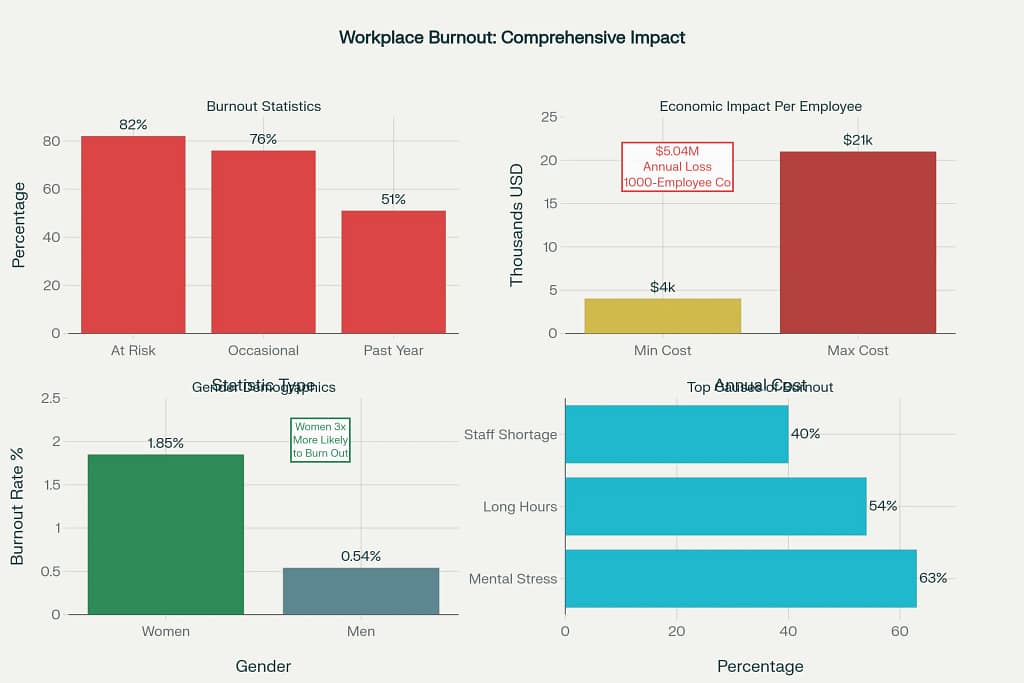
Workplace Signs Of Burnout At Work has reached epidemic proportions, affecting over 82% of the workforce and costing companies millions in lost productivity, turnover, and healthcare expenses. Recent research reveals that burnout isn’t just “feeling tired” – it’s a serious occupational phenomenon with distinct warning signs that, when recognized early, can prevent devastating personal and professional consequences. This comprehensive guide explores the science-backed signs of workplace burnout, provides real-world examples, and offers expert-recommended strategies for prevention and recovery.
Understanding Signs Of Burnout At Work: The WHO Definition
The World Health Organization officially recognizes burnout as “a syndrome conceptualized as resulting from chronic workplace stress that has not been successfully managed”. Unlike temporary work stress, burnout manifests through three specific dimensions that distinguish it from everyday job pressures:
Energy Depletion or Exhaustion: Persistent physical and emotional fatigue that doesn’t improve with rest, leaving individuals feeling drained even before their workday begins.
Increased Mental Distance: Growing cynicism, negativism, or detachment from work responsibilities and colleagues, often accompanied by a loss of idealism about one’s profession.
Reduced Professional Efficacy: Feelings of incompetence, decreased sense of accomplishment, and doubt about one’s professional abilities and contributions.
Importantly, the WHO emphasizes that burnout “refers specifically to phenomena in the occupational context and should not be applied to describe experiences in other areas of life”. This distinction helps differentiate workplace burnout from general life stress or clinical depression, though these conditions can overlap.
The Alarming Statistics: A Global Crisis
Current research paints a sobering picture of burnout’s prevalence and impact across industries. The 2024 Global Talent Trends report found that 82% of employees are at risk for burnout this year, while Grant Thornton’s 2024 survey revealed that 51% of respondents suffered burnout in the past year – a 15 percentage-point increase from the previous year.
The economic implications are staggering. Research published in the American Journal of Preventive Medicine estimates that burnout costs American companies between $4,000 and $21,000 per employee annually. For a typical 1,000-employee company, this translates to approximately $5.04 million in annual losses through decreased productivity, increased healthcare costs, and higher turnover rates.
Gender disparities in burnout rates are particularly concerning. Swedish research reveals that women are three times more likely to experience burnout than men (1.85% versus 0.54%), with one in seven women experiencing burnout by age 40 compared to one in 20 men. The study also found that burnout’s repercussions extend beyond the individual worker, affecting spousal income and children’s educational achievements.
Physical Warning Signs: Your Body’s Distress Signals
Burnout manifests through numerous physical symptoms that often appear before emotional or behavioral changes become apparent. Healthcare professionals emphasize recognizing these early warning signs:
Persistent Exhaustion and Fatigue
Unlike normal tiredness that improves with rest, burnout-related exhaustion is chronic and unrelenting. Individuals report feeling completely drained even after a full night’s sleep, struggling to summon energy for basic daily activities. This exhaustion often worsens progressively, making it increasingly difficult to complete routine tasks that were once manageable.
Sleep Disturbances and Related Issues
Sleep problems are among the most common physical manifestations of burnout. These include difficulty falling asleep due to racing thoughts about work, waking up frequently during the night, or experiencing non-restorative sleep that leaves individuals feeling groggy and unrefreshed. Many also report grinding their teeth at night due to stress.
Frequent Headaches and Muscle Tension
Tension headaches, neck pain, and shoulder stiffness frequently accompany burnout. These symptoms often result from chronic stress-induced muscle tension and can become so severe they interfere with concentration and job performance.
Gastrointestinal Problems
Burnout commonly triggers digestive issues including stomachaches, intestinal problems, and changes in appetite. Some individuals experience overeating as a coping mechanism, while others lose their appetite entirely. These symptoms reflect the body’s stress response affecting the digestive system.
Weakened Immune Function
Increased susceptibility to illnesses is a hallmark of burnout. Individuals may find themselves catching colds, flu, or other infections more frequently as chronic stress compromises immune system functioning. This creates a cycle where illness leads to more work stress and further immune system suppression.
Emotional and Mental Warning Signs: The Psychological Toll
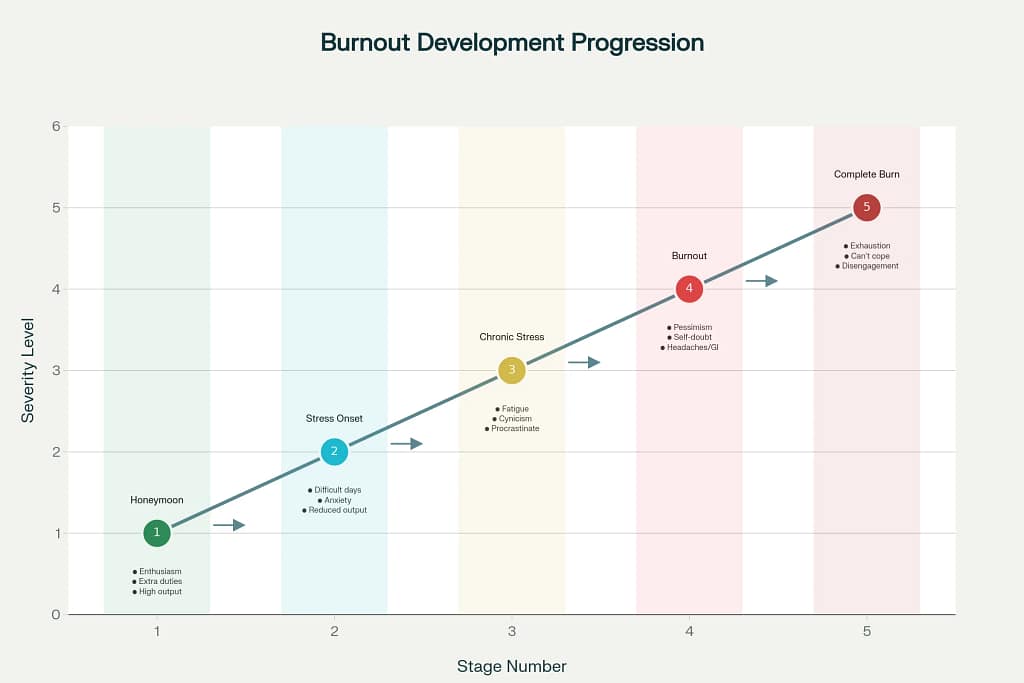
The emotional and mental symptoms of burnout often develop gradually, making them challenging to recognize initially. However, understanding these patterns is crucial for early intervention.
Growing Cynicism and Negativity
A shift toward cynicism represents one of burnout’s defining characteristics. Employees who once approached work with enthusiasm begin expressing persistent negative attitudes about their job, colleagues, or organization. This cynicism often extends beyond specific workplace issues to encompass a generally pessimistic worldview about work and career prospects.
Feelings of Helplessness and Self-Doubt
Burnout erodes self-confidence and professional self-efficacy. Individuals begin questioning their abilities, feeling inadequate despite previous success, and experiencing persistent self-doubt about their professional competence. This can manifest as imposter syndrome or the belief that others overestimate their capabilities.
Anxiety and Irritability
Heightened anxiety, particularly work-related anxiety, is common in burnout. This may include Sunday night anxiety about the upcoming work week, panic attacks before important meetings, or generalized worry about job performance. Irritability often accompanies this anxiety, with individuals becoming easily frustrated by minor inconveniences or normal workplace interactions.
Loss of Motivation and Enthusiasm
The gradual erosion of work enthusiasm marks a critical burnout indicator. Tasks that once provided satisfaction become meaningless obligations, and individuals struggle to find purpose or engagement in their work. This loss of motivation often extends beyond work to hobbies and personal interests.
Detachment and Emotional Numbness
Emotional detachment from work responsibilities and relationships represents burnout’s depersonalization dimension. Individuals may feel disconnected from their work’s impact, view colleagues as impediments rather than collaborators, and experience emotional numbness toward previously meaningful aspects of their job.
Behavioral Warning Signs: How Burnout Changes Actions
Burnout significantly alters behavior patterns, often in ways that become apparent to colleagues and supervisors before the individual fully recognizes their condition.
Decreased Performance and Productivity
Declining work quality and productivity are among the most visible signs of burnout. Tasks take longer to complete, attention to detail diminishes, and previously manageable workloads become overwhelming. This isn’t due to laziness but rather to the cognitive and emotional resources being depleted by chronic stress.
Increased Absenteeism and Tardiness
Higher rates of sick leave usage and frequent tardiness often signal developing burnout. Research shows that employees experiencing burnout are 63% more likely to take sick days and 23% more likely to visit the emergency room. This pattern reflects both the physical health impacts of chronic stress and the psychological need to escape work-related stressors.
Social Withdrawal and Isolation
Withdrawal from workplace social interactions is a common behavioral response to burnout. Individuals may avoid team meetings, skip workplace social events, decline lunch invitations, or minimize casual conversations with colleagues. This isolation often extends to personal relationships as well, creating a cycle of reduced social support when it’s most needed.
Procrastination and Avoidance
Increasing procrastination and task avoidance reflect the overwhelming nature of burnout. Important projects get delayed, emails go unanswered, and routine responsibilities accumulate as individuals struggle to initiate action on work tasks. This behavior often generates additional stress as deadlines approach and workloads increase.
Substance Use as Coping Mechanism
Using food, alcohol, drugs, or other substances to manage stress represents a particularly concerning behavioral indicator. This coping strategy provides temporary relief but ultimately exacerbates burnout symptoms and can lead to additional health problems.
Real-World Case Studies: Burnout in Action
Understanding how burnout manifests in real workplace situations provides valuable insight into recognizing and addressing these patterns.
Case Study 1: Healthcare Professional Burnout
Sarah, a 35-year-old radiation therapist, worked with palliative patients in an understaffed department with high patient loads. Initially passionate about her work, she began experiencing persistent fatigue and sleep difficulties. Sarah noticed she was taking more sick days and struggling to focus during treatments.
Key Warning Signs Observed:
- Persistent exhaustion despite adequate rest
- Sleep disturbances affecting daily functioning
- Increased absenteeism and difficulty concentrating
- Feelings that colleagues couldn’t depend on her
- Social withdrawal from friends and family
- Contemplating leaving her profession entirely
Sarah’s case illustrates how burnout develops in high-stress healthcare environments where emotional demands combine with insufficient organizational support and recovery time.
Case Study 2: Corporate Management Burnout
Jennifer, a senior manager in her 40s, experienced gradual burnout after years of managing demanding work, family, and social commitments. Despite her high-achieving nature, she reached complete emotional and physical depletion, ultimately resigning without a backup plan.
Progressive Symptoms Identified:
- Initial success masking growing exhaustion
- Diminished enjoyment in previously satisfying activities
- Emotional numbness and inability to feel joy
- Physical depletion affecting work performance
- Decision to leave employment to focus on recovery
Jennifer’s recovery process involved rest, self-compassion practices, nature exposure, and gratitude exercises before eventually returning to work with better boundaries and work-life integration strategies.
Case Study 3: Hospitality Industry Burnout
Mark, a 50-year-old restaurant manager with 16+ years at his organization, experienced classic burnout symptoms despite holding a supervisory position with good benefits. His case demonstrates how burnout can affect even successful professionals who appear to have desirable positions.
Burnout Indicators Present:
- Feeling bored and inadequate despite professional success
- Frequent “wall-hitting” experiences with longer recovery times
- Depression and anxiety about career advancement
- Psychological distancing from supervisors
- Increasing negativity toward management
- Recognition of personal attitude deterioration
Mark’s situation illustrates how lack of advancement opportunities, repetitive responsibilities, and insufficient challenge can contribute to burnout even in seemingly stable employment.
Expert-Recommended Prevention Strategies
Leading workplace mental health researchers and practitioners recommend comprehensive approaches to burnout prevention that address both individual and organizational factors.
Individual-Level Prevention Strategies
Establishing Clear Boundaries
Setting firm workplace boundaries represents the foundation of burnout prevention. This includes not checking work emails during personal time, taking proper lunch breaks away from desks, learning to decline additional projects when overwhelmed, and communicating availability clearly. Research shows that 95% of employees consider organizational respect for work-personal time boundaries very important.
Developing Stress Management Skills
Effective stress management techniques can significantly reduce burnout risk. Evidence-based approaches include:
- Mindfulness meditation: Studies show that even brief five-minute daily mindfulness exercises can dramatically reduce stress levels among healthcare providers
- Progressive muscle relaxation: Systematic tension and relaxation exercises help release physical stress
- Deep breathing techniques: Simple breathing exercises activate the parasympathetic nervous system
- Regular physical exercise: Even 20-minute walks reduce stress hormones and boost mood
Prioritizing Self-Care Practices
Comprehensive self-care addresses physical, emotional, and social needs. Key components include maintaining consistent sleep schedules (7-9 hours nightly), eating balanced meals with adequate protein and fiber, engaging in regular physical activity, and maintaining social connections. Research indicates that 79% of respondents with good work-life balance report excellent mental health.
Building Support Networks
Strong social support systems provide crucial buffering against burnout. This involves cultivating relationships with trusted colleagues, friends, and family members who can provide emotional support and practical advice during stressful periods.
Organizational Prevention Strategies
Creating Supportive Work Environments
Organizations can significantly impact burnout rates through environmental and policy changes. Effective strategies include:
- Implementing flexible work arrangements: Remote work options, flexible hours, and hybrid models give employees greater control over their schedules
- Ensuring adequate staffing: Research shows that 40% of employees identify people shortages as their most significant workplace stressor
- Providing clear role expectations: Ambiguous or unrealistic goals create persistent pressure leading to burnout
- Fostering psychological safety: Environments where employees can express concerns without fear of retaliation
Regular Recognition and Feedback Programs
Feeling appreciated is one of the most effective antidotes to burnout. Organizations should implement regular recognition programs that acknowledge both significant achievements and everyday contributions. 76% of HR leaders plan to overhaul performance management processes to provide more frequent, development-oriented feedback.
Workload Management and Distribution
Effective workload management prevents burnout by ensuring equitable task distribution and realistic deadlines. This includes regular workload assessments, redistribution when necessary, and providing additional resources during peak periods.
Workplace Mental Health Programs
Research demonstrates that multi-level workplace mental health programs combining individual and organizational strategies show the most robust evidence for burnout reduction. Effective programs typically include:
Employee Assistance Programs (EAPs)
EAPs provide confidential assessment, counseling, and resource navigation for employees experiencing personal or work-related challenges. 82% of surveyed employers offered EAP services in 2024, recognizing their value in preventing burnout escalation. EAPs typically offer:
- Individual counseling for stress management and coping strategies
- Work-life resource navigation for childcare, elder care, and financial challenges
- Manager consultation services for addressing team burnout
- Crisis intervention and mental health referrals
Mindfulness-Based Interventions
Systematic reviews show that mindfulness-based interventions can meaningfully reduce burnout symptoms, particularly emotional exhaustion and depersonalization while increasing personal accomplishment. The “Mindfulness in Motion” program, an 8-week workplace intervention, has consistently demonstrated significant reductions in burnout and perceived stress with increases in resilience and work engagement.
Organizational Restructuring Interventions
Participatory organizational interventions demonstrate the most sustained burnout reduction, maintaining effectiveness for 12 months or longer. These interventions involve employees in identifying and addressing systemic workplace stressors through collaborative problem-solving processes.
Recovery Strategies: Expert-Backed Approaches
When burnout has already developed, recovery requires comprehensive, sustained efforts addressing multiple dimensions of well-being.
Immediate Intervention Strategies
Professional Assessment and Support
Individuals experiencing significant burnout symptoms should consider professional evaluation to rule out underlying medical conditions and receive appropriate treatment recommendations. Healthcare providers can assess whether symptoms warrant clinical intervention and provide referrals to mental health specialists when necessary.
Implementing Recovery Experiences
Research on Conservation of Resource Theory shows that recovery experiences – non-work activities that create positive outlooks and restore energy – are crucial for mitigating burnout. Effective recovery activities include:
- Physical activities that provide mental restoration
- Creative pursuits unrelated to work responsibilities
- Social activities that strengthen personal relationships
- Mindfulness practices that promote present-moment awareness
Cognitive-Behavioral Techniques
Cognitive-behavioral approaches help individuals reframe negative thought patterns contributing to burnout. These techniques involve identifying and challenging cognitive distortions such as catastrophizing or all-or-nothing thinking, developing more realistic perspectives on work challenges, and building problem-solving skills.
Long-Term Recovery and Sustainability
Boundary Reconstruction
Successful burnout recovery requires establishing and maintaining healthy boundaries between work and personal life. This process involves learning to say “no” to excessive demands, delegating responsibilities when possible, and prioritizing activities that support well-being and recovery.
Values and Priority Reassessment
Recovery often involves reevaluating personal values and ensuring they align with current lifestyle and career choices. This process helps individuals make informed decisions about job changes, career transitions, or workplace modifications needed to prevent future burnout episodes.
Developing Resilience and Coping Skills
Building resilience involves developing sustainable coping strategies that can withstand future workplace stressors. This includes stress management techniques, emotional regulation skills, and problem-solving approaches that address challenges proactively rather than reactively.
When to Seek Professional Help
Recognizing when burnout requires professional intervention is crucial for preventing serious long-term consequences. Immediate professional attention is recommended when experiencing:
- Persistent symptoms despite self-care efforts: If burnout symptoms continue after implementing stress reduction strategies and lifestyle changes
- Physical health impacts: Chronic headaches, digestive problems, sleep disorders, or frequent illnesses that interfere with daily functioning
- Mental health complications: Signs of depression, anxiety disorders, or thoughts of self-harm
- Substance use concerns: Using alcohol, drugs, or other substances to cope with work stress
- Relationship deterioration: Significant strain in personal relationships due to work-related stress
- Inability to function: Difficulty performing basic work responsibilities or daily activities
Healthcare providers can conduct comprehensive assessments, rule out other medical conditions, and provide appropriate treatment recommendations including therapy, medication when indicated, and lifestyle interventions.
Read More:- You’re Not Lazy, You’re Digital Burnout: The Mental Health Crisis Destroying Gen Z in 2025
Frequently Asked Questions
Q: How long does it take to recover from burnout?
A: Research indicates that complete recovery from burnout typically takes 6-9 months with structured intervention. However, recovery timelines vary based on burnout severity, available support systems, and the ability to modify work conditions. Some individuals notice improvement within weeks of implementing changes, while others require extended time away from work.
Q: Can burnout be prevented if I’m in a high-stress job?
A: Yes, burnout can often be prevented even in demanding roles through proactive stress management, strong support systems, and organizational interventions. The key is developing sustainable coping strategies, maintaining work-life boundaries, and advocating for necessary workplace changes before symptoms become severe.
Q: Is burnout the same as depression?
A: While burnout and depression share some symptoms, they are distinct conditions. Burnout is specifically work-related and involves exhaustion, cynicism, and reduced professional efficacy, while depression affects all areas of life. However, untreated burnout can increase depression risk, making early intervention important.
Q: Should I quit my job if I’m experiencing burnout?
A: Job change isn’t always necessary for burnout recovery. Many individuals successfully recover by modifying their current work situation through boundary setting, workload adjustments, and stress management techniques. Consider professional guidance to evaluate whether workplace modifications are sufficient or if job transition would be beneficial.
Q: How can managers identify burnout in their team members?
A: Managers should watch for decreased productivity, increased absenteeism, social withdrawal, irritability, and changes in work quality. Regular one-on-one conversations, anonymous feedback surveys, and creating psychologically safe environments where employees feel comfortable discussing challenges can help identify burnout early.
Medical Disclaimer: This article is for educational purposes only and does not constitute medical advice. If you’re experiencing persistent symptoms of burnout, depression, or other mental health concerns, please consult with a qualified healthcare professional for proper evaluation and treatment.
Conclusion
Workplace burnout represents a critical challenge requiring immediate attention from individuals, organizations, and society. With over 80% of the workforce at risk and companies losing millions annually, the need for comprehensive prevention and intervention strategies has never been more urgent. By recognizing the warning signs early, implementing evidence-based prevention strategies, and creating supportive work environments, we can address this epidemic and build healthier, more sustainable workplaces for everyone.
The path forward requires commitment from all stakeholders – employees must prioritize self-care and boundary-setting, managers must foster supportive environments and recognize early warning signs, and organizations must invest in comprehensive mental health programs and structural changes that address burnout’s root causes. Only through these coordinated efforts can we create work environments where people can thrive rather than merely survive.

Ahmed is a self-improvement and psychology writer passionate about helping people live smarter, calmer, and more productive lives.
- Ahmed manasiya

- Ahmed manasiya
- Ahmed manasiya
- Ahmed manasiya