
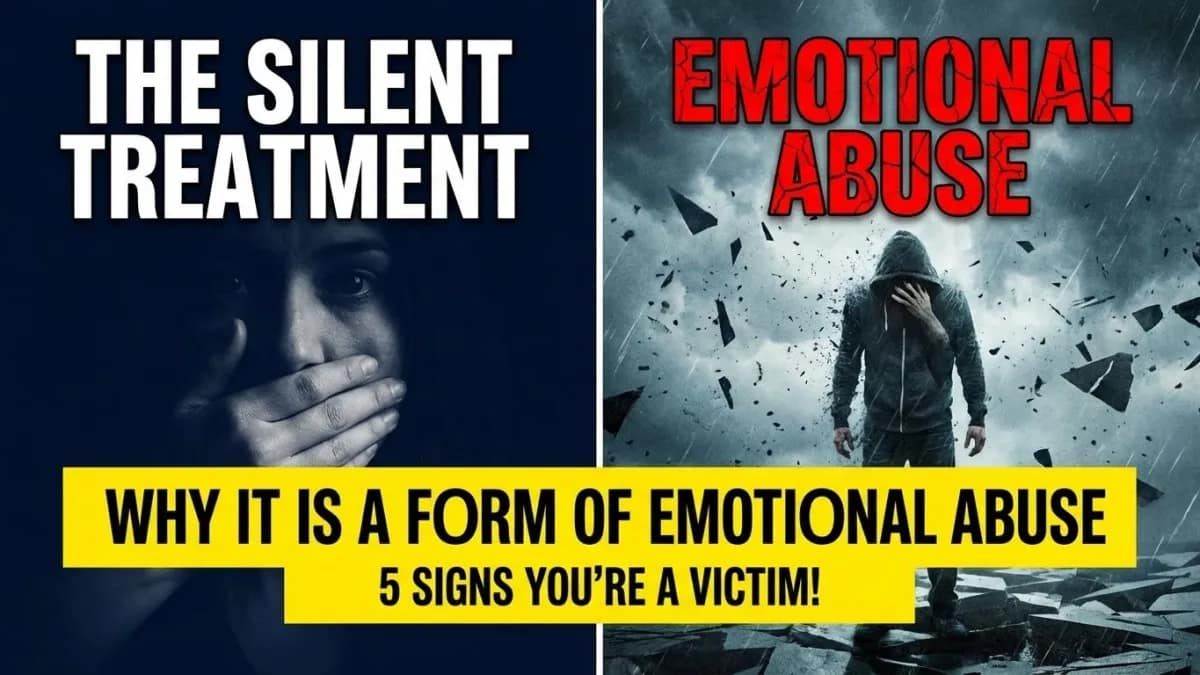
Silent Treatment: Why It Is a Form of Emotional Abuse
Key Takeaways
Before you dive in, here’s what you need to know:
- The silent treatment is deliberate withdrawal of communication used to punish or control you
- It’s classified as emotional abuse by psychologists because it damages your mental health
- Signs include being ignored for days, refusal to acknowledge your presence, and using silence as punishment
- This behavior triggers the same brain pain centers as physical injury
- You can protect yourself by setting boundaries, refusing to chase, and seeking professional support
- Breaking free requires recognizing the pattern and taking action to protect your wellbeing
What Is the Silent Treatment?
Let me be clear about this: the silent treatment isn’t just someone needing space after an argument.
It’s when someone deliberately refuses to communicate with you as a form of punishment or control. I’ve worked with hundreds of people dealing with this, and the pattern is always the same.
The person giving you the silent treatment:
- Ignores you completely, sometimes for days or weeks
- Refuses to acknowledge your presence in the room
- Won’t respond to direct questions or attempts at conversation
- Acts like you don’t exist until they decide you’ve “learned your lesson”
This isn’t taking a timeout to cool down. This is weaponized silence.
Why the Silent Treatment Is Emotional Abuse
Here’s what most people don’t realize: emotional abuse doesn’t require physical contact to cause real harm.
The silent treatment checks every box for abusive behavior. Let me show you why.
It’s Used to Control You
I’ve seen this pattern play out countless times in my practice. The silent treatment isn’t about conflict resolution.
It’s about power and control. The person giving you the cold shoulder is training you to behave a certain way.
According to the National Domestic Violence Hotline, emotional abuse is just as serious as physical abuse and often precedes physical violence.
They’re teaching you that:
- Speaking up leads to punishment
- Your needs don’t matter
- You must comply to receive basic human acknowledgment
- Love and attention can be withdrawn at any moment
It Causes Real Psychological Damage
Your brain doesn’t distinguish between emotional and physical pain as much as you’d think.
Research from Purdue University shows that social rejection activates the same neural pathways as physical injury. When someone gives you the silent treatment, your brain literally processes it as pain.
I’ve watched clients develop:
- Anxiety disorders from walking on eggshells
- Depression from feeling worthless and invisible
- Trust issues that affect all their relationships
- Physical symptoms like headaches and stomach problems
This isn’t “just” emotional. This is real damage to your mental health.
It Violates Your Basic Human Needs
We all need connection and communication to survive emotionally. It’s not weakness—it’s biology.
The silent treatment weaponizes this need against you. It says, “I’ll give you basic human interaction only when you obey me.”
That’s manipulation. That’s control. That’s abuse.
How the Silent Treatment Differs from Healthy Space
Let me help you understand the difference because this confuses a lot of people.
Healthy Space Looks Like This:
- “I’m too upset to talk right now. Can we discuss this tomorrow?”
- They give you a specific timeframe for when they’ll be ready
- They still acknowledge your presence and basic needs
- The goal is to calm down and communicate better
Silent Treatment Looks Like This:
- Complete shutdown with no explanation or timeline
- Refusing to tell you what’s wrong or when they’ll talk
- Pretending you don’t exist while going about their day
- Using your discomfort as the point—they want you to suffer
See the difference? One is about self-care. The other is about punishment and control.
Pro Tip Box
Pro Tip: Keep a journal of silent treatment incidents. Write down the date, what triggered it, and how long it lasted. This helps you see the pattern clearly and gives you evidence if you need it later. I’ve had clients tell me this simple step was the wake-up call they needed to recognize the abuse.
Warning Signs You’re Experiencing Emotional Abuse
I want you to check your relationship against these red flags. Be honest with yourself.
The silent treatment is abuse when:
- It happens repeatedly as a pattern, not a one-time event
- It lasts for days or weeks at a time
- The person refuses to tell you why they’re upset
- You find yourself constantly apologizing just to get them to talk to you
- You feel anxious and panicked when they withdraw
- You’ve changed your behavior to avoid triggering their silence
- They use it to punish you for setting boundaries
- You feel like you’re walking on eggshells constantly
If you’re nodding along to multiple items on this list, you’re dealing with emotional abuse.
The Devastating Effects on Your Mental Health
Let me share what I’ve seen happen to people who endure this treatment long-term.
Your Self-Worth Crumbles
When someone treats you like you’re invisible, you start believing you’re worthless.
I’ve had clients tell me they felt like they were going crazy. They questioned their own reality, their memories, their right to have feelings.
This is called gaslighting by omission. The silence makes you doubt everything about yourself.
You Develop Trauma Responses
Your nervous system goes into overdrive. You become hypervigilant, always scanning for signs that the silence is coming.
Common trauma responses include:
- Panic attacks when your partner seems distant
- Inability to relax or feel safe in the relationship
- Constantly checking your phone for messages
- Overanalyzing every interaction for danger signs
This is your body trying to protect you from repeated emotional injury.
Your Other Relationships Suffer
The damage doesn’t stay contained in one relationship.
I’ve watched people become:
- Unable to trust anyone new
- Withdrawn from friends and family
- Emotionally numb to protect themselves
- Convinced they don’t deserve better treatment
The abuse rewires how you see yourself and the world.
Why People Use the Silent Treatment
Understanding the “why” doesn’t excuse the behavior, but it helps you see it’s not about you.
They Never Learned Healthy Communication
Some people grew up in homes where the silent treatment was normal. They watched their parents do it.
It’s the only conflict resolution tool they know. But here’s the thing: childhood trauma doesn’t give anyone the right to traumatize you.
They Enjoy the Power
I’m going to be blunt because you need to hear this.
Some people use the silent treatment because they like watching you squirm. They enjoy having that power over your emotions.
When you chase them, apologize, beg them to talk—they get a rush from knowing they can control you like that.
They’re Avoiding Accountability
The silent treatment is perfect for people who don’t want to:
- Discuss their own bad behavior
- Compromise or see your perspective
- Take responsibility for their actions
- Engage in mature conflict resolution
Silence means they never have to answer for anything.
How to Protect Yourself
You have more power than you think. Here’s what I tell my clients to do.
Stop Chasing Them
This is hard, but it’s crucial. When they go silent, don’t pursue.
Don’t send multiple texts. Don’t apologize when you’ve done nothing wrong. Don’t beg for their attention.
I know it feels impossible, but chasing them reinforces the behavior. You’re showing them the silent treatment works.
Set Clear Boundaries
Next time they’re actually talking to you, have this conversation:
“I understand you need space sometimes, but the silent treatment hurts me. From now on, I need you to tell me when you need time alone and give me a timeframe for when we can talk.”
If they violate this boundary, there need to be consequences. Maybe that means you leave the house. Maybe you stop engaging entirely.
Build Your Support System
You cannot do this alone. I’ve seen too many people try to handle emotional abuse in isolation.
Talk to:
- Trusted friends who validate your reality
- A therapist who specializes in emotional abuse
- Support groups for people in similar situations
- Family members who can provide perspective
Your abuser wants you isolated. Building support is an act of resistance.
Create an Exit Plan
I’m not saying you have to leave today. But you need to be prepared to leave if things escalate.
This means:
- Having money set aside in a separate account
- Important documents stored safely
- A place you can go if needed
- People who know what’s happening and can help
Even if you never use this plan, having it reduces your anxiety.
Document Everything
Keep records of the silent treatment incidents. Screenshots of unanswered messages. Journal entries about what happened.
This isn’t paranoia—it’s protection. If you ever need to explain the abuse to others or seek legal protection, you’ll have evidence.
When to Walk Away
Some relationships can’t be saved. I need you to understand when it’s time to go.
Leave if:
- The silent treatment is getting more frequent or lasting longer
- Your mental health is deteriorating (depression, anxiety, suicidal thoughts)
- Your physical health is suffering
- They refuse to acknowledge the behavior is a problem
- They won’t go to couples therapy or individual counseling
- You feel afraid of them
- The relationship has no moments of genuine connection anymore
You don’t need permission to leave someone who’s hurting you. You don’t need to wait until it gets “bad enough.”
If you’re asking yourself whether it’s bad enough to leave, it’s bad enough.
Healing After the Silent Treatment
Recovery is possible, but it takes time and intentional effort.
Therapy Is Essential
You need professional help to process this trauma. A therapist can help you:
- Rebuild your self-worth
- Develop healthy communication patterns
- Process the grief and anger
- Learn to trust yourself again
I’ve seen people transform their lives with the right therapeutic support.
Reconnect with Yourself
The silent treatment trained you to ignore your own needs and feelings.
Start asking yourself:
- What do I actually want?
- What do I enjoy doing?
- What are my values?
- What boundaries do I need?
This might feel strange at first. That’s normal. Keep practicing.
Give Yourself Time
You won’t heal overnight. I’ve had clients tell me they expected to “get over it” in a few weeks.
Recovering from emotional abuse typically takes months or years. Be patient with yourself. Healing isn’t linear.
You’ll have good days and bad days. Both are part of the process.
Is the silent treatment always abuse?
No, not always. If someone needs a few hours to cool down and tells you that’s what they’re doing, that’s healthy space. The silent treatment becomes abuse when it’s used repeatedly as punishment, lasts for extended periods without explanation, or is designed to control your behavior.
How long does the silent treatment usually last?
In abusive relationships, I’ve seen it last anywhere from hours to months. The duration often increases over time as the abuser realizes it’s an effective control tactic. There’s no “normal” timeframe—any prolonged silence used as punishment is harmful.
Can a relationship recover after the silent treatment?
Yes, but only if the person giving the silent treatment recognizes it’s abusive, takes full responsibility, and commits to changing through therapy. I’ve seen very few relationships recover without professional intervention. Both people need to do serious work, and the abuser must demonstrate sustained change over time.
Why do I feel like I’m going crazy when they ignore me?
This is a normal response to emotional abuse. The silent treatment creates something called cognitive dissonance—you can’t reconcile the person who claims to love you with their cruel behavior. Your brain struggles to make sense of this contradiction, which feels like you’re losing your mind. You’re not. The situation is crazy-making, not you.
Is giving someone the silent treatment ever justified?
No. There’s never a situation where deliberately punishing someone with silence is the right choice. If you’re too angry to talk, say that. If you need space, communicate that. Silent treatment is always a choice to hurt someone rather than resolve conflict maturely.
What should I do if my partner refuses to stop using the silent treatment?
You have three options: accept that this is how your life will be, continue trying to change them (which rarely works), or leave. I know that’s harsh, but I’ve worked with hundreds of people in this situation. If someone refuses to change abusive behavior after you’ve clearly identified it, they’re telling you who they are. Believe them.
How is the silent treatment different from stonewalling?
They’re closely related. Stonewalling is when someone shuts down during a conversation—they’re physically present but completely unresponsive. The silent treatment often includes stonewalling but extends beyond single conversations to days or weeks of complete withdrawal. Both are harmful communication patterns.
Can I fix this by being a better partner?
No, and I need you to really hear this: the silent treatment is not your fault. Nothing you did justifies emotional abuse. I’ve seen people twist themselves into knots trying to be “perfect” enough to stop the silent treatment. It doesn’t work because the problem isn’t you—it’s the abuser’s choice to use control tactics instead of healthy communication.
READ MORE:https://mrpsychics.com/trauma-bonding-why-hard-to-leave-an-abusive-partner/

Ahmed is a self-improvement and psychology writer passionate about helping people live smarter, calmer, and more productive lives.
- Ahmed manasiya

- Ahmed manasiya
- Ahmed manasiya
- Ahmed manasiya