
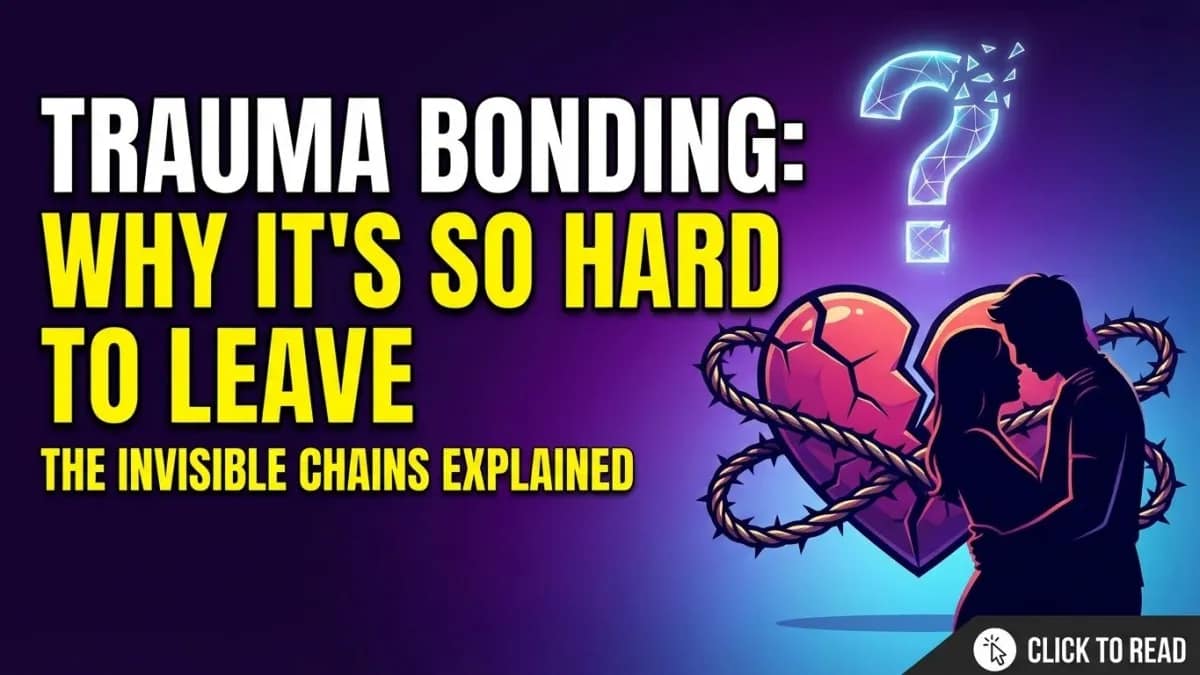
Trauma Bonding: Why It’s Hard to Leave an Abusive Partner
Key Takeaways
What you need to know about trauma bonding:
- Trauma bonding is a psychological attachment that forms between an abused person and their abuser through cycles of abuse and affection
- It’s not weakness or love—it’s your brain’s survival response to dangerous situations
- The intermittent reinforcement (good moments mixed with bad) creates a powerful addiction-like bond
- You can break free with the right support, even though it feels impossible right now
- Leaving takes an average of 7 attempts—each step forward matters
Introduction: You’re Not Crazy for Staying
I’ve worked with hundreds of people who ask me the same question: “Why can’t I just leave?”
If you’re reading this, you probably know something is wrong. You see the red flags. Your friends and family don’t understand why you stay.
But here’s what I want you to know: You’re not weak. You’re not stupid. You’re trauma bonded.
Let me explain what’s really happening in your brain and your relationship.
What Is Trauma Bonding?
Trauma bonding is a strong emotional attachment between an abused person and their abuser.
It happens when someone repeatedly harms you, then shows you kindness or affection. Your brain gets confused by this pattern.
Think of it like this: Your partner hurts you on Monday. They buy you flowers and apologize on Tuesday. They ignore you on Wednesday. They’re incredibly loving on Thursday.
This cycle creates a powerful psychological trap.https://www.psychologytoday.com/us/basics/trauma
It’s Not Regular Love
I’ve seen people confuse trauma bonding with deep love. Here’s the difference:
Healthy love makes you feel safe, respected, and free to be yourself.
Trauma bonding makes you feel anxious, fearful, and desperate for approval.
One builds you up. The other tears you down while making you crave more.
Why Trauma Bonding Happens
Your brain isn’t broken—it’s actually trying to protect you.
The Science Behind It
When you’re in danger, your body releases stress hormones like cortisol and adrenaline.
When your partner suddenly acts kind after being cruel, your brain floods with dopamine (the feel-good chemical).
This creates the same addictive pattern as gambling or drug use. You keep hoping for the next “high” of their affection.
The Cycle That Traps You
I’ve watched this pattern repeat in countless relationships:
- Tension building – You walk on eggshells, sensing something bad is coming
- Incident – The abuse happens (yelling, hitting, cruel words, silent treatment)
- Reconciliation – They apologize, promise to change, act loving
- Calm – Things feel normal, almost good
- Repeat – The cycle starts again
Each time you go through this cycle, the bond gets stronger.
Signs You’re Trauma Bonded
You might be trauma bonded if you:
- Defend your partner’s behavior to others, even when you know it’s wrong
- Feel like you can’t function or survive without them
- Keep returning after leaving, or struggle to stay away
- Make excuses like “they had a bad childhood” or “they’re stressed at work”
- Feel responsible for their emotions and behavior
- Experience intense fear about leaving, even though staying hurts
- Have friends and family who are worried about you
- Feel emotionally numb or disconnected from your own feelings
- Experience extreme anxiety when apart from them
- Believe that only you truly understand them
What I’ve Noticed in My Work
The people I’ve worked with often say things like: “But they need me” or “I’m the only one who can help them.”
This isn’t love. This is your trauma bond talking.
Why It’s So Hard to Leave
Let me be honest with you: Leaving is incredibly difficult. Here’s why.
Your Brain Is Working Against You
Cognitive dissonance means holding two conflicting beliefs at once.
You know they hurt you. But you also remember when they were kind. Your brain struggles to reconcile these opposites.
So it creates stories: “They didn’t mean it.” “I provoked them.” “They’re getting better.”
The Fear Factor
I’ve seen three main fears keep people trapped:
Fear of being alone – The thought of life without them feels terrifying
Fear of retaliation – Many abusers escalate violence when someone tries to leave
Fear of judgment – Worrying what others will think or say
Financial and Practical Barriers
You might share:
- A home or lease
- Bank accounts
- Children
- Pets
- Friends and family connections
Leaving means dismantling your entire life. That’s not a small thing.
The Hope That Keeps You Stuck
“Maybe they’ll change this time.”
I’ve heard this hundreds of times. And I understand it. You’ve seen glimpses of who they could be.
But here’s what I’ve learned: Abusers rarely change without serious professional help. And even then, it takes years—not weeks or months.
Pro Tip: The “Six Month Rule”
Here’s something I tell everyone who’s unsure about their relationship:
Imagine your life exactly as it is right now—with no changes—six months from today.
Not how it could be if they changed. Not how it was in the beginning. Exactly as it is right now.
Can you live with that? Does that future make you feel hopeful or trapped?
Your gut reaction to this question tells you everything you need to know.
How Abusers Strengthen the Bond
Abusers (often unconsciously) use specific tactics to keep you attached.
Intermittent Reinforcement
This is the most powerful tool in their arsenal.
Random acts of kindness mixed with abuse create an addictive pattern. You never know which version of them you’ll get.
It’s the same psychological principle that keeps people pulling slot machine levers.
Isolation
I’ve watched abusers systematically cut their partners off from:
- Friends who “don’t understand”
- Family who “interfere”
- Hobbies and activities that provide independence
- Work opportunities or education
When you’re isolated, they become your entire world.
Gaslighting
They make you question your own reality:
“That never happened.” “You’re too sensitive.” “You’re remembering it wrong.” “I was just joking—you can’t take a joke.”
Over time, you stop trusting your own perceptions.
Love Bombing After Incidents
After they hurt you, they might:
- Shower you with gifts and attention
- Make grand romantic gestures
- Cry and promise to change
- Threaten to hurt themselves if you leave
This isn’t genuine remorse. It’s manipulation designed to keep you in place.
Breaking Free: The Path Forward
I won’t lie to you—leaving is hard. But it’s possible. Here’s what I’ve seen work.
Step 1: Recognize the Pattern
You’re already doing this by reading this article.
Awareness is the first step. You can’t change what you don’t acknowledge.
Step 2: Build a Support System Quietly
Reach out to people outside the relationship:
- A trusted friend or family member
- A therapist who understands domestic abuse
- A domestic violence hotline or organization
- Online support groups for survivors
Do this carefully if you’re in danger. Use private browsing. Delete your history. Meet people away from home.
Step 3: Document Everything
Keep records of:
- Abusive incidents (dates, details, photos of injuries)
- Text messages and emails
- Financial information
- Important documents (IDs, birth certificates, insurance)
Store these somewhere safe that your partner can’t access.
Step 4: Create a Safety Plan
Think through the practical steps:
Financial: Open a separate bank account. Save money when possible. Know where you’ll stay.
Legal: Understand your rights. Consider a restraining order. Talk to a lawyer if you share property or children.
Physical: Plan your exit for when they’re gone. Have a packed bag ready. Know your route.
Step 5: Go No Contact
This is crucial. Every contact restarts the trauma bond.
Block their number. Block their social media. Ask friends and family not to pass messages.
I know this feels impossible. You might want to “stay friends” or “check on them.”
Don’t. Not yet. Maybe not ever.
Step 6: Get Professional Help
Find a therapist who specializes in:
- Trauma recovery
- Domestic abuse
- PTSD treatment
You need to rewire your brain’s response patterns. This takes time and professional support.
What I Tell Everyone Who’s Leaving
You will doubt yourself. You will miss them. You will remember the good times.
This doesn’t mean you made a mistake. It means you’re human and you’re grieving.
The trauma bond weakens over time, but it doesn’t disappear overnight.
Common Mistakes That Keep You Stuck
I’ve seen people make these mistakes repeatedly:
Mistake #1: Believing Their Promises
“I’ll go to therapy.” “I’ll stop drinking.” “I’ll never do it again.”
Words without sustained action mean nothing. Look at their behavior over months, not days.
Mistake #2: Going Back “One More Time”
Each time you return, the bond gets stronger. They learn that their tactics work.
Mistake #3: Keeping Lines of Communication Open
“We can still be friends” usually means “I’m still available for manipulation.”
Mistake #4: Blaming Yourself
You didn’t cause their abuse. You can’t fix them. You aren’t responsible for their choices.
Mistake #5: Rushing Into Another Relationship
Your brain needs time to heal. Otherwise, you might repeat the same patterns with someone new.
The Reality of Recovery
Let me be real with you about what recovery looks like.
The First Few Months Are the Hardest
You’ll experience:
- Withdrawal symptoms similar to drug addiction
- Intense longing for them
- Doubt about whether you made the right choice
- Physical symptoms (trouble sleeping, appetite changes, anxiety)
This is normal. Your brain is adjusting to the absence of those trauma-bond chemicals.
It Gets Better Gradually
Around 3-6 months, most people report:
- Clearer thinking
- Less obsessive thoughts about their ex
- Better sleep
- Reconnecting with their own identity
By one year, many survivors feel:
- Significantly stronger
- More confident in their decision
- Able to spot red flags in others
- Grateful they left
You Might Need Years
Full recovery from trauma bonding can take 2-5 years.
This isn’t failure. Complex trauma takes time to heal.
Resources That Can Help
Crisis Support
National Domestic Violence Hotline: 1-800-799-7233 Available 24/7. They can help with safety planning and local resources.
Crisis Text Line: Text HOME to 741741 For immediate support via text message.
Online Resources
- TheHotline.org – Information and chat support
- LoveIsRespect.org – Resources specifically for young people
- RAINN.org – Support for sexual abuse survivors
Local Help
Search for:
- Domestic violence shelters in your area
- Free or low-cost therapy through community health centers
- Legal aid organizations for restraining orders
- Support groups for survivors
Many of these services are free and confidential.
How long does trauma bonding last?
The intensity usually peaks in the first 3-6 months after leaving. Most people feel significantly better by 1-2 years. However, triggers can bring up feelings even years later. With proper support and no contact, the bond weakens steadily over time.
Can you trauma bond with a narcissist?
Yes. In fact, relationships with narcissists are one of the most common places trauma bonding occurs. Their cycle of idealization, devaluation, and intermittent affection creates the perfect conditions for trauma bonding.
Is trauma bonding the same as Stockholm Syndrome?
They’re similar but not identical. Stockholm Syndrome specifically refers to hostages bonding with captors. Trauma bonding is a broader term that includes any abusive relationship where cycles of abuse and affection create unhealthy attachment.
Why do I miss my abuser?
You’re not missing the abuse—you’re missing the good moments and the chemical rush your brain got during reconciliation periods. You might also miss the person you hoped they would become. This is the trauma bond, not genuine love.
Can a trauma bond be healed while staying in the relationship?
Extremely rarely. The abusive partner would need to completely stop all abusive behaviors, take full responsibility, engage in intensive therapy for years, and maintain consistent change. I’ve seen this happen in less than 1% of cases. The bond is maintained by the abuse cycle itself.
How do I know if it’s trauma bonding or real love?
Real love makes you feel safe, supported, and free to be yourself. Trauma bonding makes you feel anxious, desperate, and trapped. If you’re constantly walking on eggshells, making excuses for them, or feeling relief when they’re gone, it’s trauma bonding.
Will I ever trust anyone again?
Yes. With time, therapy, and healing, most survivors go on to have healthy relationships. You’ll learn to spot red flags earlier. You’ll choose partners who treat you with consistent respect. Your capacity for love isn’t broken—it just needs time to recalibrate.
What if I have children with my abuser?
This complicates things but doesn’t make escape impossible. Document everything. Work with lawyers familiar with domestic violence. Many courts now understand trauma bonding and abuse dynamics. Prioritize your and your children’s safety above all else.
Should I tell my abuser I’m leaving?
Only if it’s safe to do so. Many experts recommend leaving when the abuser is away and communicating through lawyers or advocates afterward. The most dangerous time in an abusive relationship is when the victim tries to leave.
How do I stop myself from going back?
Remove all contact methods. Write yourself a letter describing the abuse to read when you’re tempted. Build a support system that holds you accountable. Stay in therapy. Remember: the urge to return is the trauma bond, not reality.
READ MORE:https://mrpsychics.com/the-5-love-languages-does-science-back-them-up/
Final Thoughts: You Deserve Better
If you’ve read this far, you’re already taking steps toward freedom.
I want you to know something: You are not broken. You are not too damaged to be loved properly.
What happened to you is not your fault. The abuse was never about you—it was about your partner’s issues and choices.
Leaving doesn’t make you a failure. Staying doesn’t make you stupid.
You’re surviving a complex psychological trap that’s designed to be nearly impossible to escape.
But people do escape. Every single day, someone breaks free from a trauma bond. You can be one of them.
The life you want—the peaceful, joyful, safe life—is waiting for you on the other side of this.
Take one small step today. Then another tomorrow.
You’ve got this. And you don’t have to do it alone.

Ahmed is a self-improvement and psychology writer passionate about helping people live smarter, calmer, and more productive lives.
- Ahmed manasiya

- Ahmed manasiya
- Ahmed manasiya
- Ahmed manasiya