
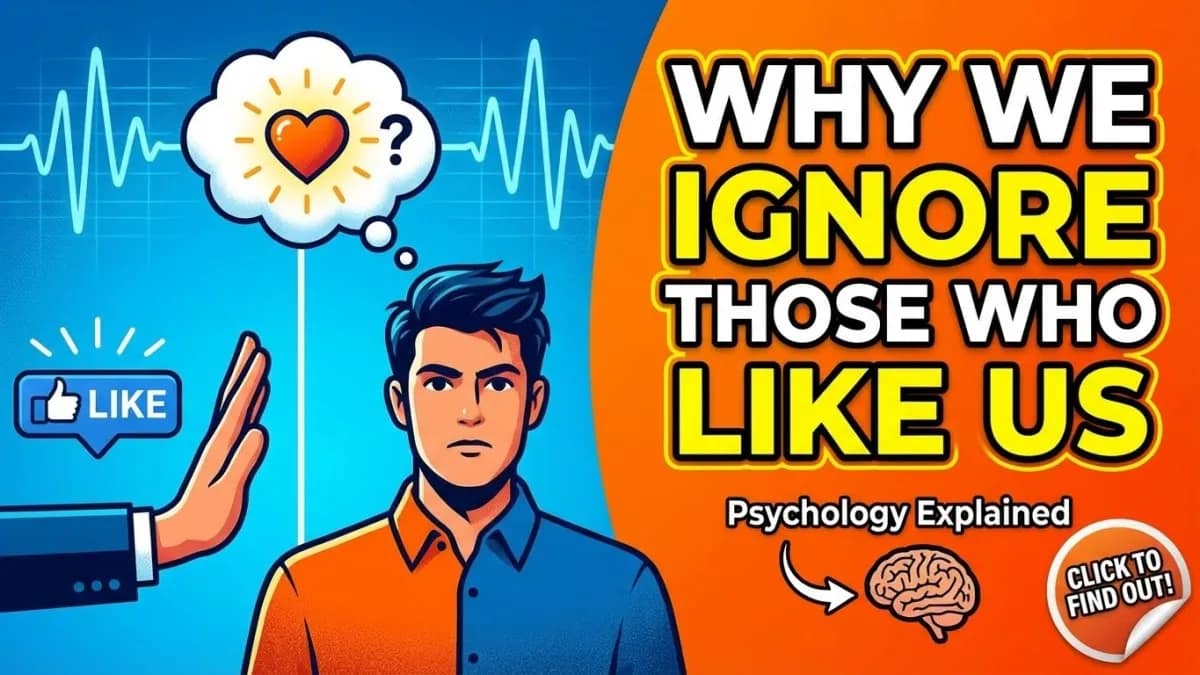
Why We Ignore Those Who Like Us (Psychology Explained)
Key Takeaways
Quick Summary: Before we dive in, here’s what you need to know:
- We often push away people who show genuine interest in us due to fear of vulnerability and low self-worth
- The scarcity principle makes us chase what feels unavailable while ignoring what’s readily available
- Attachment styles from childhood directly impact how we respond to people who like us
- Understanding these patterns can help you build healthier relationships and stop self-sabotaging
- Learning to recognize and value genuine interest is a skill you can develop
Introduction: The Paradox That Ruins Relationships
You know that person who treats you well, texts back quickly, and clearly enjoys your company?
And somehow, you find yourself more interested in the person who barely responds?
I’ve watched this pattern destroy promising relationships for years. As someone who has studied relationship psychology extensively, I can tell you this isn’t just you being difficult. There’s real science behind why we ignore the people who actually like us.
Let’s break down what’s really happening in your brain.
The Psychology Behind Ignoring Interest
1. The Scarcity Principle: Why We Want What We Can’t Have
Here’s what happens in your mind: things that seem rare feel more valuable.
When someone is always available and shows clear interest, your brain doesn’t register them as “valuable.” I’ve seen countless clients lose amazing partners because of this exact thinking.
The scarcity trap works like this:
- Available person = low perceived value
- Unavailable person = high perceived value
- Your brain mistakes difficulty for worth
Think about it this way. If I told you there were only 5 bottles of average wine left in the world, you’d suddenly want one. That’s your brain playing tricks on you.https://www.psychologytoday.com/us/basics/scarcity
2. Fear of Vulnerability and Intimacy
When someone genuinely likes you, they’re offering you something terrifying: real intimacy.
I’ve talked to hundreds of people who sabotage good relationships. Most of them aren’t even aware they’re doing it. They just know they feel “uncomfortable” when things get too real.
Here’s what fear of intimacy looks like:
- You create distance when someone gets too close
- You find flaws in people who treat you well
- You feel anxious when relationships become stable
- You convince yourself you’re “not ready” repeatedly
The person who ignores you? They’re safe. You can’t get hurt by someone who was never really there.
3. Low Self-Worth: “They Must Have Bad Taste”
This one hits hard, but it’s true for many people.
When you don’t value yourself, you can’t trust people who value you. You think there must be something wrong with them for liking you.
I’ve seen this pattern repeatedly in my work:
- “If they like me, they must be desperate”
- “They don’t really know the real me yet”
- “Once they figure me out, they’ll leave anyway”
- “Anyone who wants me must have low standards”
Your brain literally cannot compute that someone worthy would choose you. So you dismiss them.
4. The Challenge Addiction
Some of us are addicted to the chase. We confuse anxiety for attraction.
When someone plays hard to get, your body releases stress hormones. Your brain interprets this chemical cocktail as excitement and passion. But it’s not love—it’s just stress.
Signs you’re addicted to the chase:
- You lose interest once someone is “won over”
- Stable relationships feel boring to you
- You need drama to feel alive
- You equate anxiety with chemistry
I used to think I just hadn’t found “the one.” Then I realized I kept chasing people who made me anxious and calling it passion.
Pro Tip: The 30-Day Awareness Challenge
Here’s something I recommend to everyone: For the next 30 days, keep a simple journal.
Every time you feel attracted to someone or lose interest in someone, write down:
- How available they are to you
- How anxious they make you feel (1-10 scale)
- Whether they show consistent interest
You’ll start seeing your patterns clearly. Most people discover they’re consistently drawn to unavailability and anxiety. Once you see it, you can start changing it.
Attachment Styles: The Root of the Problem
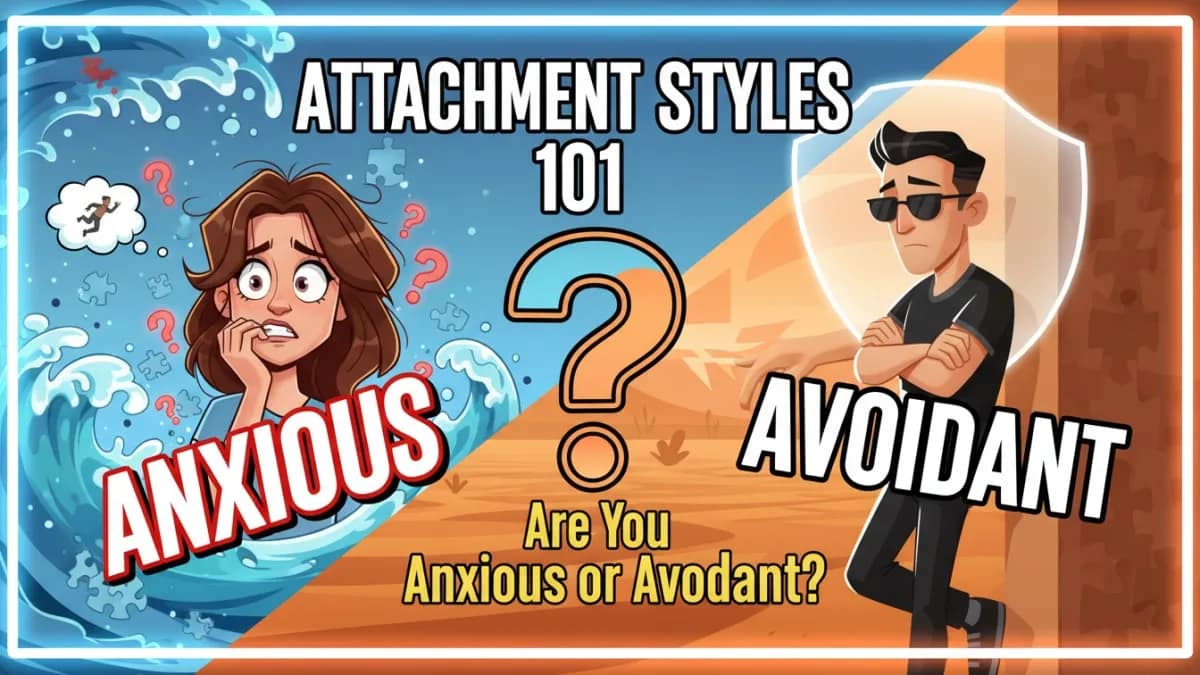
Anxious Attachment: The Approval Seeker
If you have anxious attachment, you need constant reassurance.
When someone is consistently available, you don’t get the validation cycle you’re used to. You actually feel more secure with inconsistent attention because it matches your childhood experience.
Anxious attachment behaviors:
- Obsessing over mixed signals
- Feeling bored with stability
- Needing to “earn” love
- Seeking reassurance constantly
Avoidant Attachment: The Distance Keeper
People with avoidant attachment run from genuine connection.
I’ve worked with many avoidant individuals. They genuinely don’t understand why they ghost people who treat them well. Their nervous system literally perceives intimacy as danger.
Avoidant attachment signs:
- You value independence above all else
- Commitment feels suffocating
- You focus on people’s flaws when they get close
- You prefer casual over serious relationships
Secure Attachment: The Healthy Response
Secure attachment means you can recognize and appreciate genuine interest.
These people don’t play games. They don’t chase unavailable partners. They build relationships with people who actually show up.
The Role of Past Experiences
Childhood Conditioning
Your childhood taught you what to expect from relationships.
If love was inconsistent, you learned that struggle equals love. When someone treats you well consistently, it feels foreign and wrong.
Common childhood patterns that affect you:
- Parents who gave conditional love
- Inconsistent emotional availability
- Having to “perform” for attention
- Being praised for independence but not emotional needs
Previous Relationships and Trauma
Maybe you’ve been burned before. You learned that people who seem “too good to be true” usually are.
I get it. Self-protection makes sense. But sometimes we protect ourselves right out of healthy relationships.
Past trauma impacts:
- You expect people to leave or hurt you
- You strike first by losing interest
- You test people constantly
- You can’t believe genuine compliments
Social and Cultural Influences
The “Hard to Get” Myth
Dating advice has ruined relationships for decades.
We’re taught that playing games works. That acting unavailable makes you desirable. This advice turns dating into manipulation instead of connection.
Toxic dating myths:
- Wait 3 days to text back
- Act less interested than you are
- Make them chase you
- The person who cares less has the power
Real connection doesn’t work this way.
Media and Romance Narratives
Every movie and TV show tells the same story: love requires obstacles and drama.
The boring, stable guy who treats the protagonist well? He’s not the romantic lead. The complicated, unavailable one who “she can fix”? That’s the love story.
I’ve seen people reject amazing partners because the relationship didn’t feel like a movie. Real life isn’t supposed to be that dramatic.
The Contrast Effect in Action
Why “Nice” Feels Boring
Your brain compares everything. When someone is consistently kind, there’s no contrast to notice.
The person who’s hot and cold? Every warm moment feels like a victory. Your brain releases dopamine. You’re literally getting addicted to the pattern.
The contrast trap:
- Consistency feels flat
- Unpredictability creates excitement
- Your brain can’t tell the difference between good and bad excitement
- You mistake stable for boring
Drama vs. Stability
Here’s something I learned the hard way: chemistry isn’t the same as compatibility.
That electric feeling you get with someone unpredictable? It’s not passion. It’s your nervous system on high alert.
Real compatibility feels calm. It feels easy. And if you’re used to chaos, easy feels wrong.
How to Break the Cycle
Step 1: Recognize Your Patterns
You can’t change what you don’t acknowledge.
Start noticing:
- Who you’re attracted to and why
- When you lose interest in people
- What “chemistry” actually feels like in your body
- Whether you chase or run from intimacy
Write it down. The patterns become obvious fast.
Step 2: Challenge Your Beliefs
Every time you think “they’re too available,” stop and question it.
Ask yourself:
- Is availability really a flaw, or am I just uncomfortable?
- What would it mean if someone actually liked me?
- Am I confusing anxiety with attraction?
- What am I afraid of if this works out?
I do this exercise with clients all the time. The answers are usually eye-opening.
Step 3: Practice Staying Present
When someone shows genuine interest and you want to run, stay for five more minutes.
Just sit with the discomfort. Notice what comes up. Don’t act on the urge to create distance immediately.
Small steps to practice:
- Respond to their text instead of leaving them on read
- Go on that second date even if you’re feeling “unsure”
- Share something real instead of staying surface-level
- Notice the urge to sabotage and pause
Step 4: Redefine Chemistry
Stop letting anxiety masquerade as passion.
Real chemistry includes:
- Feeling safe and respected
- Consistent communication
- Mutual effort and interest
- Comfort being yourself
- Excitement that doesn’t come from fear
If you only feel “chemistry” when you’re anxious, you’re measuring the wrong thing.
Step 5: Work on Your Self-Worth
This is the big one. You have to believe you’re worth consistent, genuine love.
I know that’s easier said than done. But until you work on this, you’ll keep pushing away people who see your value.
Self-worth building practices:
- Therapy (seriously, it helps)
- Notice your self-talk and challenge negative thoughts
- Surround yourself with people who treat you well
- Set boundaries and watch people respect them
- Celebrate small wins
When to Seek Professional Help
Red Flags That You Need Support
Some patterns are too deep to fix alone.
Consider getting help if:
- You’ve repeatedly sabotaged healthy relationships
- You can’t feel attracted to people who are emotionally available
- You have severe anxiety around intimacy
- Your patterns are causing you significant distress
- You recognize the problem but can’t change the behavior
I’ve seen therapy transform people’s relationship patterns. There’s no shame in getting support.
Types of Therapy That Help
Effective approaches:
- Attachment-based therapy: Addresses childhood patterns
- Cognitive Behavioral Therapy (CBT): Challenges distorted thinking
- EMDR: Processes relationship trauma
- Couples counseling: Even if you’re single, relationship therapy helps
The right therapist can help you rewire these patterns faster than doing it alone.
Real-Life Success Stories
From Chasing to Choosing
I worked with a client named Sarah (name changed). She only dated men who barely texted back.
After six months of work, she started dating someone who was consistent and available. She called me panicking: “It feels wrong. There’s no spark.”
We worked through it. She stayed present with her discomfort. Today she’s been happily partnered for three years.
She told me recently: “I can’t believe I thought anxiety was attraction. What I have now is so much better.”
Learning to Value Availability
Another client, Mike, always lost interest once women showed they liked him back.
Through therapy, he realized he learned this from his mother, who only showed affection when he achieved something. Love was always conditional.
Once he understood this, he could choose differently. He’s now engaged to someone who loved him from day one.
Why do I lose interest when someone likes me back?
Your brain associates love with uncertainty or struggle based on past experiences. When someone is available and consistent, it doesn’t match your learned pattern of what love “should” feel like. This usually stems from childhood attachment issues or past relationship trauma.
Is it normal to find “nice” people boring?
It’s common but not healthy. You’ve likely confused anxiety and unpredictability with excitement. “Boring” often means “safe and stable,” which feels unfamiliar if you’re used to chaos. Healthy relationships should feel calm, not constantly dramatic.
How do I stop chasing unavailable people?
Start by recognizing the pattern and understanding why you do it. Work on your self-worth and challenge the belief that you need to “earn” love. Practice staying present when someone shows genuine interest instead of running away or losing interest.
Can this pattern be changed?
Yes, absolutely. With awareness, therapy, and consistent practice, you can rewire these patterns. I’ve seen countless people break this cycle and build healthy relationships. It takes time and effort, but change is definitely possible.
What if I’m just not attracted to people who like me?
You need to examine what “attraction” means to you. If you’re only attracted to anxiety-producing situations, that’s not attraction—that’s your nervous system responding to stress. Real attraction can coexist with safety and consistency.
How long does it take to break this cycle?
It varies by person. Some people see changes in a few months with therapy and conscious effort. Others need a year or more. The key is consistent work on understanding and changing your patterns, not a specific timeline.
Should I force myself to date someone I’m not interested in?
No, but examine why you’re not interested. If it’s because they’re “too available” or “too nice,” that’s worth exploring. If there’s genuinely no connection beyond their availability, that’s different. Don’t force attraction, but do question your criteria.
What’s the difference between healthy unavailability and game-playing?
Healthy unavailability means someone has boundaries and a full life outside of you. Game-playing means intentionally creating distance to manipulate your interest. Healthy people are available but not desperate; game-players are strategic with their attention.
Read More:https://mrpsychics.com/psychological-facts-crushes-that-surprise-you/
Conclusion: Choose Different, Get Different
Here’s the truth I wish someone had told me years ago: The people who make you anxious aren’t the ones who truly love you.
You keep ignoring people who like you because you’ve learned that love is supposed to hurt. That it’s supposed to be hard. That you’re supposed to chase it.
But you’re wrong. And I mean that in the kindest way possible.
Real love feels different. It feels calm. It feels steady. It feels like coming home, not like running a marathon.
Your assignment: The next time someone shows genuine, consistent interest in you, don’t run. Don’t lose interest. Don’t find reasons they’re wrong for you.
Just stay. See what happens. You might be surprised.
Because the relationship you’ve been searching for might be with the person you’ve been ignoring all along.

Ahmed is a self-improvement and psychology writer passionate about helping people live smarter, calmer, and more productive lives.
- Ahmed manasiya

- Ahmed manasiya
- Ahmed manasiya
- Ahmed manasiya