
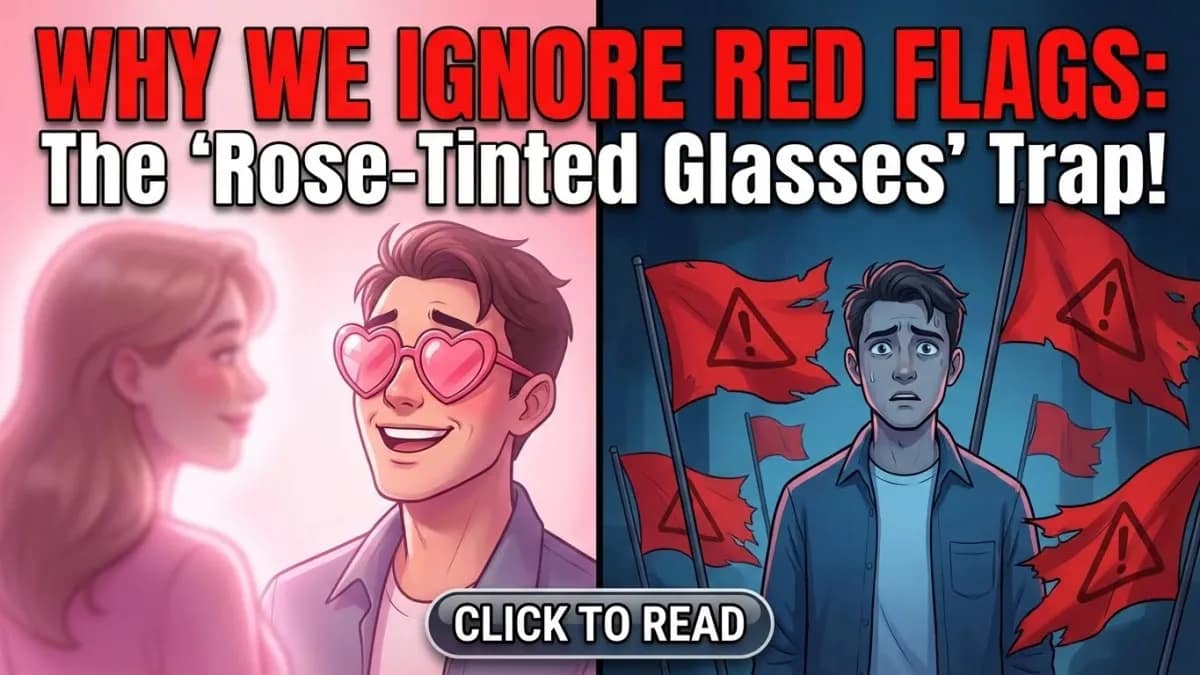
Why We Ignore Red Flags in Relationships (Rose-Tinted Glasses)
Key Takeaways
Before you dive in, here’s what you need to know:
- Red flags are warning signs that something isn’t right in a relationship, but our brains are wired to overlook them
- Love chemicals like dopamine and oxytocin literally cloud your judgment in the early stages
- You’re not stupid for missing red flags—you’re human, and there are psychological reasons behind it
- Recognizing why you ignore warning signs is the first step to breaking the pattern
- Past trauma, fear of being alone, and low self-worth are the biggest culprits
Introduction: The Truth About Those Rose-Tinted Glasses
I’ve worked with hundreds of people who stayed in bad relationships way longer than they should have.
And almost every single one asks me the same question: “How did I not see it coming?”
Here’s the thing—you probably did see it. You just didn’t want to believe it.
Your brain put on rose-tinted glasses and suddenly, red flags looked like quirks. Warning signs became “things you could fix.” Dealbreakers turned into “nobody’s perfect.”
In this post, I’m going to show you exactly why this happens and what you can do about it.
What Are Red Flags in Relationships?
Let me be clear about what we’re talking about.
Red flags are behaviors or patterns that signal potential problems, disrespect, or even danger in a relationship.
They’re not the same as differences in taste or personality quirks.
Common Red Flags People Miss:
- Controlling behavior – They check your phone, decide what you wear, or isolate you from friends
- Constant criticism – You feel like you can’t do anything right
- Love bombing – Intense affection and promises way too early (then it disappears)
- Disrespecting boundaries – You say no, they push anyway
- Hot and cold behavior – Amazing one day, distant the next
- Lying or hiding things – Even about “small” stuff
- Making you feel crazy – Denying things you know happened (gaslighting)
I’ve seen people excuse every single one of these because they were hoping things would change.
The Psychology: Why Your Brain Betrays You
Your brain isn’t trying to hurt you. It’s actually trying to protect you—just in the wrong way.
Let me explain the science behind those rose-tinted glasses.https://www.health.harvard.edu
1. Love Chemicals Hijack Your Logic
When you fall for someone, your brain releases dopamine, oxytocin, and serotonin.
These are the same chemicals involved in addiction.
I’ve seen this play out countless times—people make decisions in new relationships they would never make otherwise. Your prefrontal cortex (the logical part) literally gets quieter while the emotional parts get louder.
You’re not thinking clearly because you’re chemically high on love.
2. Confirmation Bias Keeps You Stuck
Once you decide you like someone, your brain looks for evidence that you’re right.
You notice every sweet text. You remember the good date. You replay the compliments.
But the criticism? The time they stood you up? The weird comment about your friend?
Your brain downplays it or erases it completely.
I’ve had clients tell me “he’s so thoughtful” and then describe someone who forgot their birthday, cancelled plans constantly, and never asked about their day.
3. The Sunk Cost Fallacy
You’ve already invested time, emotions, maybe money into this relationship.
Your brain tells you: “If I leave now, all of that was wasted.”
So you stay, hoping your investment will eventually pay off.
I’ve watched people stay in miserable relationships for years because they “already spent five years together.” They thought leaving meant admitting those five years were a mistake.
But here’s the truth: staying in something wrong doesn’t make your past investment worth it.
4. Fear of Being Alone
This is the big one I see in my work.
People ignore red flags because they’re terrified of being single.
They think: “What if nobody else wants me? What if I’m too picky? What if this is as good as it gets?”
Your brain would rather deal with known problems than unknown loneliness.
I’ve seen amazing people settle for crumbs because they believed being alone was worse than being disrespected.
The Emotional Reasons We Ignore Warning Signs
Beyond brain chemistry, there are deeper emotional patterns at play.
Low Self-Worth Makes Red Flags Invisible
If you don’t believe you deserve better, you won’t look for better.
I’ve worked with clients who genuinely believed they should be grateful someone wanted them at all.
When your self-esteem is low, you think bad treatment is normal. You think you’re the problem. You think you need to try harder.
Red flags don’t look like warnings—they look like challenges you need to overcome to prove you’re worthy of love.
Past Trauma Creates Blind Spots
If you grew up around dysfunction, dysfunction feels like home.
Your childhood taught you what “normal” looks like, even if that normal was unhealthy.
I’ve seen people attracted to partners who treat them exactly like their critical parent did. It’s not because they want to be hurt—it’s because familiar feels safe, even when it’s painful.
The Hope Addiction
You’re not addicted to the person. You’re addicted to the hope that they’ll change.
Every small improvement feels like proof that your faith in them was justified.
I call this “potential dating”—you’re not in a relationship with who they are. You’re in a relationship with who you hope they’ll become.
You ignore red flags today because you’re betting on a different tomorrow.
Pro Tip: The 6-Month Reality Check
Here’s something I tell every client:
Whatever behavior you’re seeing at 6 months is likely the best version of this person you’ll get.
People are usually on their best behavior early on. If you’re seeing red flags in the honeymoon phase, they will get worse, not better.
Ask yourself: “If nothing about this person changed, would I be happy in this relationship 5 years from now?”
If the answer is no, you’re ignoring red flags and betting on change that probably won’t come.
The Social and Cultural Pressures
Let’s talk about the outside voices that make you doubt yourself.
“Give Them Another Chance”
Friends and family often mean well, but they can make you second-guess your instincts.
“Maybe you’re being too sensitive. Everyone has flaws. Relationships take work.”
Yes, relationships take work—but you shouldn’t have to work to be treated with basic respect.
I’ve seen people stay in toxic situations because their mom kept saying “marriage is hard” or their friends said “you’ll never find perfect.”
Society’s Timeline Pressure
If you’re in your late 20s or 30s, you might feel pressure to “settle down.”
You see friends getting engaged. Family asks when you’re getting married. Social media shows everyone’s highlight reels.
So you ignore red flags because you think you’re running out of time.
I’ve had clients pick the wrong person because they were more focused on hitting a life milestone than finding the right partner.
The Fairytale Myth
Movies and TV taught us that love conquers all.
The bad boy reforms for the right woman. The emotionally unavailable man opens up. Love is supposed to be hard-won and dramatic.
Real healthy love isn’t like that.
I’ve seen people mistake chaos and drama for passion. They think if it’s not intense and complicated, it’s not real love.
Signs You’re Wearing Rose-Tinted Glasses Right Now
Let me give you a reality check. You might be ignoring red flags if:
- You make excuses for their behavior – “They’re just stressed” or “They had a rough childhood”
- You’re the only one trying – You’re doing all the calling, planning, and compromising
- Your friends are concerned – Multiple people have said something seems off
- You feel anxious a lot – You’re constantly wondering where you stand
- You’ve changed yourself – You dress differently, talk differently, or avoid certain topics to keep the peace
- You justify poor treatment – “At least they don’t hit me” or “It could be worse”
- You’re always waiting – Waiting for them to commit, to change, to choose you
If you recognized yourself in three or more of these, you need to take those glasses off.
How to Remove the Rose-Tinted Glasses
Okay, so you know you’re ignoring red flags. Now what?
1. Write Down What You’re Experiencing
Your memory will trick you. Your emotions will rewrite history.
Write down the facts.
When they cancel plans, write it down. When they criticize you, write it down. When you feel uncomfortable, write it down.
I tell my clients to keep a simple note in their phone. After a month, read it back. You’ll see patterns you were blind to in the moment.
2. Ask Your Future Self
Imagine yourself five years from now.
What advice would your future self give you about this relationship?
I’ve used this exercise with hundreds of people, and almost everyone knows the answer immediately. Your gut knows. You just need to listen.
3. Talk to Someone You Trust
Pick someone who loves you and will be honest.
Tell them what’s really happening—not the edited, hopeful version. The real version.
Ask them directly: “Do you think I’m ignoring red flags?”
Then listen without defending. Just listen.
4. Imagine Your Best Friend in Your Situation
If your best friend described your relationship to you, what would you tell them?
Would you tell them to stay? Or would you tell them to run?
We’re always clearer about other people’s relationships than our own.
Use that clarity.
5. List Your Non-Negotiables
What are the things you absolutely need in a relationship?
Honesty? Respect? Emotional availability? Kindness?
Now honestly assess whether you’re getting those things.
Not sometimes. Not on good days. Consistently.
I’ve had clients realize they’ve been negotiating on things they swore they’d never compromise on.
What to Do When You Finally See the Red Flags
Seeing them is one thing. Acting on what you see is another.
Don’t Wait for the “Right Time”
There’s never a perfect moment to have a hard conversation or end a relationship.
You’re waiting for certainty you’ll never have.
I’ve seen people waste years waiting for absolute proof that leaving was the right choice.
Trust Your Gut Over Their Words
Pay attention to how you feel, not just what they say.
They might have great excuses. They might promise to change.
But how do you feel most of the time? Anxious? Exhausted? Small?
That feeling is data. Use it.
You Don’t Need Anyone’s Permission to Leave
Not your family’s. Not your friends’. Not even a therapist’s.
If something doesn’t feel right, that’s reason enough.
I’ve worked with so many people who kept looking for external validation to trust themselves.
You already know what you need to do.
Get Support
Leaving isn’t always easy, especially if you’ve been together a long time.
Talk to a therapist. Lean on friends. Join a support group.
You don’t have to do this alone, and asking for help isn’t weakness.
What if I’m wrong about the red flags?
Trust me, I’ve seen thousands of relationships. People rarely regret trusting their instincts about red flags. They regret ignoring them.
If multiple things feel wrong, and you’re constantly anxious or making excuses, you’re probably not wrong.
How do I know if I’m being too picky or if these are real red flags?
Being picky is having preferences about hobbies, lifestyle, or personality types. Red flags are about how someone treats you.
Wanting someone who shares your love of hiking? That’s picky. Needing someone who respects your boundaries? That’s basic.
Can people change if you point out the red flags?
Some people can change, but only if they truly want to and put in consistent work over time.
I’ve seen this happen, but it’s rare. Most people who show red flags early on either don’t think they have a problem or aren’t motivated enough to change.
Don’t stay based on potential. Stay based on reality.
Why do I keep choosing the same type of person?
You’re attracted to what feels familiar, even if it’s unhealthy.
This usually comes from childhood patterns or unhealed trauma. Working with a therapist can help you break this cycle and start choosing healthier partners.
Is it normal to ignore red flags at first?
Yes, it’s common because of all the psychological and chemical factors we discussed.
But common doesn’t mean healthy. The goal is to recognize the pattern and change it.
How early should I expect to see red flags?
Often within the first few months, sometimes even on the first few dates.
Pay attention to small things: how they treat servers, how they talk about exes, how they handle small disappointments.
What if they’re perfect except for one red flag?
It depends on the red flag. Some are dealbreakers no matter what: abuse, addiction they won’t address, chronic lying.
But ask yourself honestly: is it really just one thing? Or have you been minimizing other issues?
How do I stop making excuses for them?
Start by noticing when you’re doing it. Catch yourself mid-excuse.
Then ask: “Would I accept this behavior from anyone else in my life?” If the answer is no, you’re making special exceptions because you’re emotionally invested.
READ MORE:https://mrpsychics.com/attachment-styles-101-are-you-anxious-or-avoidant/
Final Thoughts: You Deserve Clear Vision
I’m going to be direct with you.
If you’re reading this article, you already know something isn’t right.
You’re looking for permission to trust yourself, or you’re hoping I’ll give you a reason to stay.
I can’t make that decision for you. But I can tell you this:
I have never, in all my years of work, met someone who regretted leaving a relationship with red flags. Not one.
But I’ve met countless people who regret staying too long.
Your gut is trying to tell you something. Those rose-tinted glasses might feel comfortable, but they’re keeping you from seeing what’s really there.
You deserve someone who doesn’t come with warning signs. You deserve to feel peaceful, not anxious. Confident, not confused.
Take off the glasses. Look clearly. And trust what you see.
Your future self will thank you.

Ahmed is a self-improvement and psychology writer passionate about helping people live smarter, calmer, and more productive lives.
- Ahmed manasiya

- Ahmed manasiya
- Ahmed manasiya
- Ahmed manasiya